What the Setup Assistant does
A guitar that feels wrong rarely has one thing wrong with it. Usually there are two or three small issues stacked up, and they disguise each other — a buzz that looks like low action turns out to be a truss rod, a stiff feel that looks like high action turns out to be the nut.
This assistant asks what you're actually experiencing and works out where to start. You describe the symptom in plain words — buzzing, stiffness, notes out of tune up the neck — and it points you at the right step, in the right order.
Why order matters more than technique
Setup is a chain. Every adjustment changes the conditions for the next one, so doing them out of sequence means doing several of them twice.
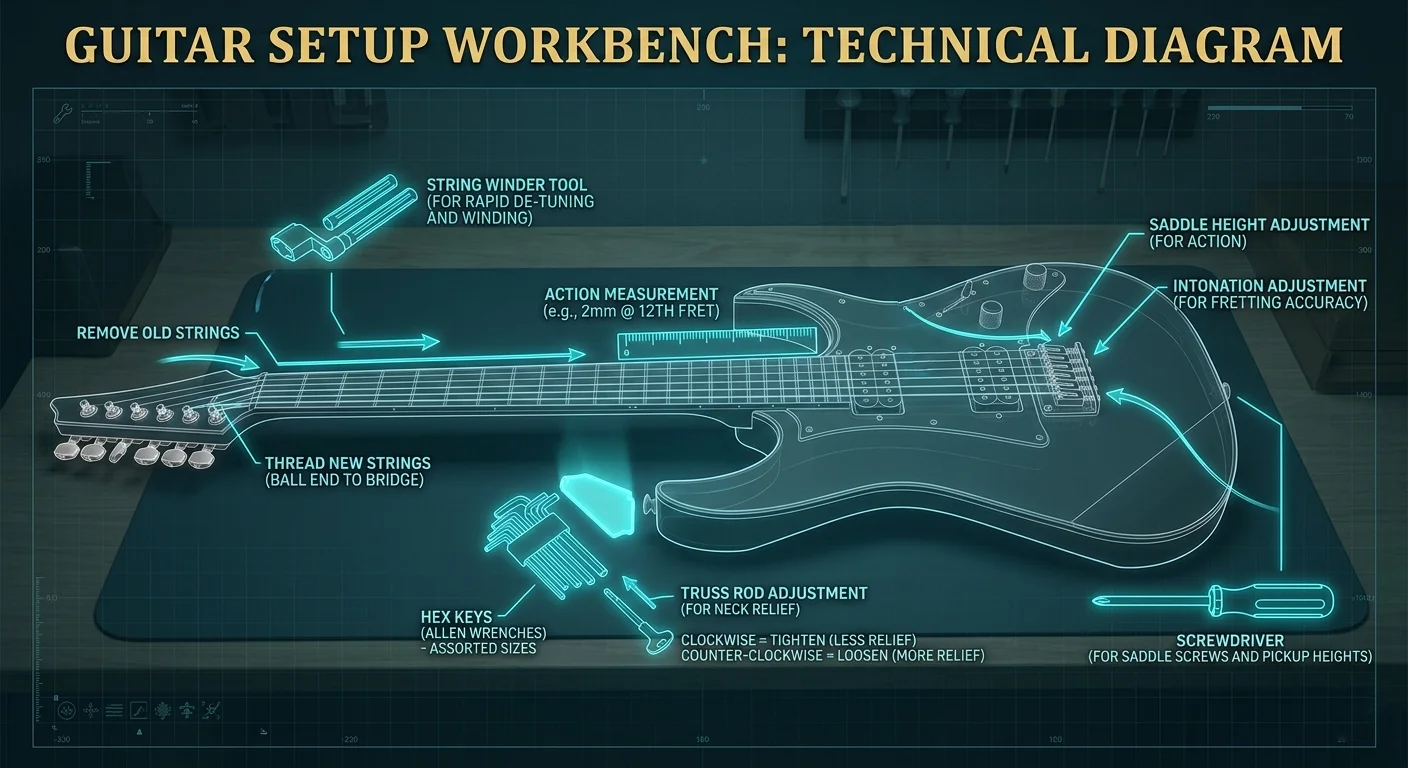
The order that saves the most backtracking is neck relief, then nut height, then action at the bridge, then intonation. Relief comes first because the neck's curve determines where every string sits along its whole length. Nut height comes next because it governs the first few frets specifically. Action at the bridge is set against a neck that's already correct. Intonation goes last, because it depends on the final string height — change the action afterward and your intonation moves with it.
Skip a step and the symptom usually comes back a week later.
If you already know what you need
You don't have to run the full diagnosis. If you're confident the neck needs relief, or you already know your intonation is out, you can jump straight to that step. The assistant will still note what else might have shifted as a result.
What this tool won't do
It won't tell you your guitar needs a refret, and it won't diagnose a cracked neck, a lifting bridge, or worn frets. Those need eyes and hands on the instrument. What it will do is stop you adjusting the wrong thing first, which is where most of the wasted time in a home setup goes.
Guitar setup questions, answered
What order should I do a guitar setup in?
Neck relief, nut height, action, then intonation. Each step changes the conditions for the ones after it, so working in that order means you set each thing once instead of revisiting it.
How long does a full setup take?
The adjusting is quick — most of the time goes into waiting. Necks want time to settle between truss rod turns, ideally an hour or more per adjustment. Doing it across an evening with pauses tends to give a better result than pushing straight through.
Do I need special tools?
Less than you'd think. A tuner, the right Allen key or screwdriver for your truss rod and saddles, and something thin to measure with covers most of it. A string action gauge is a nice addition but not a starting requirement.
Can I damage my guitar doing this myself?
The main risks are over-tightening a truss rod and filing a nut slot too deep. Both are avoidable by moving in small increments and stopping when something feels tight or looks wrong. Everything else on a standard setup is reversible.
My guitar buzzes. Is that a setup problem?
Often, but not always. Buzz spread evenly across the neck usually points at relief or overall action. Buzz on the first few frets more often points at the nut. Buzz on one or two specific frets can mean a high or worn fret, which is a repair rather than a setup.