Setup Guide
What Is a Multi-Scale Guitar? The Math Behind Fanned Frets
Multi-scale guitars use fanned frets and different string lengths to balance tension across the neck. Here is how the math works and why it matters.
If you have spent any time looking at modern guitars lately, you have probably seen instruments with frets that slant across the neck like a folded fan. They look unusual at first, but multi-scale guitars are not a gimmick. They are a solution to a real physics problem: different strings want different scale lengths to feel and sound their best.
That is why these guitars matter. A multi-scale neck balances tension across the strings, giving the low strings more length and the high strings a shorter, more comfortable feel. Once you understand that tradeoff, the design starts to make a lot of sense.

The problem with single-scale necks
A standard guitar uses one scale length for every string. That works well for a lot of music, but it forces the low strings and high strings to live under the same physical conditions. The result is a compromise: the bass strings can feel too loose while the treble strings can feel tighter than necessary.
That compromise gets more noticeable in lower tunings and heavier styles. The low string wants more scale length to stay clear and controlled, while the high strings usually feel better when the scale stays shorter. Multi-scale design solves that mismatch.
What the fan actually does
A multi-scale guitar gives each string its own slightly different length. The bass side is longer, and the treble side is shorter. That means the low strings get more tension and clarity without needing extreme string gauges, while the high strings stay slinky and easy to bend.
The frets have to follow that geometry, which is why they slant in a fan shape. The fan is not decoration — it is the visual result of making every string work a little more naturally. Once the fret pattern is mapped correctly, the guitar can feel more balanced from top to bottom.

Why the tension feels better
On a standard neck, one string can feel loose and another can feel stiff even when they are part of the same set. Multi-scale instruments help smooth out that difference. The low strings gain firmness and note definition, while the high strings keep their bend-friendly feel.
That balance is especially useful for drop tunings and lower-register playing. Instead of fighting floppy bass strings or over-tight trebles, the guitar gives each string a more appropriate amount of length. The result is usually a more even, more controlled feel.
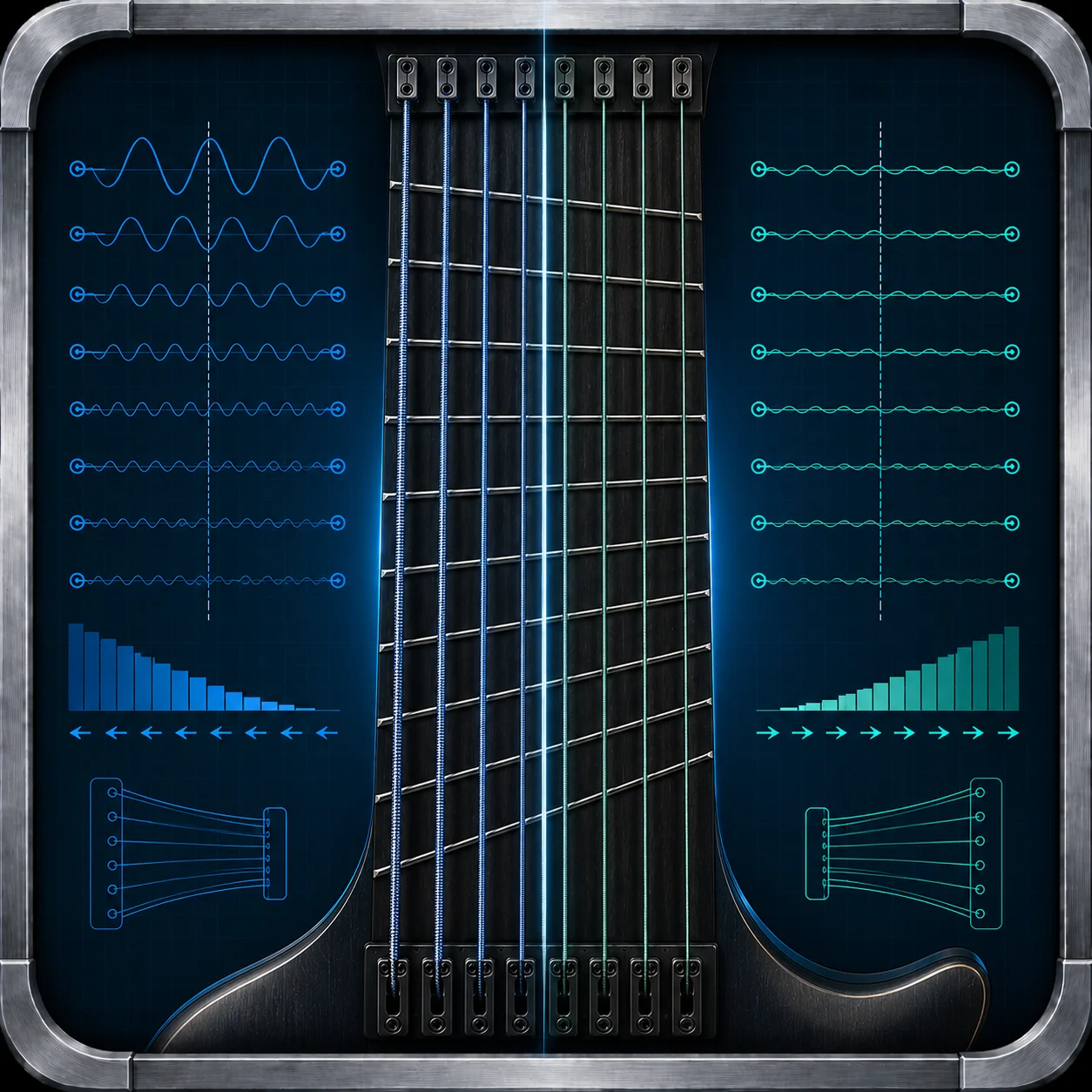
Want to see how scale length changes per-string tension across tunings?
String Tension Calculator →Why players like them
The guitar feels more even under the picking hand because strings are not all forced to behave the same way.
Low strings stay tighter and less muddy, especially when played hard or in lower tunings.
Most players adjust to the fan quickly. The angle often feels more natural than it looks.
The Plotter connection
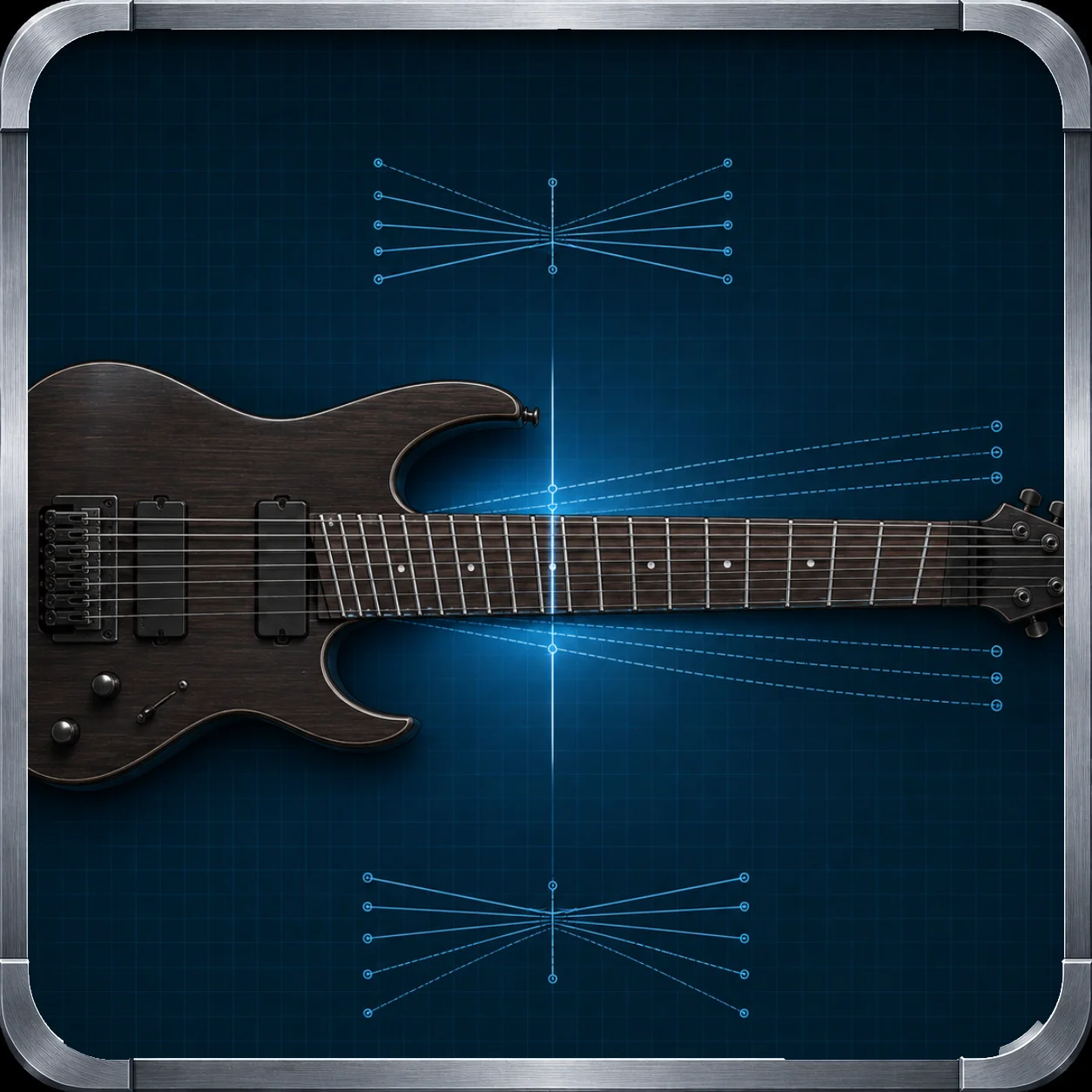
Before buying or designing a multi-scale guitar, it helps to visualize the geometry first. The Multi-Scale Plotter lets you set bass and treble scale lengths, choose a perpendicular fret, and see the fan layout before committing to a neck design. That is useful whether you are choosing a neutral fret position or just trying to understand how the geometry will look.
If you also want to compare how the scale lengths affect string feel, the String Tension Calculator is the next step. And if you want to see exact fret positions for a single scale, the Fret Position Calculator gives you the full table. Together, those three tools turn the math into something you can actually use.
Ready to visualize the fan before you commit to a design?
Open the Multi-Scale Plotter →The Pocket Roady order
Here is the simplest workflow — start at the top and stop when the design feels right:
Understand the scale-length tradeoff — longer bass side, shorter treble side.
Visualize the fan with the Multi-Scale Plotter.
Compare tunings and gauges with the String Tension Calculator.
Look up exact fret positions with the Fret Position Calculator.
Decide whether the feel matches your playing style — then build or buy.
Multi-scale guitars make more sense once you stop thinking of the fan as unusual and start seeing it as the logical result of better tension balance.
Where to go next
If you play lower tunings, want more clarity on the bass strings, or just like the idea of a more balanced neck, multi-scale is worth understanding. The design is not about looking futuristic — it is about making the guitar work better for the physics of the strings.
Want to see the layout before you buy? Use the Multi-Scale Plotter to visualize the fan, the Fret Position Calculator to look up exact positions, and the String Tension Calculator to compare how the design changes feel across tunings.