Setup Guide
The Physics of String Tension: How It Affects Your Feel, Bends, and Setup
String tension is the hidden force that shapes feel, bend resistance, and setup stability. Here is how it works and why it matters for your guitar.
When you pick up a guitar and bend a note, you are not just moving metal around — you are feeling physics in real time. Every string is under constant pull, and that pull affects how the guitar feels, how hard bends are, and how the instrument responds across the fretboard. Once you understand tension, a lot of setup choices start making more sense.
The important part is that string tension is not random. It changes in predictable ways based on pitch, scale length, and string mass. That means you can use it to choose smarter gauges, tune more confidently, and avoid setups that fight your hands.
The three variables
String tension is shaped by three main variables: pitch, scale length, and string mass. If any one of those changes, the feel of the guitar changes too. That is why the same string set can feel very different on two guitars.
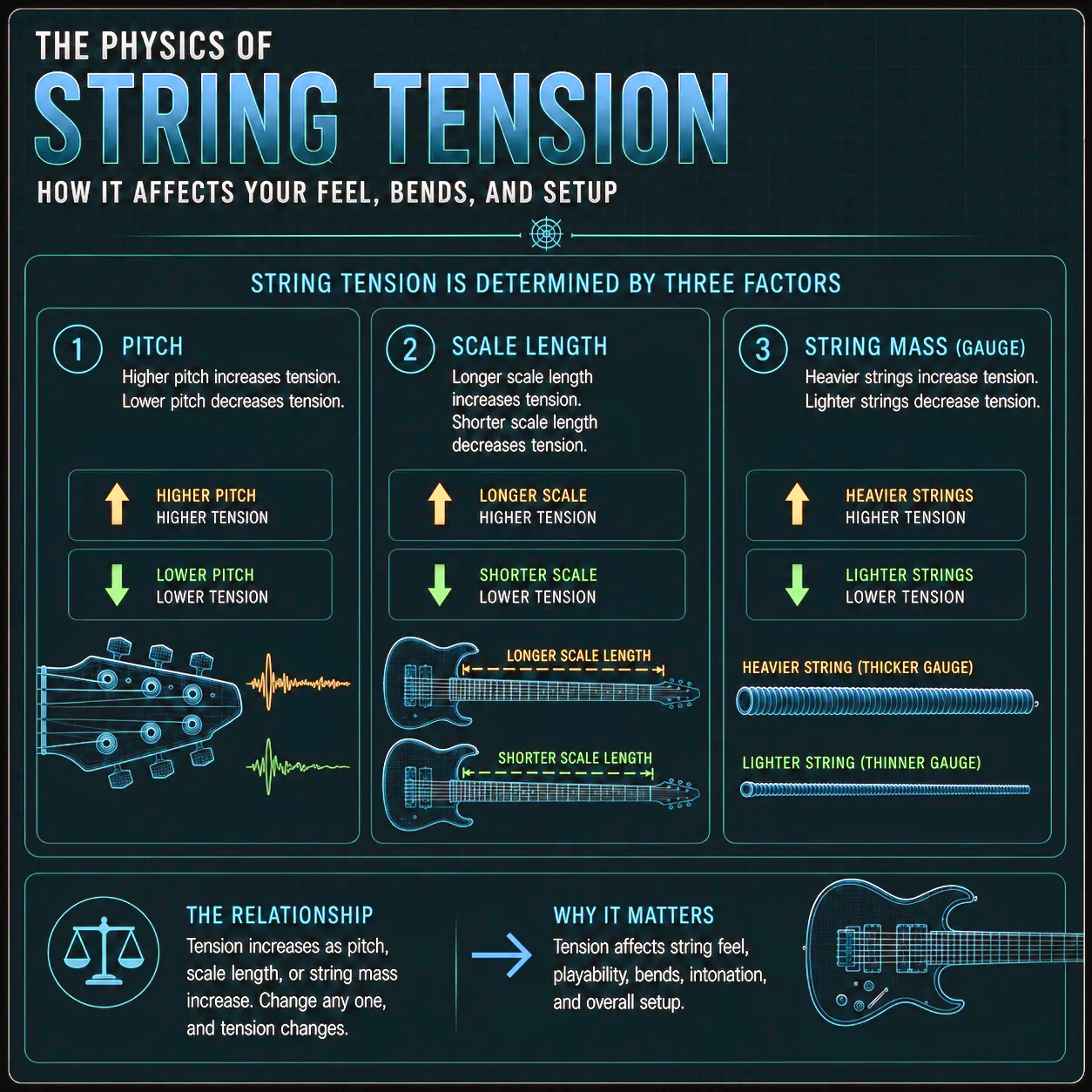
Higher notes need more tension. Thinner strings can still feel taut because they are tuned up to pitch.
A longer string has to be pulled harder to reach the same note — which is why longer-scale guitars feel tighter.
Heavier strings need more force to vibrate at the same pitch, which is why heavier gauges feel firmer.
Pitch and feel
The higher the note, the tighter the string has to be. That is why a high E can feel snappier than a low E, even though it is thinner. The relationship between pitch and force is one of the main reasons different tunings feel so different.
When you lower the tuning, you lower the tension. That can make the guitar feel looser and easier to bend, but it can also make the strings feel less stable under the pick. In other words, the same guitar can feel completely different just from a tuning change.

Scale length matters
Scale length is the distance from the nut to the bridge saddle. A longer scale length means the string has to be stretched harder to reach the same pitch. That is one reason a 25.5 inch guitar usually feels tighter than a 24.75 inch guitar with the same string gauge.
This is also why the same gauge can feel perfect on one guitar and too stiff on another. The guitar is not imagining it — the tension is genuinely different. Scale length changes the whole balance of the instrument.

Gauge changes everything
Heavier strings have more mass, which means they need more force to vibrate at the same pitch. That is why heavier sets feel firmer, resist bends more, and often hold down the low end better. Lighter sets are easier to bend but can feel less stable if the setup is not matched to them.
This is also where your setup starts to change. A heavier set may need a little more neck relief or different action, while a lighter set may need the opposite. The string choice is not separate from setup — it is part of the setup.

What tension does to bends
Bending a string means temporarily increasing its tension. If the baseline tension is already high, bends feel stiff and demanding. If the baseline tension is lower, bends feel softer and easier to control.
That does not mean lower tension is always better. A very loose setup can feel floppy or unstable if you tune low or play hard. The goal is not minimum tension — it is the tension that feels right for your hands and playing style.
What tension does to buzz
Tension also affects how much room the string needs to vibrate. Higher-tension strings tend to move in a tighter arc, which can help you run the action lower without buzzing. Lower-tension strings vibrate in a wider arc, which may need more clearance.
That is why a setup that feels perfect with one gauge may buzz after a gauge change. The guitar has not broken — the physics changed. Once tension shifts, the setup usually has to catch up.
Why setup shifts happen
If you drop the tuning, the tension falls and the neck can react quickly. The truss rod may suddenly have more influence than the strings, which can flatten the neck or even create back-bow. That is one reason lower tunings often call for setup adjustment.
Heavier strings do the opposite. They add pull, which can increase relief and raise action if the neck was already close to its limit. String tension is always part of the guitar's structural balance.

Any time you make a significant tension change — new gauge, different tuning, longer scale — give the neck a day to settle before making fine adjustments. Wood moves slowly, and a hasty truss rod tweak right after a string change can overshoot.
The Pocket Roady order
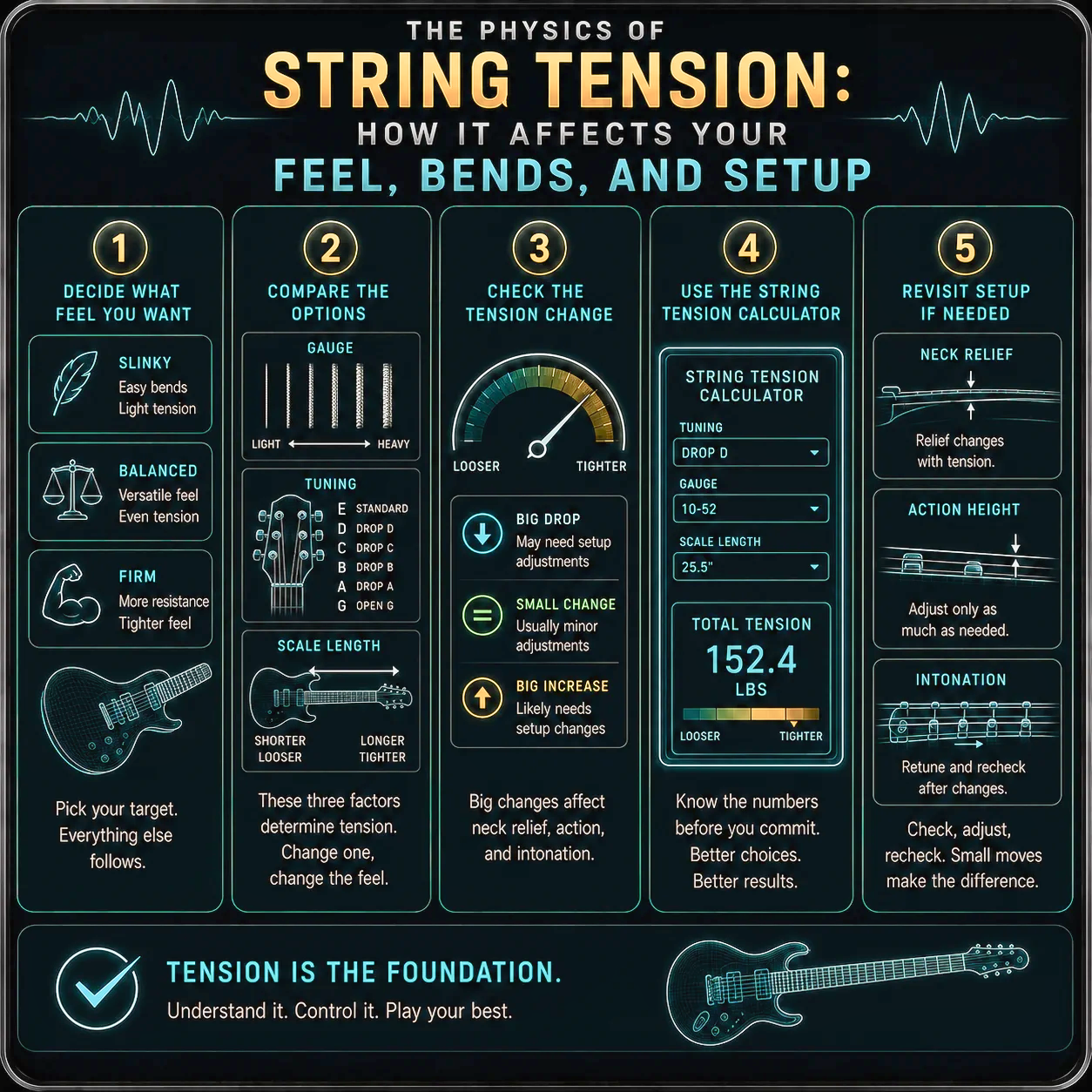
Here is the simple workflow — start at the top and stop when the setup feels right:
Decide what feel you want — slinky, balanced, or firm.
Compare the gauge, tuning, and scale length options you are considering.
Check whether the tension change is big or small.
Use the String Tension Calculator before buying strings.
Revisit setup if the new tension changes the neck or action.
That order keeps the process calm and practical. Instead of fighting the guitar, you are using the physics to make better choices.
Where to go next
If you want a lighter, slinkier feel, lower tunings and lighter gauges will push you in that direction. If you want more firmness and stability, heavier strings and longer scale lengths will move you there. The point is not to memorize formulas — it is to understand what tension is doing under the hood.
Want the numbers without the math headache? Use the String Tension Calculator to compare gauges, tunings, and scale lengths before you commit to a new setup.
Open the String Tension Calculator →