Setup Guide
How to Fix Buzzing on the First Few Frets (Nut vs. Relief)
If your guitar buzzes near the headstock, the problem is usually either neck relief or the nut. This guide helps you tell the difference before you start adjusting anything.
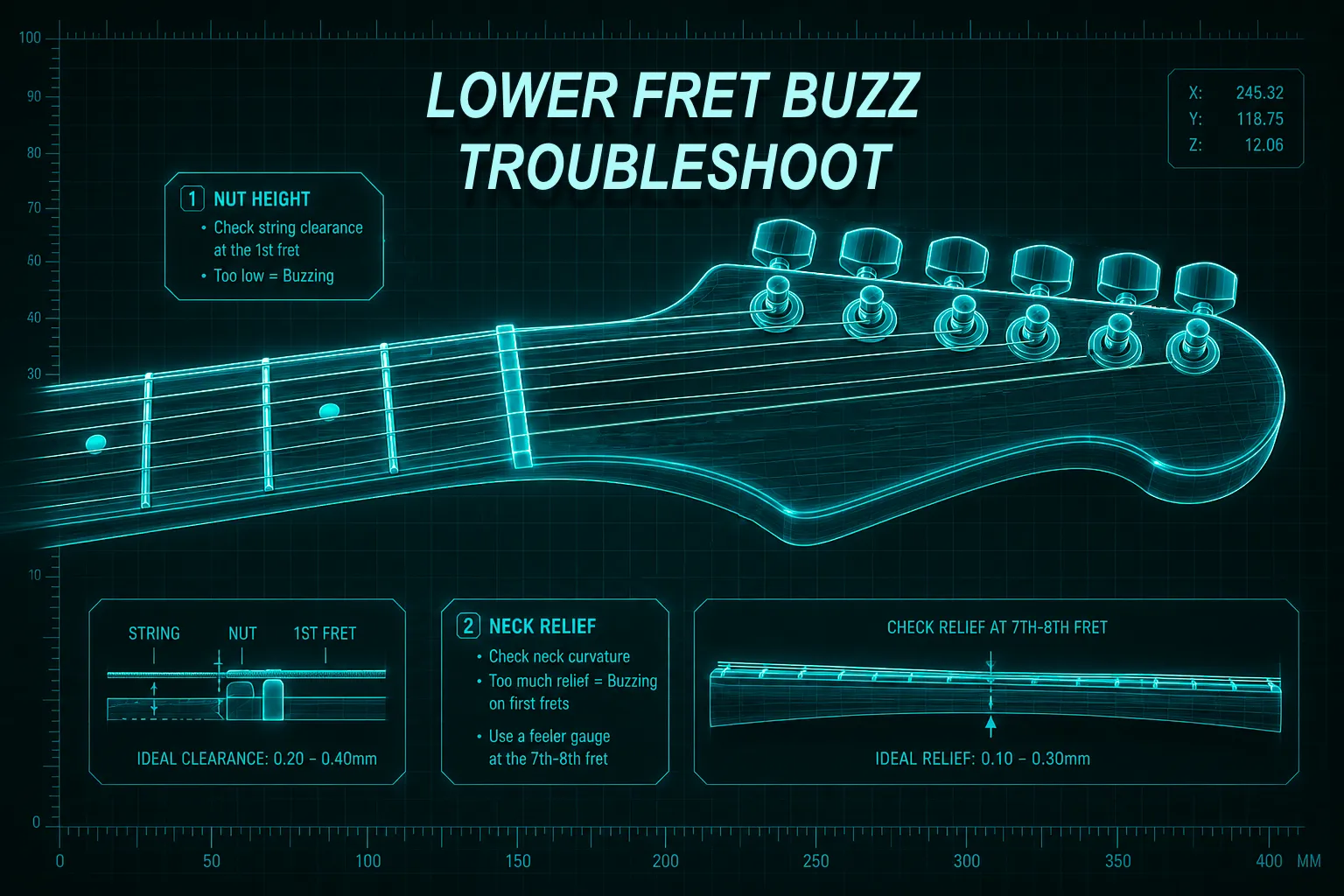
There is nothing quite like a localized fret buzz to ruin a great guitar session. You pluck an open string or press down on a simple F or C chord, and instead of a clean ringing note you get a metallic rattle that drives you crazy.
When a guitar buzzes specifically on the first few frets — usually between the nut and the 5th fret — the problem is usually concentrated near the headstock. The good news is that you do not have to guess. This kind of buzzing almost always comes down to one of two things: neck relief or nut slot depth.
The Two Suspects
To figure out what is happening, you need to understand how the string behaves when played open versus when your fingers press it down. That difference is what helps separate a neck issue from a nut issue.
If the neck is too straight or back-bowed, the strings may not have enough room to vibrate cleanly near the first few frets. If the nut slots are too deep, the strings sit too low at the headstock and rattle before they even get a chance to ring properly.
Too Little Neck Relief
Your guitar neck needs a very slight forward curve so the strings have room to vibrate without hitting the frets. That curve is called relief. If the neck is too straight or has a slight back-bow, the frets near the nut are often the first place buzzing shows up.
This usually means the truss rod needs attention. A guitar with too little relief can buzz on open strings and continue buzzing as you play up through the first few frets. If that sounds familiar, the Neck Relief Helper is the right place to start.
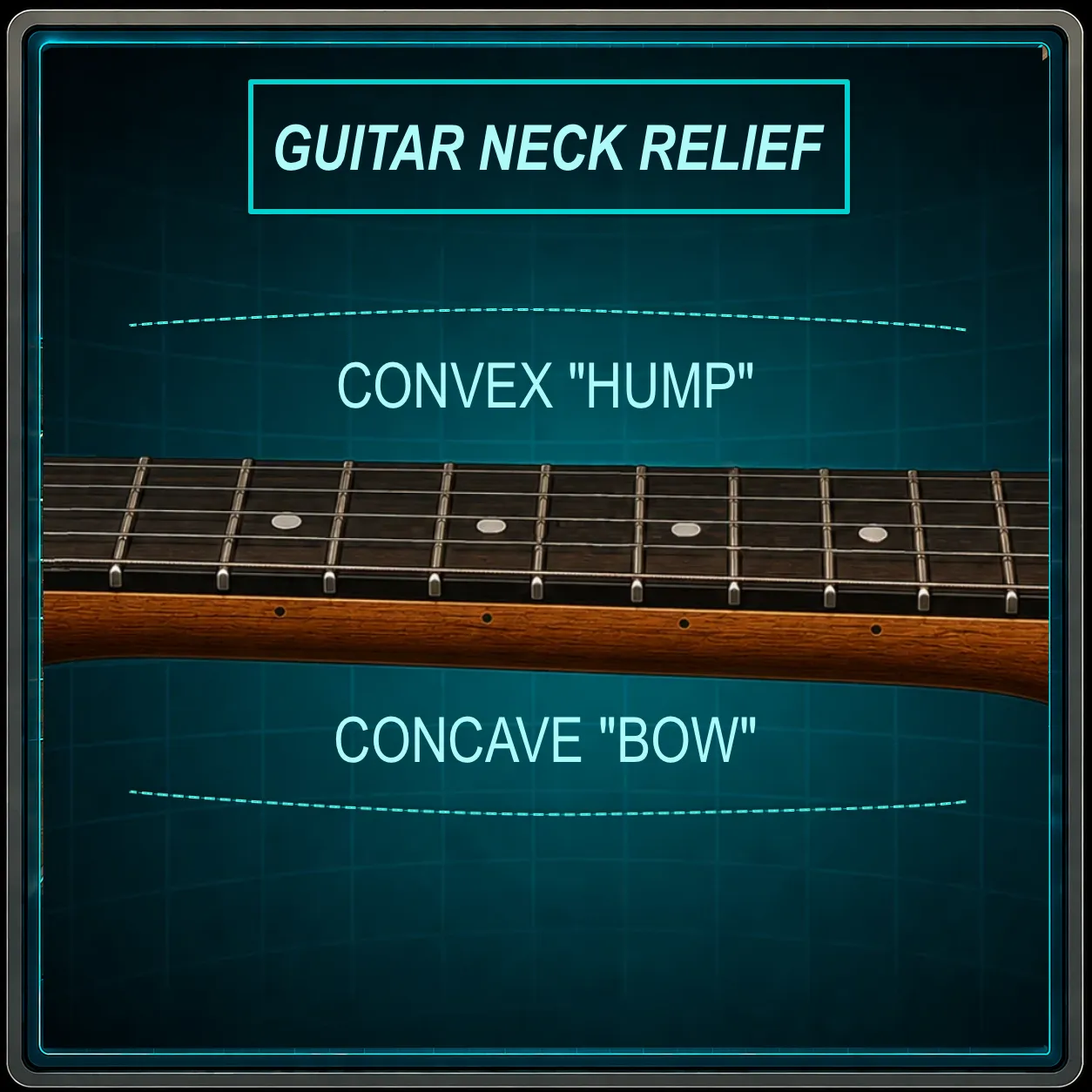
Check your neck relief in about two minutes.
Check Neck Relief →Nut Slots Cut Too Deep
The nut is the small slotted piece at the top of the neck that holds the strings in place before they reach the tuners. If the slots are filed too low, the string sits too close to the first fret and starts buzzing when played open.
This is one of the easiest problems to mistake for a neck issue. A string that buzzes open but stops buzzing the moment you fret it near the first fret often points to the nut.
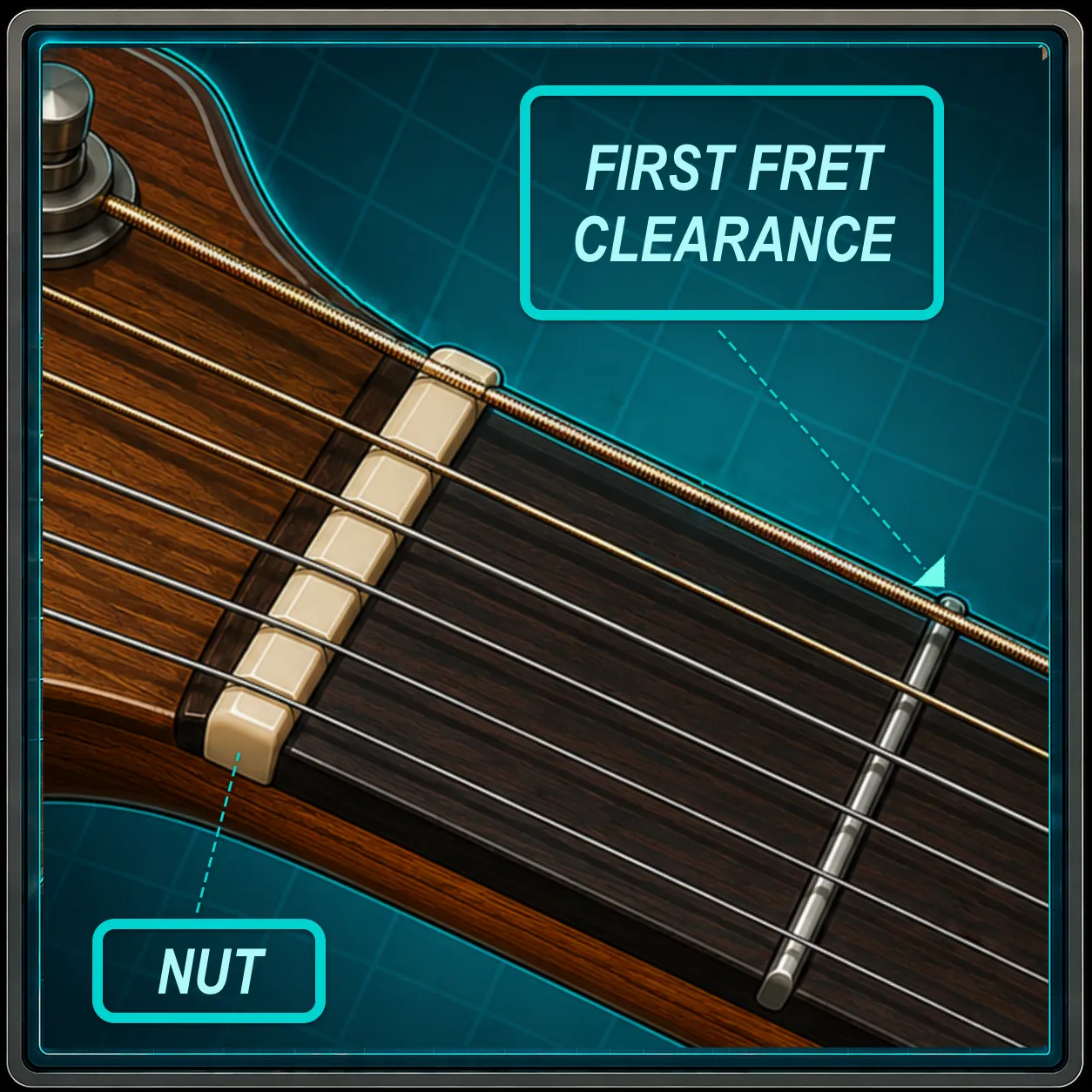
Check your nut height before reaching for a file.
Use the Nut Slot Helper →The Quick Bench Test
A fast way to narrow it down is the first-fret check. Tune the guitar to pitch, press the string down at the 3rd fret, and look at the gap above the 1st fret wire. If the clearance is almost nonexistent and the string feels like it is sitting on the fret, the nut may be too low.
If there is a small but healthy gap and the buzzing still happens across frets 1 to 5, the neck is more likely the issue.
Fret the string at the 3rd fret with one hand and look at the gap between the bottom of the string and the top of the 1st fret wire. You want to see a hairline gap — just enough daylight to tell the string is not resting on the fret. No gap at all usually means the nut is too low. A larger gap combined with buzzing usually points to neck relief.
How to Tell Which Symptom Matters
Here is the simple difference — the location and behavior of the buzz tells you almost everything you need to know:
The string buzzes on the open note but stops buzzing as soon as you fret it anywhere near the first fret.
The buzz continues through the first few frets even when you are pressing the string down cleanly.
If you are unsure, do not start turning screws randomly. That is exactly why a structured check saves time — it keeps you from making one adjustment that masks the real problem while creating a new one somewhere else.
The Pocket Roady Order
The safest order is always to check the whole setup before fine-tuning one detail. If the neck looks too straight, handle relief first. If the buzz disappears the moment you fret a note, check the nut next.
Tune the guitar properly. String tension affects both relief and nut readings.
Check whether the buzz is open-string only or continues through the first few frets.
Run the 3rd fret test — press at the 3rd fret and check the gap at the 1st fret wire.
Use the right guide for the symptom you are actually seeing.
Make only the smallest adjustment needed, then retune and recheck.
That order keeps the process calm and predictable — and it protects both your time and your instrument.
Where to Go Next
If the guitar buzzes near the headstock, the fix is usually close by — but the exact cause matters. Use the right tool for what you are actually seeing.
Not sure which one it is? Start with the Guitar Setup Assistant for the full sequence, use the Neck Relief Helper if the neck looks too straight or back-bowed, and use the Nut Slot Helper if the buzzing disappears as soon as you fret the string.