Guitar Neck Relief 101: How to Check and Adjust Your Truss Rod
If your guitar suddenly feels stiff, buzzy, or harder to play than usual, don't panic. In many cases, the neck just needs a small relief check — and that is a normal part of guitar maintenance.

Wood moves. Humidity changes, seasonal shifts, and string gauge swaps can all affect how the neck behaves. That does not mean something is broken — it usually means the setup needs a small correction.
Think of neck relief like a small setup correction, not a rescue mission. Small changes are usually enough.
What neck relief means
Neck relief is the slight forward curve a guitar neck needs so the strings can vibrate cleanly. Too much curve can make the guitar feel high and stiff in the middle of the neck. Too little curve can create buzz, especially in the lower frets.
A helpful way to think about it: the neck should not be dead straight, and it should not be bowing dramatically. You want a small, controlled amount of relief that lets the strings ring without rattling against the frets.
The quick no-tools check
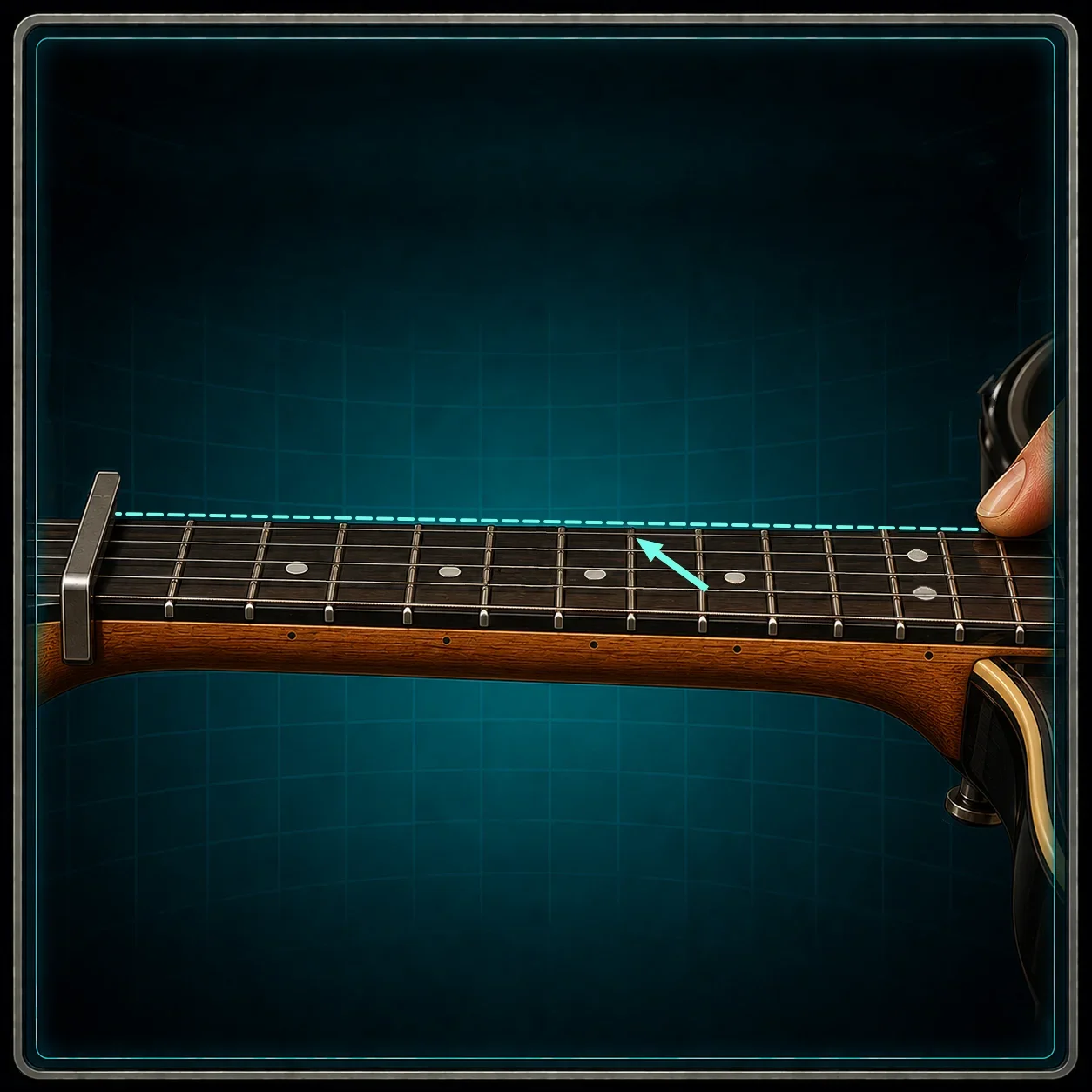
You can get a useful first reading without special tools. Tune the guitar to pitch, put a capo on the 1st fret, and hold the string down where the neck meets the body.
Now look at the gap around the 7th or 8th fret. If there is a tiny gap, that is usually a good sign. If the string is touching the fret, the neck may be too straight or back-bowed. If the gap is large enough to look obvious, there may be too much relief.
A thin guitar pick or business card can help as a rough reference. The goal here is not perfection — it is simply to see whether the neck is in the right neighbourhood.
What the results mean
Too little relief
If the string sits right on the frets or buzzes badly in the lower register, the neck may be too straight or back-bowed. In that case, the truss rod usually needs to be loosened slightly so the strings have room to vibrate.
Too much relief
If the strings feel high and stiff in the middle of the neck, the neck may have too much forward bow. In that case, the truss rod usually needs a small tightening to bring the neck back into a better shape.
| What you see | What it means | What to do |
|---|---|---|
| Tiny gap at 7th–8th fret | Relief is good | No adjustment needed |
| No gap — string touches fret | Too straight or back-bowed | Loosen truss rod slightly |
| Large visible gap | Too much relief | Tighten truss rod slightly |
Relief is measured under normal string tension, so tune first and measure second.
💡 Not sure if neck relief is actually the issue?
If your guitar feels off but you're not certain where the problem is, the Setup Assistant walks you through the full chain in the right order — starting at the neck.
How to adjust it
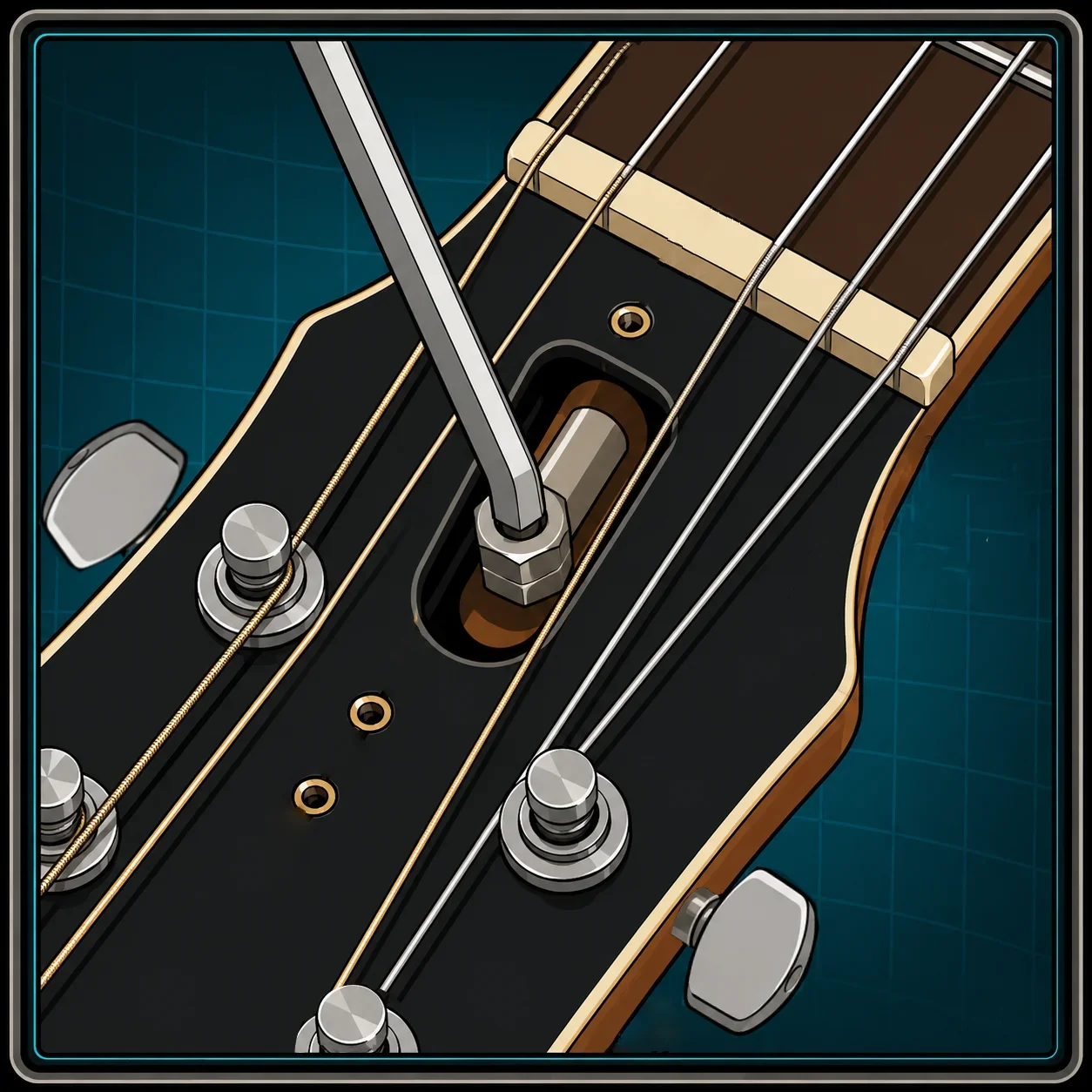
Before touching the truss rod, make sure the guitar is tuned to pitch. A neck should always be checked under normal string tension.
Use small adjustments only. A quarter turn is usually enough for one pass, and some guitars need even less. After each move, retune the guitar, let it settle, and check again.
A simple way to think about it
- Clockwise tightens the truss rod and reduces relief (less forward bow)
- Counterclockwise loosens it and adds relief (more forward bow)
- More relief helps if the neck is too straight and buzz shows up low on the neck
- Less relief helps if the neck is bowed forward and the action feels too high
- Small changes are always safer than big ones
- Always re-check before moving on to the next setup step
⚠ Know when to stop
If the truss rod feels stuck or unusually hard to turn, stop and do not force it. A stubborn truss rod is not the time to "just give it one more push". When in doubt, take the guitar to a qualified tech.
If the wrench suddenly feels wrong, stop. A stubborn truss rod is not the time to push harder.
Before you move on
Neck relief is only one part of a full setup. If the neck looks good but the guitar still feels off, the nut, action, or intonation may be the real issue.
That is why it helps to treat setup as a chain rather than a single fix. Get the neck right first, then move forward with the rest of the setup.
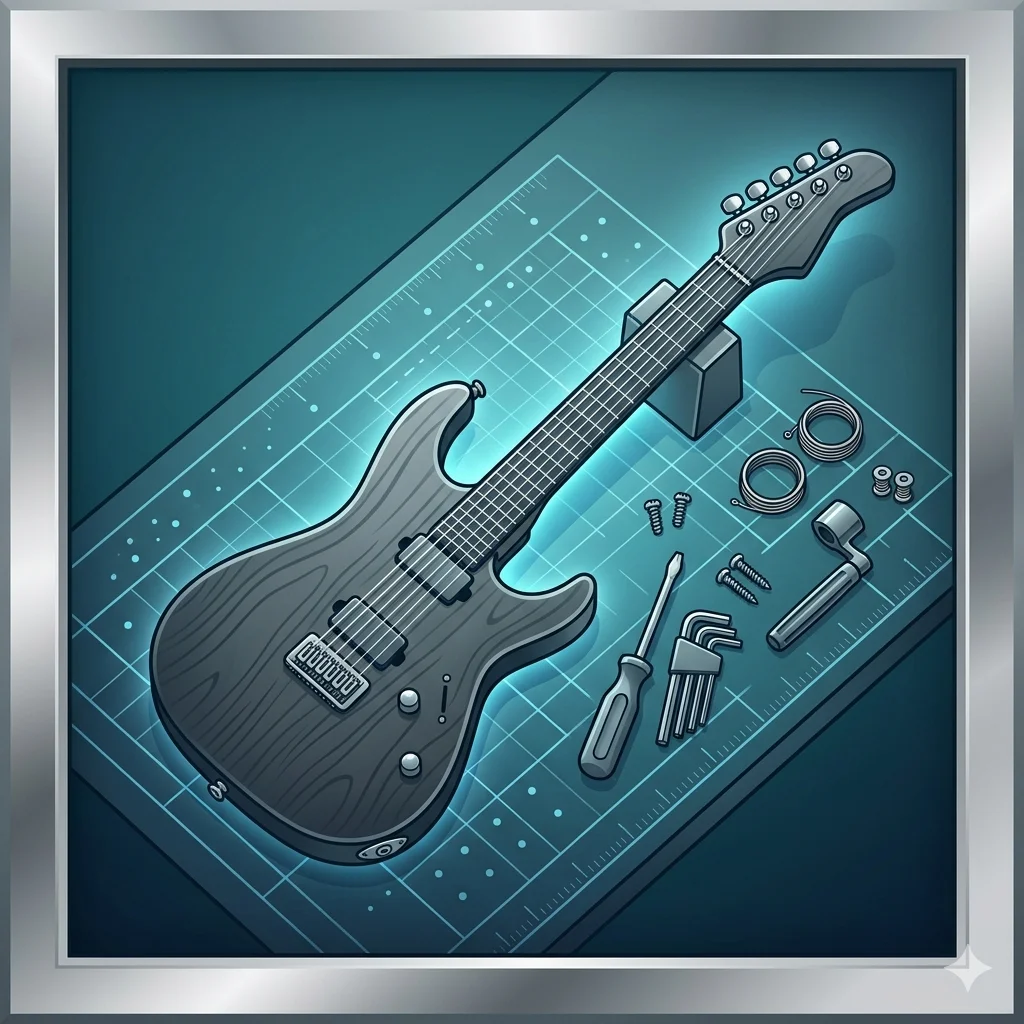
If you are unsure what your neck is telling you, the next step is not guessing harder. Use the Neck Relief Helper to get a clearer read on what the guitar likely needs.
Try the Neck Relief Helper →More of the Setup Chain
Neck relief questions, answered
Which way do I turn the truss rod to add relief?
Loosen it — counter-clockwise, as you're facing the nut. Tightening pulls the neck straighter and takes relief away. If you only remember one thing: loosen adds gap, tighten removes it.
Is neck relief different on a Strat than on a Les Paul?
The target is roughly the same either way — a small gap, not a big one. What changes is how the neck responds. Bolt-on necks like a Strat's tend to move a little more freely, while set necks often move slower and want more settling time between turns.
Do I need a special gauge to measure it?
No. A capo, your fretting hand, and a feeler gauge will get you there, and even a business card or a thin pick gives you a usable reference. Feeler gauges are nice if you like numbers, but plenty of good techs work by feel and sight.
How much should I turn at once, and how long do I wait?
A quarter turn is plenty. Give the neck time to settle — an hour is fine for most guitars, overnight is better if you're not in a rush. Wood moves slowly, and stacking turns before it settles is how people overshoot.
My relief keeps changing on its own. Is something wrong?
Probably not. Necks respond to humidity and to seasonal changes, and a heavier or lighter string set will shift relief too. If you find yourself adjusting every few weeks, look at where the guitar lives before you look at the truss rod.