How Often Should You Change Your Guitar Strings?
There is no universal string-change schedule. Here are the signs your strings give you, plus a realistic timeline based on how you play.

It is one of the most common questions every guitar player asks, and the answers can vary wildly. Some players change strings constantly, while others keep the same set on for months. That can make it hard to know what is actually right for your guitar.
The truth is that there is no single calendar rule that works for everyone. How often you should change your strings depends on how much you play, how your sweat affects the metal, and what kind of tone you want. The goal is to learn the signs instead of guessing.
What makes a string go dead
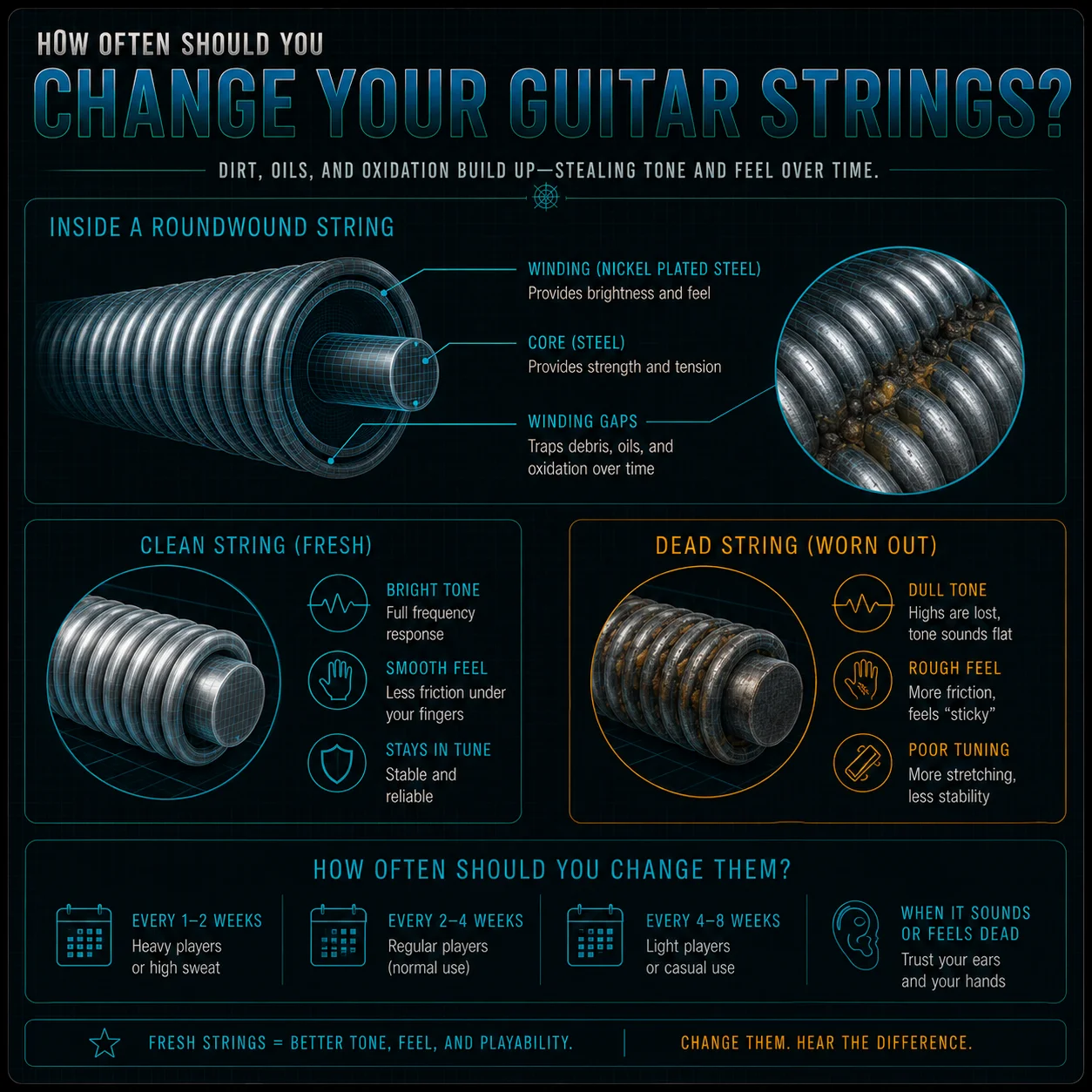
Strings do not just wear out in the abstract. Over time, they collect sweat, oil, dirt, and moisture inside the winding. That buildup changes how the string vibrates and slowly dulls the tone.
As that happens, the tone gets darker and less open. The surface can also feel rougher under your fingers, which makes slides and bends less comfortable. In some cases, the string can even start to sound less accurate up the neck.
Match the timeline to your playing
Your change schedule should match your usage. A player who practices once or twice a week does not need the same schedule as someone rehearsing and gigging constantly. The more you play, the faster the strings usually lose their sparkle.
Sweat chemistry also matters. Some players can keep strings usable for months, while others corrode them very quickly. Coated strings usually last longer, but even they still need to be replaced eventually.
Look for the warning signs
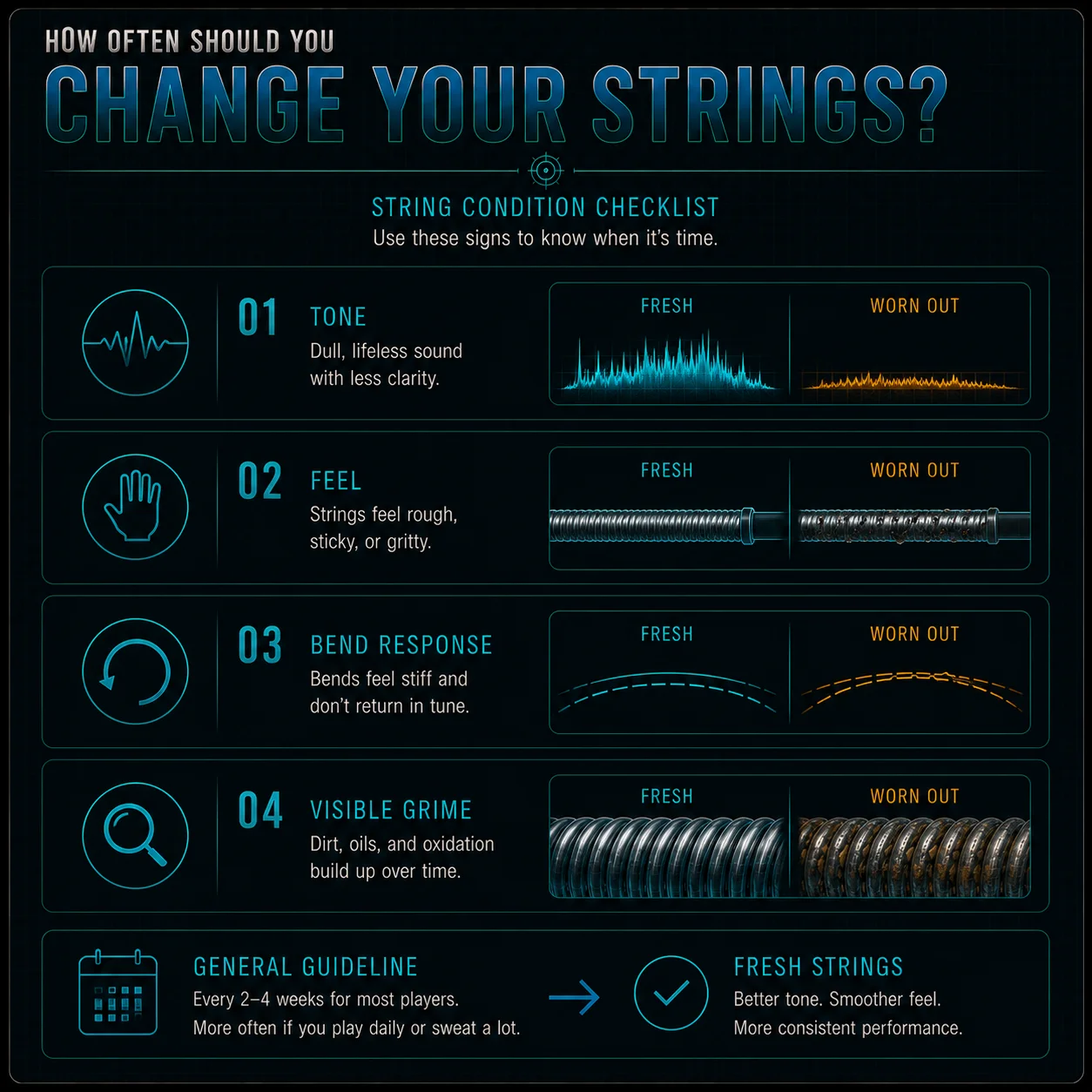
Instead of only watching the calendar, look at the strings themselves. If the surface feels rough, the tone sounds dull, or the string does not bend the way it used to, those are strong signs it is time for a change. A white cloth wipe can also show grime and oxidation quickly.
Another clue is intonation drift higher up the neck. If notes seem to go sour even when the open strings are fine, worn strings may be part of the problem. The more you notice these signs, the easier it becomes to change strings before they become a problem.
Choose the right type
Different string types wear differently. Coated strings usually last longer and stay brighter for more time. Uncoated strings often feel more direct and lively, but they may need more frequent replacement.
That is why string choice matters as much as replacement timing. If you want longer life and more stable tone, coated strings can be a smart option. If you want a familiar feel and bright response, classic uncoated sets still make sense.

How often you change strings depends a lot on which set you buy. Pick the option that matches how hard you are on strings.
Heads up: some links below are affiliate links. If you buy through them, Pocket Roady may earn a small commission at no extra cost to you. We only point to gear we'd reach for ourselves.
- Coated strings — a thin protective layer keeps them bright longer. Best if your hands are hard on strings or you'd rather change less often.
- Classic uncoated strings — more direct and lively under the fingers. The traditional choice — just plan to swap them a bit sooner.
- Multipack of your usual set — if you change often, buying a few sets at once is cheaper and means you're never caught without a spare.
Use the tracker
This is exactly where the String Life Tracker helps. Instead of trying to remember when you last changed your strings, you can log the install date, brand, gauge, and usage. That makes it much easier to know when a set is entering the dead-tone zone.
It also works well alongside the broader Guitar Care Hub. Once you track string age consistently, guitar maintenance becomes a lot more predictable. That means fewer surprises and better tone over time.
Tired of guessing when you last restrung? Log it once and let the tracker remember.
Open String Life Tracker →
Trust your ears and fingers over the calendar. A set that lasts one player a month might last another three. Watch for dull tone, a rough feel, and sour notes up the neck — those tell you more than any fixed schedule.
The Pocket Roady order
Here is the simplest workflow — start at the top and work your way down:
Watch for tone loss, rough feel, and intonation drift.
Match your string-change timing to how much you play.
Choose the right string type for your tone and durability goals.
Use the String Life Tracker to log usage and replacement dates.
Keep the Guitar Care Hub nearby for broader maintenance guidance.
That sequence keeps the topic calm and practical. String changes become much easier once you stop guessing and start tracking.

Where to go next
If you want your guitar to sound fresh and stay consistent, string changes are one of the simplest maintenance habits to get right. The trick is learning your own timing instead of following someone else's schedule.
Want an easier way to track string wear? Open the String Life Tracker to log your string brand, gauge, and install date, then use it alongside the Guitar Care Hub.