How to Pick Strings for Bright or Warm Tone
String material changes your guitar's tone more than most players expect. Here is how to choose strings for a brighter, warmer, or more balanced sound.

You have already chosen the right gauge and dialed in your setup, but the guitar still does not sound quite like you want. Maybe it feels too sharp and brittle, or maybe it sounds dark and cloudy. That is where string material starts to matter.
Different string alloys shape your tone in different ways. Some are naturally brighter and more cutting, while others sound warmer and smoother. Once you understand that tradeoff, it becomes much easier to choose strings that fit your instrument and your style.
Bright versus warm
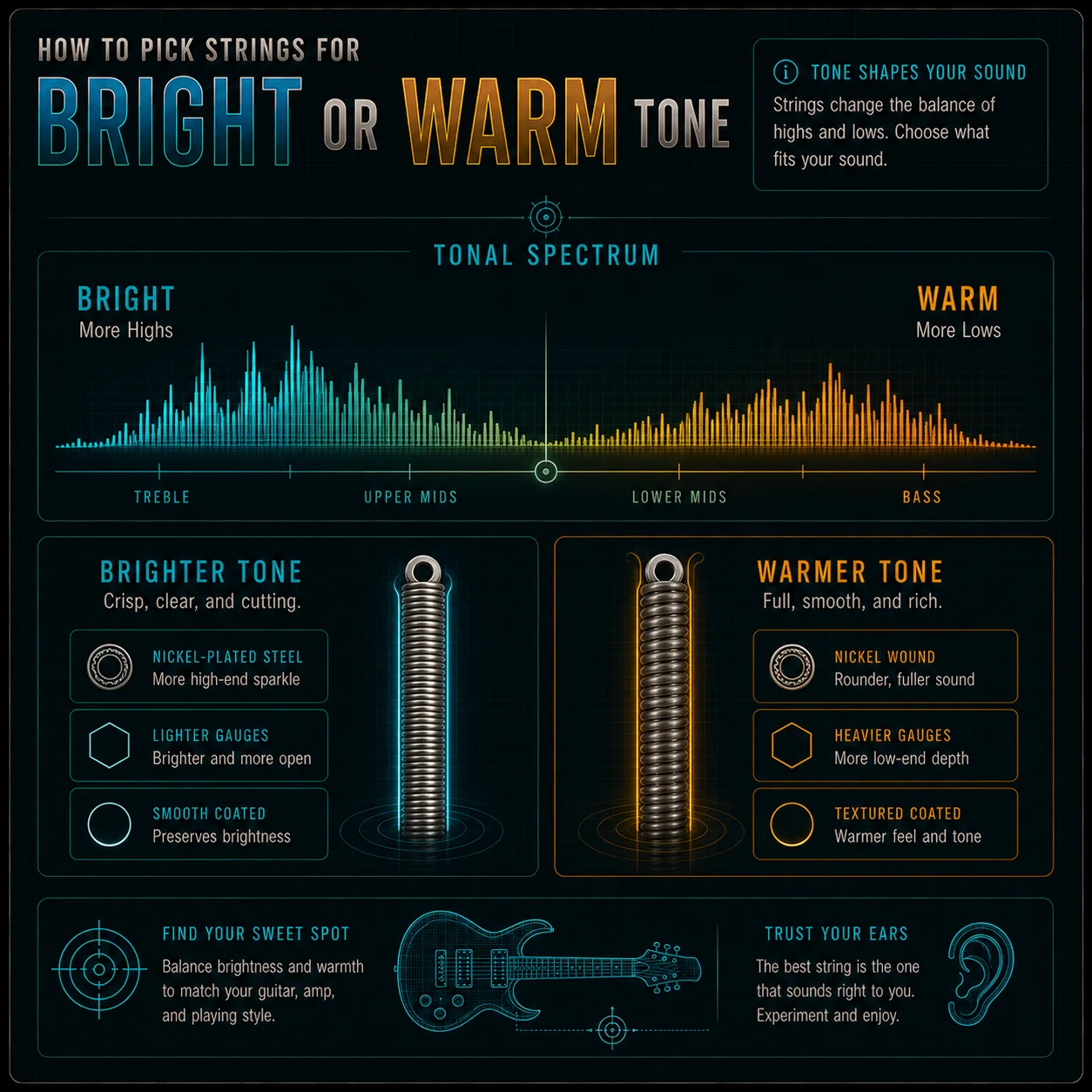
When players talk about bright strings, they usually mean strings that emphasize crisp highs and extra clarity. Warm strings usually lean more toward smooth mids and a softer top end. Neither one is universally better — they just serve different sounds.
A bright set can help a guitar cut through a dense mix. A warm set can help tame harshness or add a rounder, more vintage feel. The choice depends on what your guitar needs most.
Acoustic string alloys
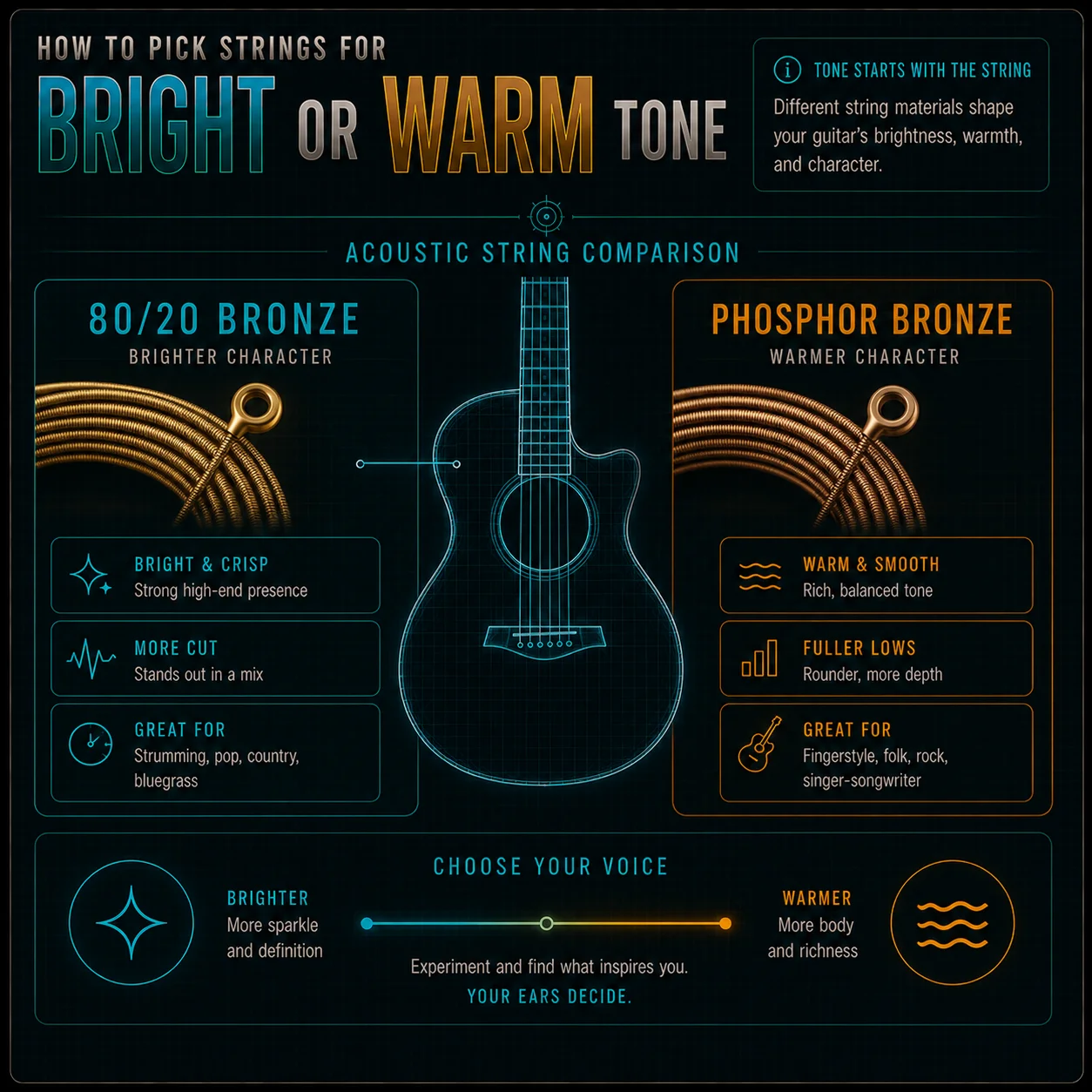
On acoustic guitar, string material changes the sound immediately. 80/20 bronze tends to sound brighter and more sparkling, with a clear top end. Phosphor bronze usually sounds a little warmer and more balanced, with a smoother midrange.
If your acoustic sounds too dark, a brighter alloy can add life and projection. If it feels too sharp, a warmer alloy can smooth things out. That makes alloy choice one of the easiest ways to shape an acoustic's voice.
Electric string alloys
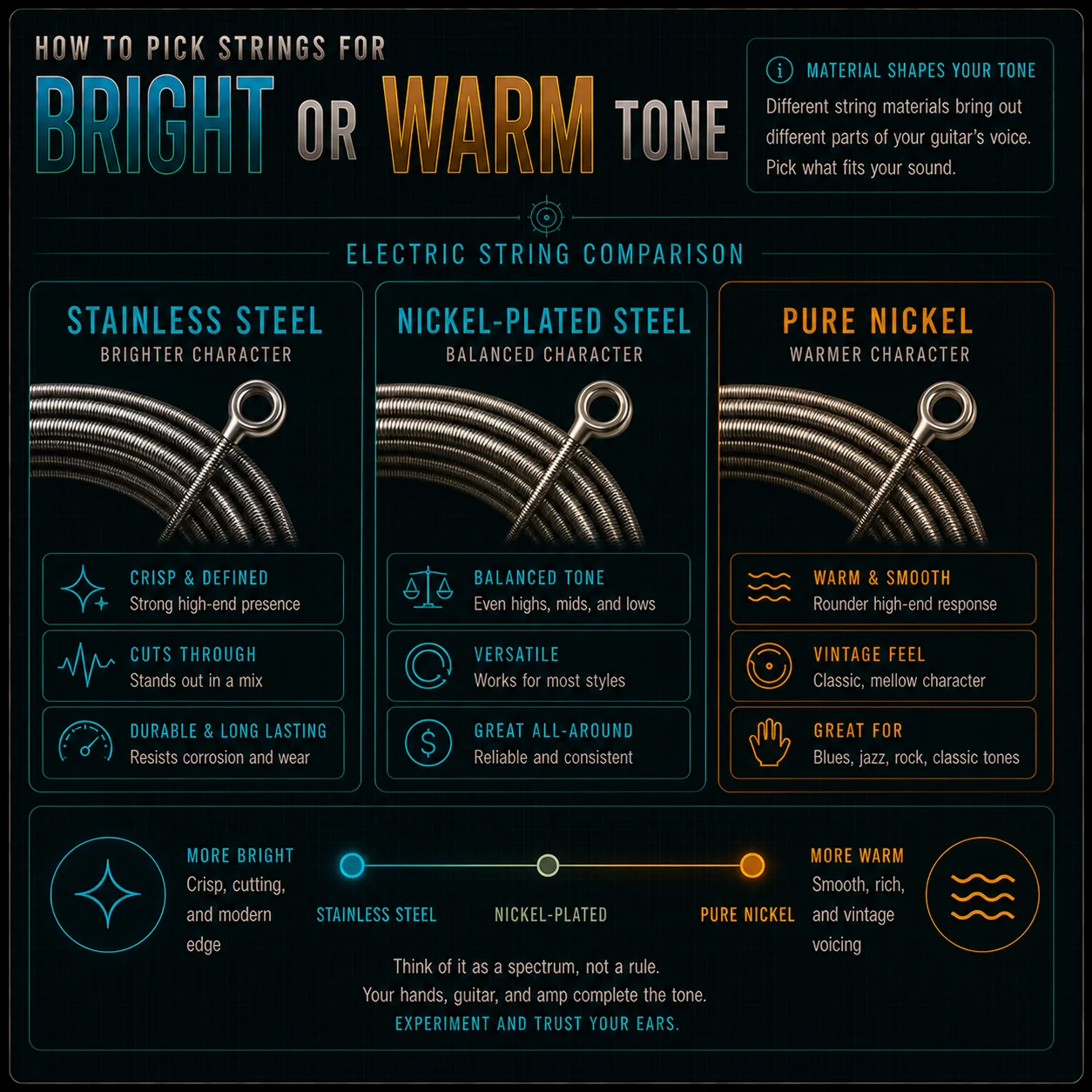
On electric guitar, the metal wrap interacts with the pickups and changes the signal your amp receives. Stainless steel usually gives a brighter, more aggressive response. Nickel-plated steel is more of a balanced standard. Pure nickel often leans warmer and rounder.
That means your string choice can help push the guitar toward more bite or more smoothness before you ever touch the amp settings. For players who want a more vintage, mellow feel, pure nickel is often a good fit. For players who want sharper cut and extra attack, brighter alloys can make sense.
If you want to nudge your guitar brighter or warmer, the alloy is the easiest lever. Match the set to the direction you want to move.
Heads up: some links below are affiliate links. If you buy through them, Pocket Roady may earn a small commission at no extra cost to you. We only point to gear we'd reach for ourselves.
- 80/20 bronze (acoustic) — brighter and sparkly up top. Reach for it if your acoustic sounds dark or boxy.
- Phosphor bronze (acoustic) — warmer and more balanced, with a smoother midrange. Good if your acoustic sounds harsh.
- Pure nickel (electric) — rounder, warmer, vintage feel. The mellow option before you touch the amp.
- Stainless steel (electric) — brighter with extra bite and attack. Reach for it when you want to cut through.
Match strings to your guitar
A bright guitar does not always need brighter strings. Sometimes it needs the opposite so the tone stays balanced. Likewise, a darker guitar can come alive with a brighter alloy.
The goal is not to make every guitar sound the same. It is to pick strings that move the instrument closer to the sound you want. That is why alloy choice should be part of the bigger tone picture, not just an afterthought.
Match the strings to the guitar, not the trend. Listen to what your instrument already does, then pick the alloy that nudges it toward the sound in your head. A bright guitar paired with bright strings can tip into harsh — sometimes the warmer set is what balances it out.
Build the full string profile
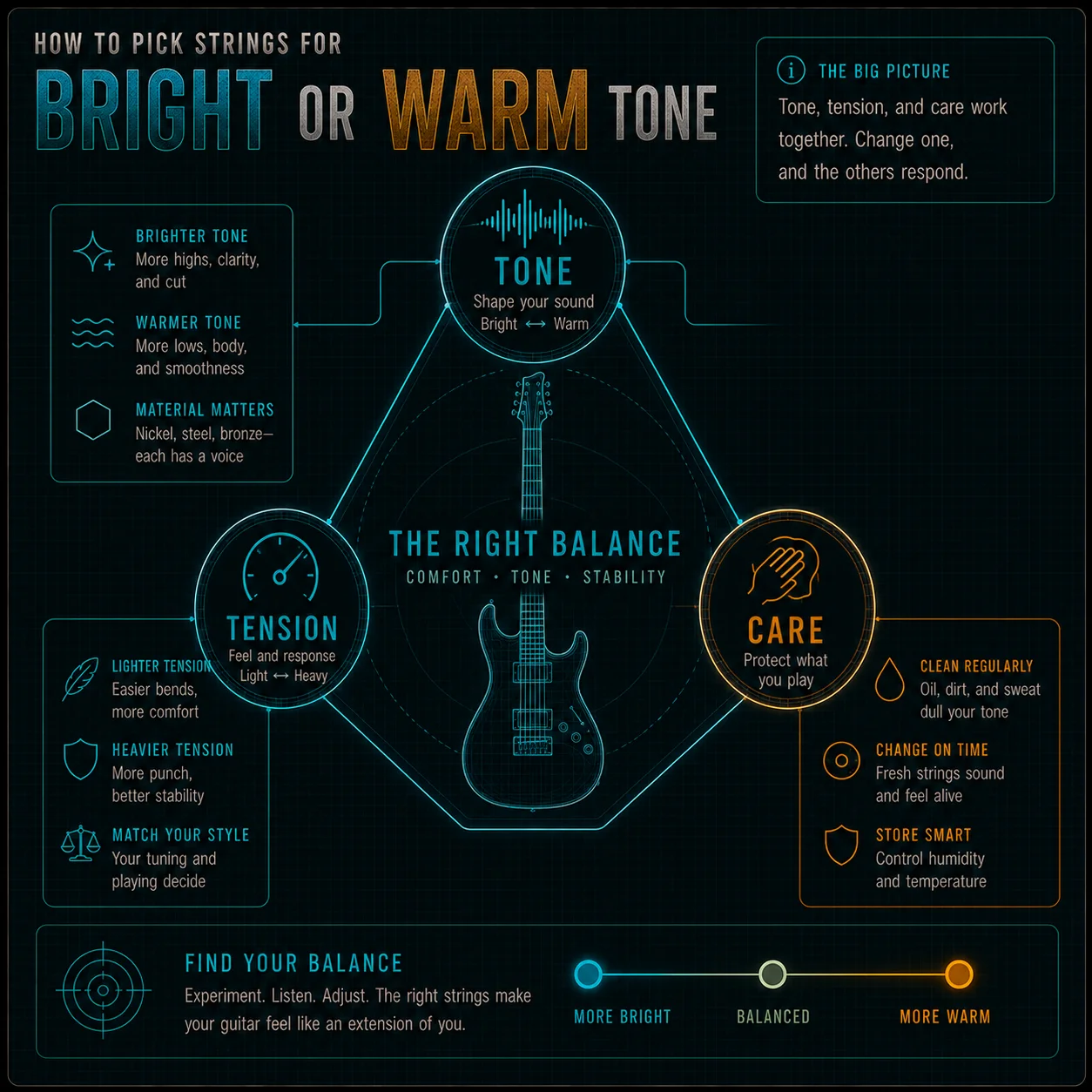
Tone does not live in a vacuum. Alloy, gauge, tension, and setup all work together. If you want a warmer, fuller string set, it is worth checking how the change affects feel and neck tension before you commit.
That is where the String Tension Calculator fits in. If you want a broader maintenance reference, the Guitar Care Hub is the natural companion. Together, they help you make string decisions with more confidence.
Switching alloys or gauge? Check the tension shift first so the feel stays right.
Open String Tension Calculator →The Pocket Roady order
Here is the simplest workflow — start at the top and work your way down:
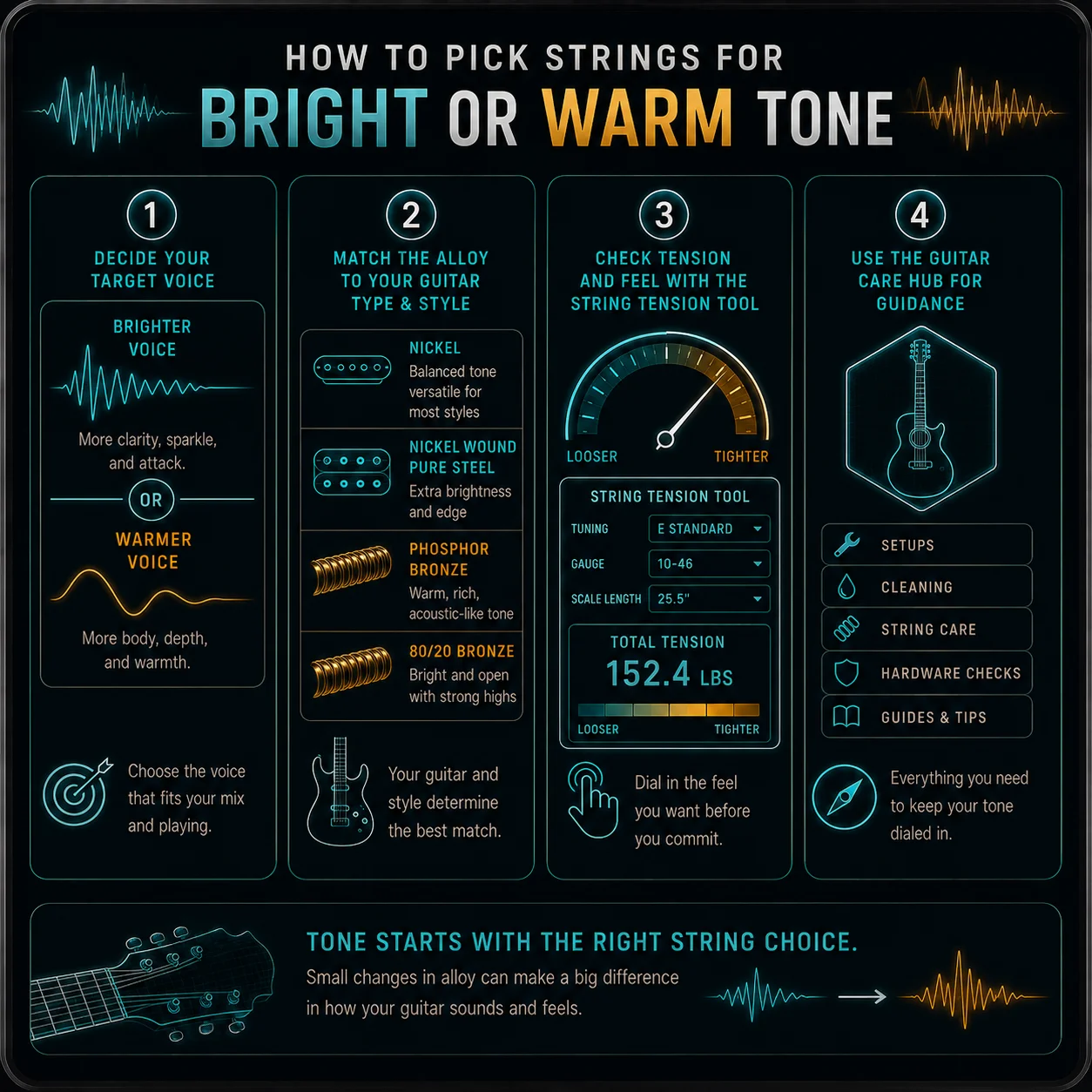
Decide whether you want a brighter or warmer voice.
Match the alloy to your guitar type and style.
Check tension and feel with the String Tension Calculator.
Use the Guitar Care Hub for broader string care and maintenance.
That sequence keeps the topic calm and practical. Once you match the string material to the sound in your head, the guitar usually feels more musical right away.
Where to go next
If you want your guitar to sound brighter or warmer, string material is one of the simplest and most effective places to start. It shapes the tone before the amp or pedals ever get involved.
Want to match tone, gauge, and feel together? Start with the Guitar Care Hub, then compare your string choices against the String Tension Calculator before you switch.