How to Choose the Right String Gauge for Your Style
String gauge changes how your guitar feels, bends, and stays in tune. Here is how to choose the right set for your style and tuning.

If you have ever stood in a guitar shop staring at a wall of string packs, you know how confusing gauge choices can feel. Every set looks a little different, the numbers seem small, and the names often sound more like marketing than music. But those tiny differences matter a lot.
String gauge affects how your guitar bends, how stiff it feels, how aggressively it responds, and how stable it stays in tune. The right set depends on your style, your tuning, and how much resistance you want under your fingers. Once you understand the tradeoff, choosing strings gets much easier.
What string gauge means
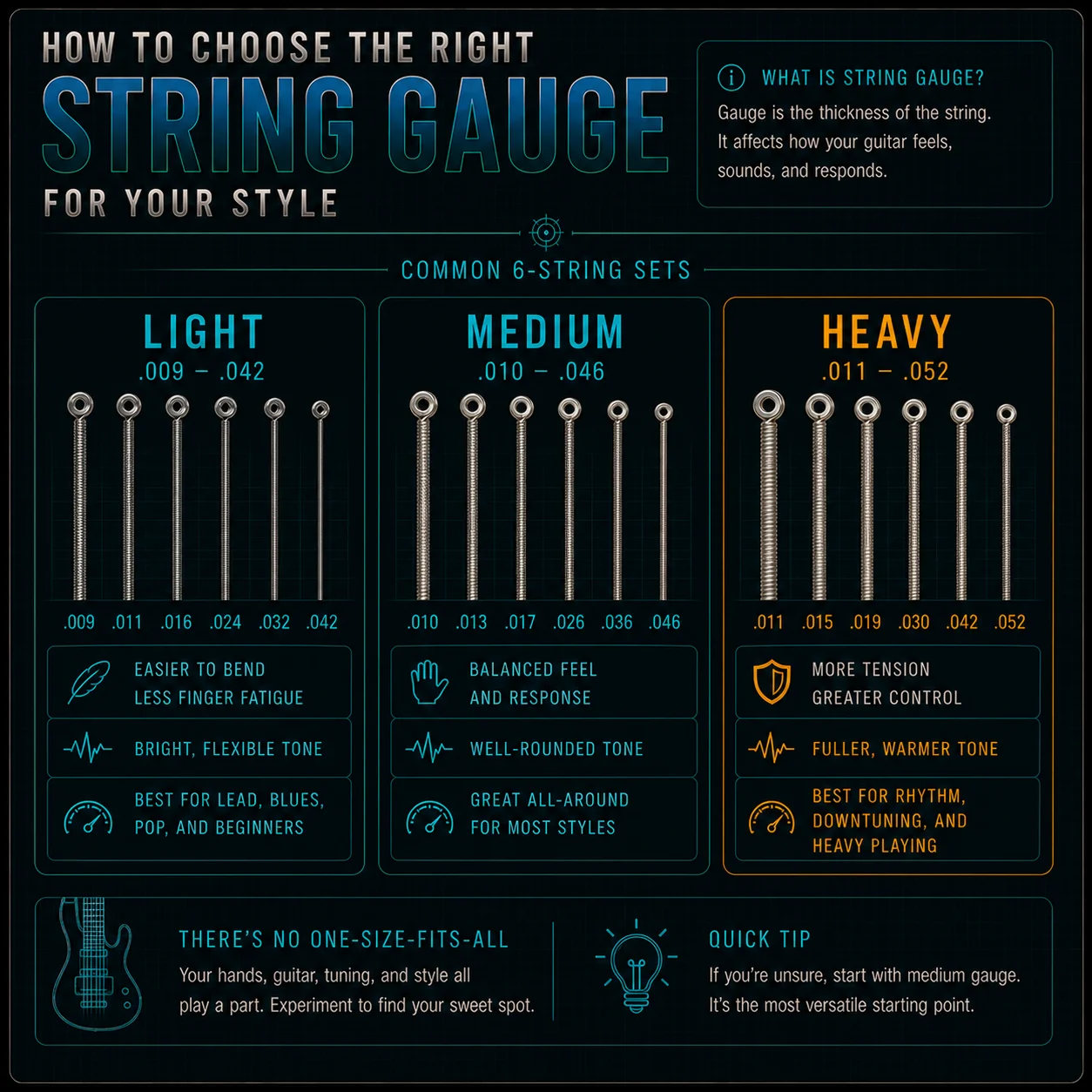
When players talk about "9s" or "10s," they are usually talking about the thickness of the thinnest string in the set. That number gives you a quick idea of how light or heavy the whole pack feels. Lighter sets bend more easily, while heavier sets feel stiffer and more resistant.
This changes more than just finger comfort. Gauge also affects tone, tuning stability, and how the strings behave under heavy picking. That is why the same guitar can feel completely different with a different set of strings.
Light versus heavy
Light gauges are easy to press and bend, which makes them a great fit for expressive lead playing. They feel quick under the fingers and can make fast passages feel less tiring. The tradeoff is that they may feel looser and can lose some firmness in lower tunings.
Heavier gauges give you more resistance and a firmer feel. They can sound punchier and hold up better in lower tunings, but they ask more from your fretting hand. The best choice depends on whether you want flexibility or firmness to be the priority.
Match gauge to style
Your style and tuning are the biggest clues. Players who stay in standard tuning and want easy bends often do well with lighter sets. Players who use drop tunings or heavier rhythm playing often prefer something thicker and stiffer.
There is no perfect gauge for everyone. The goal is to find the balance between comfort, tone, and tuning stability. Once that balance is right, the guitar feels more natural right away.
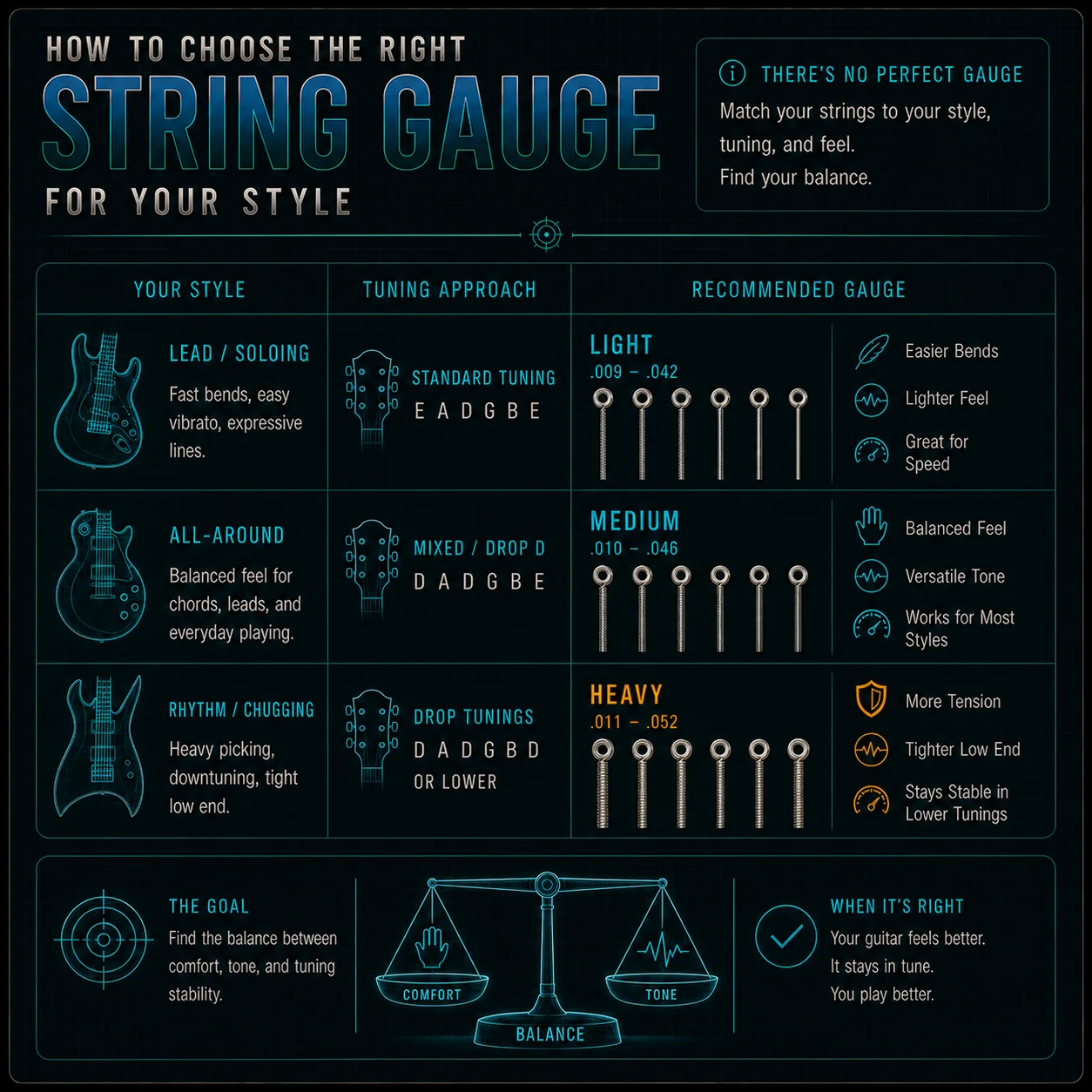
Gauge is a feel choice. Start with the tier that matches your style and tuning, then fine-tune from there.
Heads up: some links below are affiliate links. If you buy through them, Pocket Roady may earn a small commission at no extra cost to you. We only point to gear we'd reach for ourselves.
- Light (.009–.042, electric) — easy bends and fast feel. A great fit for lead playing in standard tuning.
- Regular (.010–.046, electric) — the balanced all-rounder. If you're unsure, this is the safe place to start.
- Heavy (.011–.052, electric) — firmer feel that holds up in drop tunings and heavier rhythm.
- Acoustic medium (.012–.053) — fuller body and more volume for strumming, if your acoustic feels thin on lights.
Use the tension tool
This is where the String Tension Calculator becomes useful. String gauge is not just about feel — it also changes physical tension on the neck. If you move from a light set to a heavier one, the guitar may react differently enough to affect setup and action.
The tool helps you compare those changes before you buy. That way, you can choose a string set with a clearer sense of how it will feel and how it may affect your instrument. It is a much better way to choose than guessing from the package label alone.
Eyeing a different gauge? See the tension shift before you commit.
Open String Tension Calculator →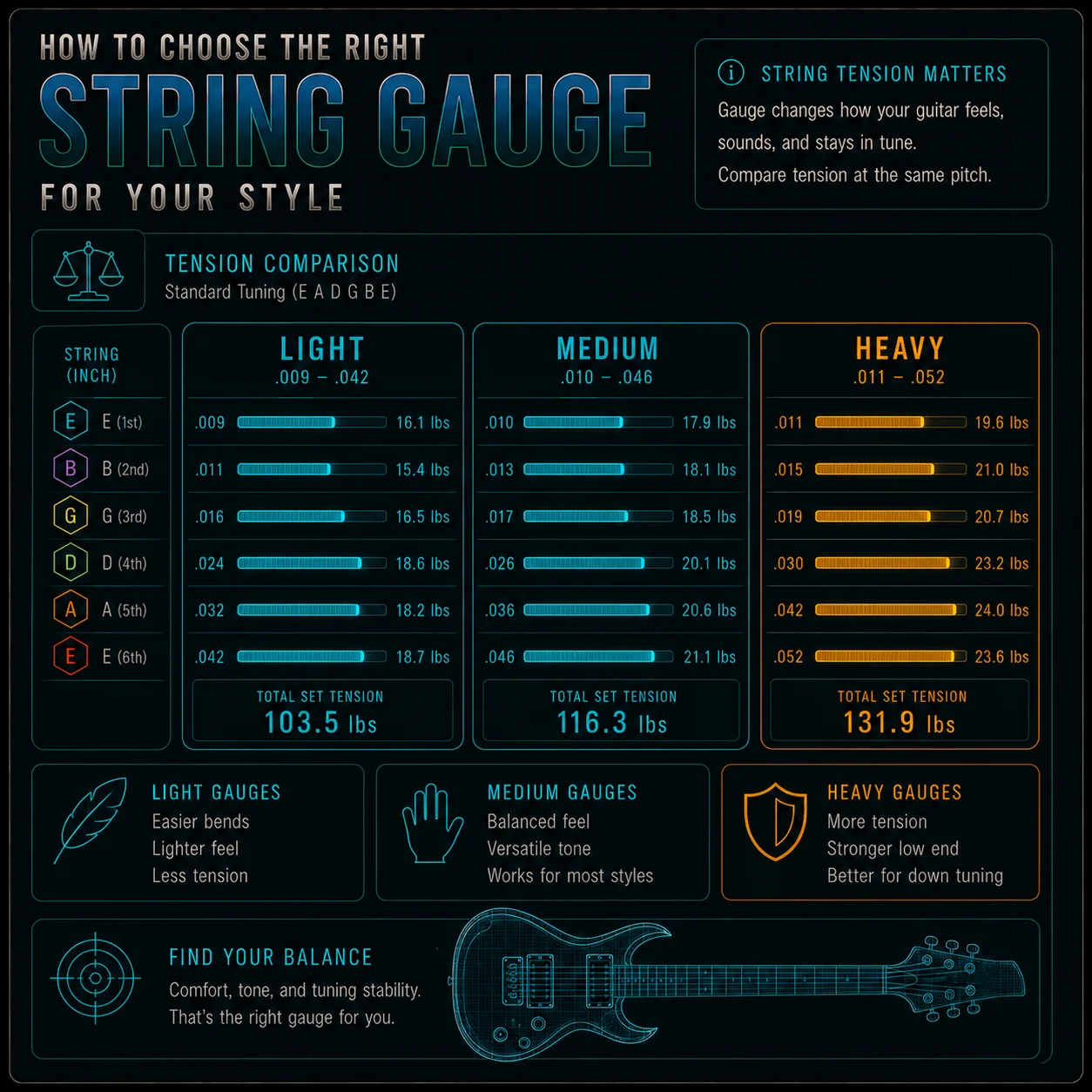
Jumping more than one tier? Plan for a quick setup. A big gauge change shifts neck tension, which can nudge your action and intonation. It's nothing to worry about — just check the relief and tuning after the swap so the guitar still plays the way you like.
Use the hub
This guide works best as part of the larger strings cluster. After deciding on gauge, it makes sense to check broader string maintenance, replacement timing, and care advice in the Guitar Care Hub. That keeps you moving naturally through the related topics.
When gauge, lifespan, and maintenance all connect, the whole decision becomes easier. Instead of treating each string choice as a separate problem, you get a simple system to follow.
The Pocket Roady order
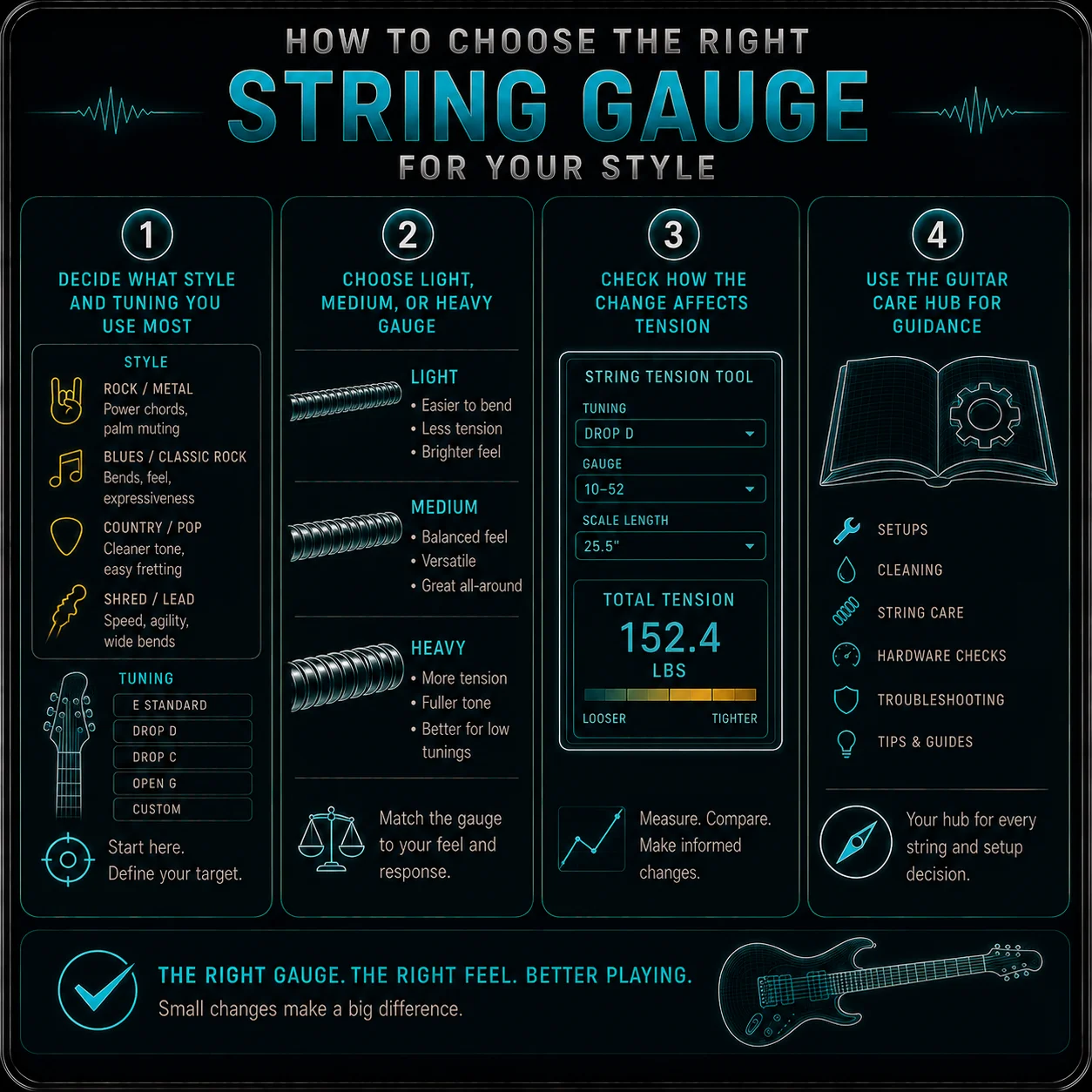
Here is the simplest workflow — start at the top and work your way down:
Decide what style and tuning you use most.
Choose light, medium, or heavy gauge based on feel and response.
Check how the change affects tension with the String Tension Calculator.
Use the Guitar Care Hub for broader string and maintenance guidance.
That sequence keeps the topic calm and practical. Once you match the gauge to your style, the guitar usually feels more predictable and easier to play.
Where to go next
If you want strings that feel right under your hands, gauge is one of the most important choices you can make. It affects bending, tone, tuning stability, and overall comfort.
Want to compare gauges before you buy? Open the String Tension Calculator to see how different sets affect feel and pull, then check the Guitar Care Hub for more maintenance guidance.