How to Keep an Acoustic Guitar Healthy Year-Round
Acoustic guitars need stable humidity to stay healthy. Here is how to protect the wood, avoid climate damage, and keep your instrument in shape all year.
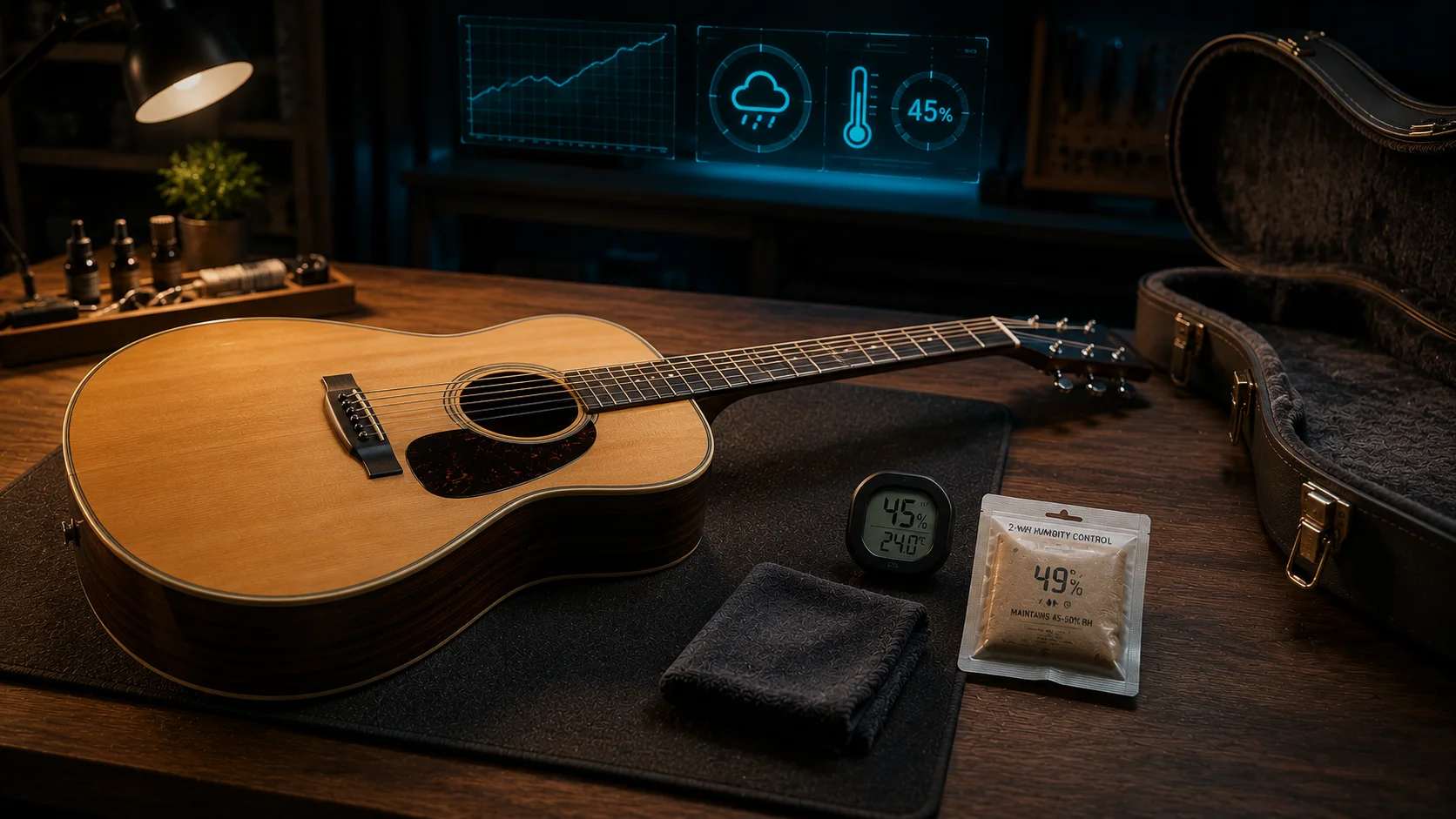
Acoustic guitars are living, breathing instruments. Because they are made from thin pieces of solid tonewood, they are much more sensitive to the environment than most players realize. When humidity swings too far in either direction, the wood can shrink, swell, or even crack.
That is why year-round climate care matters. An acoustic guitar does best when it stays in a stable humidity range instead of bouncing through seasonal extremes. Once you understand how moisture affects the wood, protecting the instrument becomes much easier.
Why humidity matters
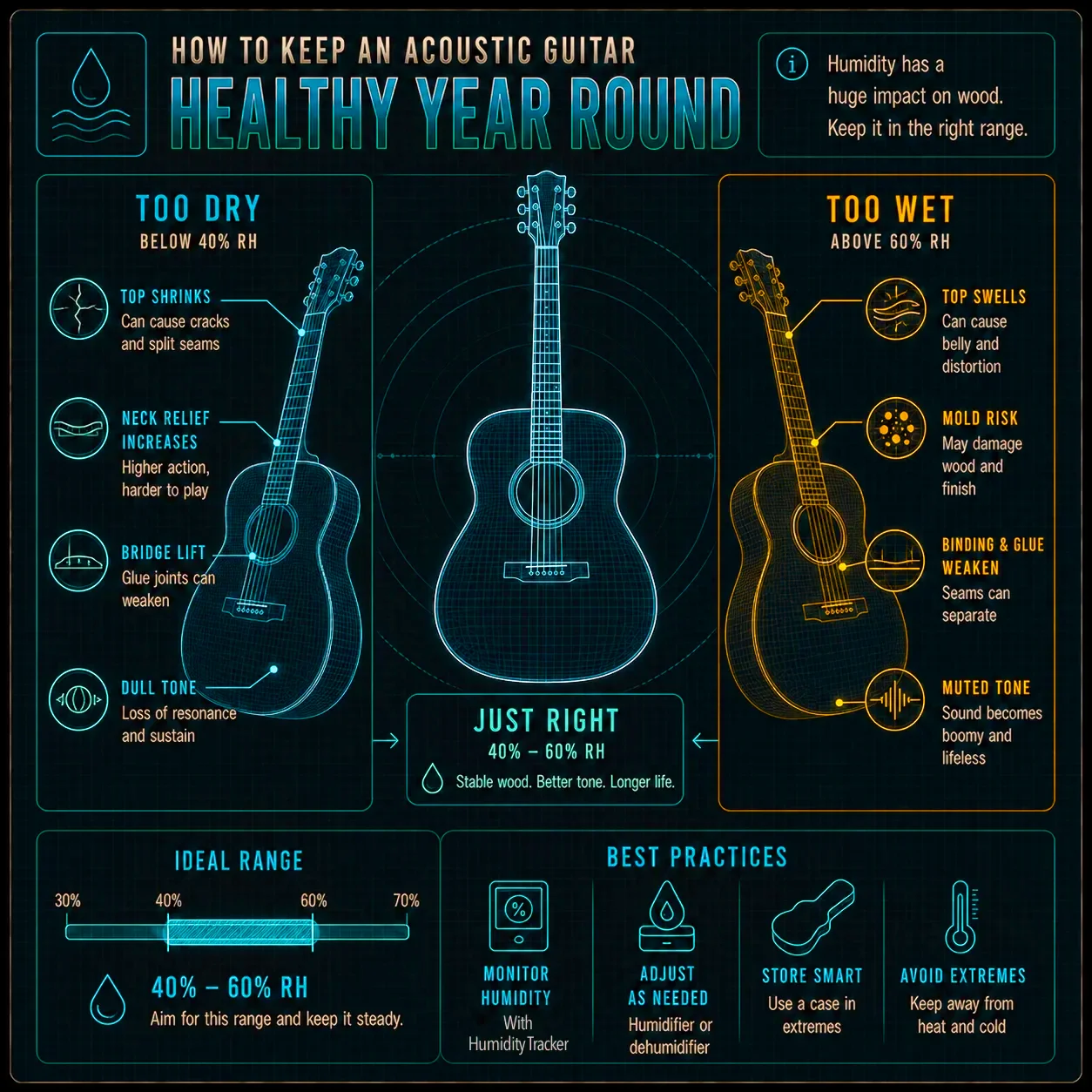
Wood moves with the air around it. In dry conditions, it loses moisture and contracts. In humid conditions, it absorbs moisture and expands. Both extremes can create real problems for the guitar's body, neck, and top.
When the guitar gets too dry, cracks and buzzing can appear. When it gets too wet, the top can swell and the action can rise. Keeping the humidity stable is one of the best long-term ways to protect an acoustic instrument.
Keep it in the case
One of the best things you can do for an acoustic guitar is store it in its hard case when you are not playing it. A case gives you a smaller, more controllable environment than an open room. That makes humidity management much easier.
An open stand might be convenient, but it leaves the guitar exposed to whatever the room is doing. If you want the instrument to stay healthier across the seasons, the case is usually the safer home. That simple habit can prevent a lot of problems later.

Use humidifiers wisely
In dry weather, a guitar humidifier can help keep the wood from losing too much moisture. In very humid conditions, a case-based humidity system can help stabilize the environment. The goal is not to soak the guitar — it is to keep the wood comfortable.
Different humidifiers serve different needs, so it helps to match the product to the situation. A soundhole humidifier, a two-way case pack, or a monitor-humidifier combo can all make sense depending on how you store and play your instrument. That gives you more control across the year.
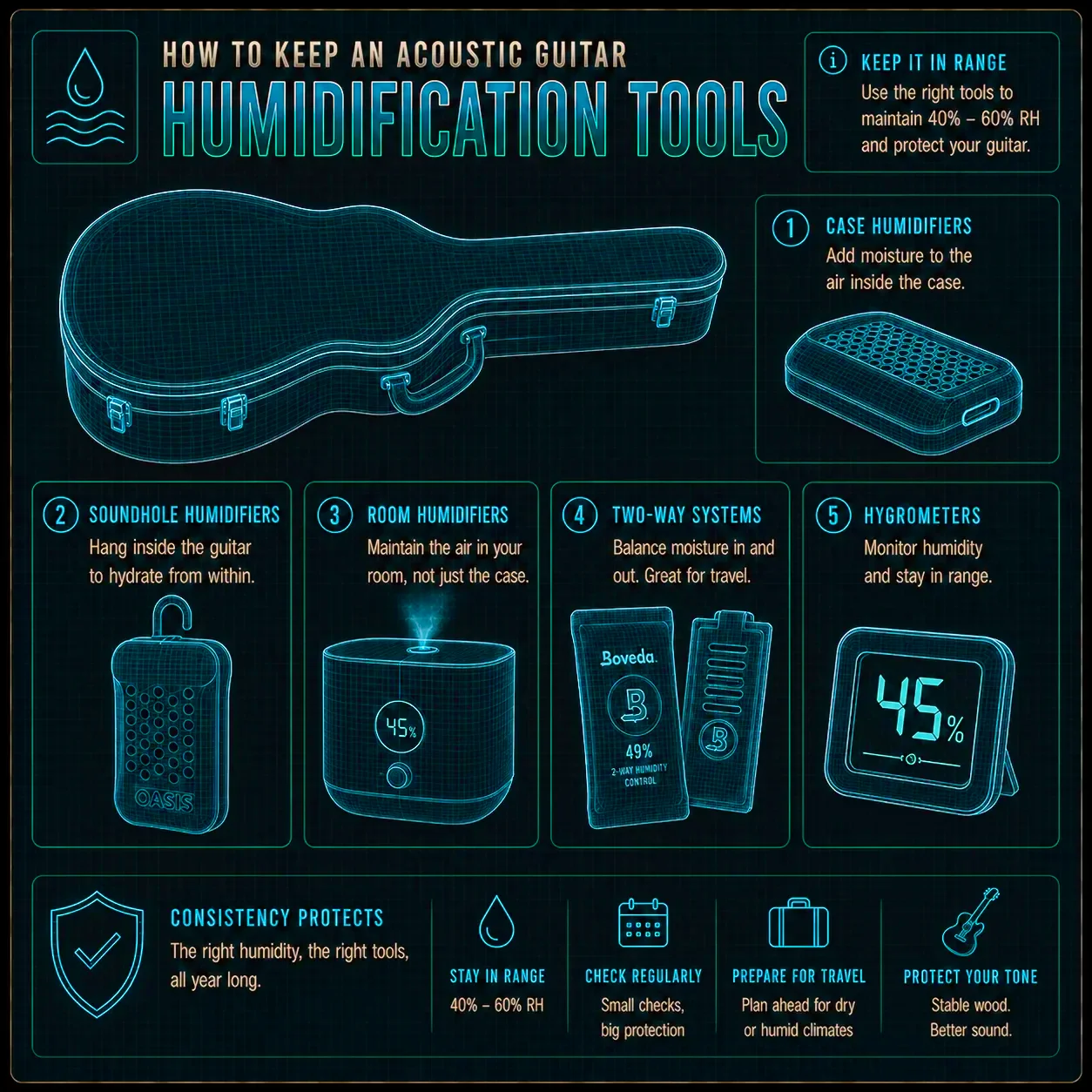
Climate care is about measuring first, then adjusting. These cover both the reading and the fix, in dry and humid seasons.
Heads up: some links below are affiliate links. If you buy through them, Pocket Roady may earn a small commission at no extra cost to you. We only point to gear we'd reach for ourselves.
- Soundhole humidifier — adds moisture in dry winter months. Sits in the soundhole and slowly releases water so the top doesn't dry out.
- Two-way humidity packs — auto-balance moisture in the case, adding or absorbing as needed. Set-and-forget protection in both directions.
- Digital hygrometer — so you're measuring instead of guessing. Knowing the actual reading is what makes the rest of this work.
- Hardshell case — the controllable environment everything else sits inside. If your acoustic lives on a stand, this is the upgrade that matters most.
Watch for climate warning signs
If the guitar starts buzzing more than usual, feels unusually stiff, or shows visible top movement, the environment may be the issue. These are often early signs that humidity has drifted too far. Catching them early matters.
A simple habit is to check the guitar and the room regularly instead of waiting for damage to show up. The more you notice small changes, the less likely you are to run into major repair problems. That is what makes climate care so valuable.

Measure before you add moisture. It's easy to over-humidify chasing a dry-season problem and end up too wet. A cheap hygrometer takes the guesswork out — aim for a stable middle range and adjust slowly rather than reacting to one bad reading.
Use the tracker
This is exactly where the Humidity Tracker helps. Instead of guessing whether the room is too dry or too wet, you can log readings and keep an eye on trends over time. That makes climate care much less reactive.
The Guitar Care Hub fits naturally here too. It connects humidity, storage, cleaning, and the rest of your maintenance routine into one place. That keeps your acoustic care organized through every season.
Want to spot humidity trends before they cause damage? Log your readings over time.
Open Humidity Tracker →The Pocket Roady order
Here is the simplest workflow — start at the top and work your way down:
Keep the guitar in its case when you are not playing it.
Use a humidifier or humidity-control system as needed.
Watch for dry or wet warning signs.
Use the Humidity Tracker to log readings.
Keep the Guitar Care Hub nearby for broader maintenance guidance.
That sequence keeps the topic calm and practical. A stable climate is one of the easiest ways to keep an acoustic guitar healthy for the long term.

Where to go next
If you want your acoustic guitar to stay healthy year-round, humidity is the biggest thing to watch. Stable storage, the right humidifiers, and regular tracking make a huge difference.
Want an easier way to track climate conditions? Open the Humidity Tracker to log room and case readings, then use the Guitar Care Hub for the bigger maintenance picture.