Guitar Care Kit: What You Actually Need (and What You Don't)
Most guitar care kits are overbuilt. Here are the few tools that actually matter, what to skip, and how to keep your instrument clean and healthy without wasting money on fluff.
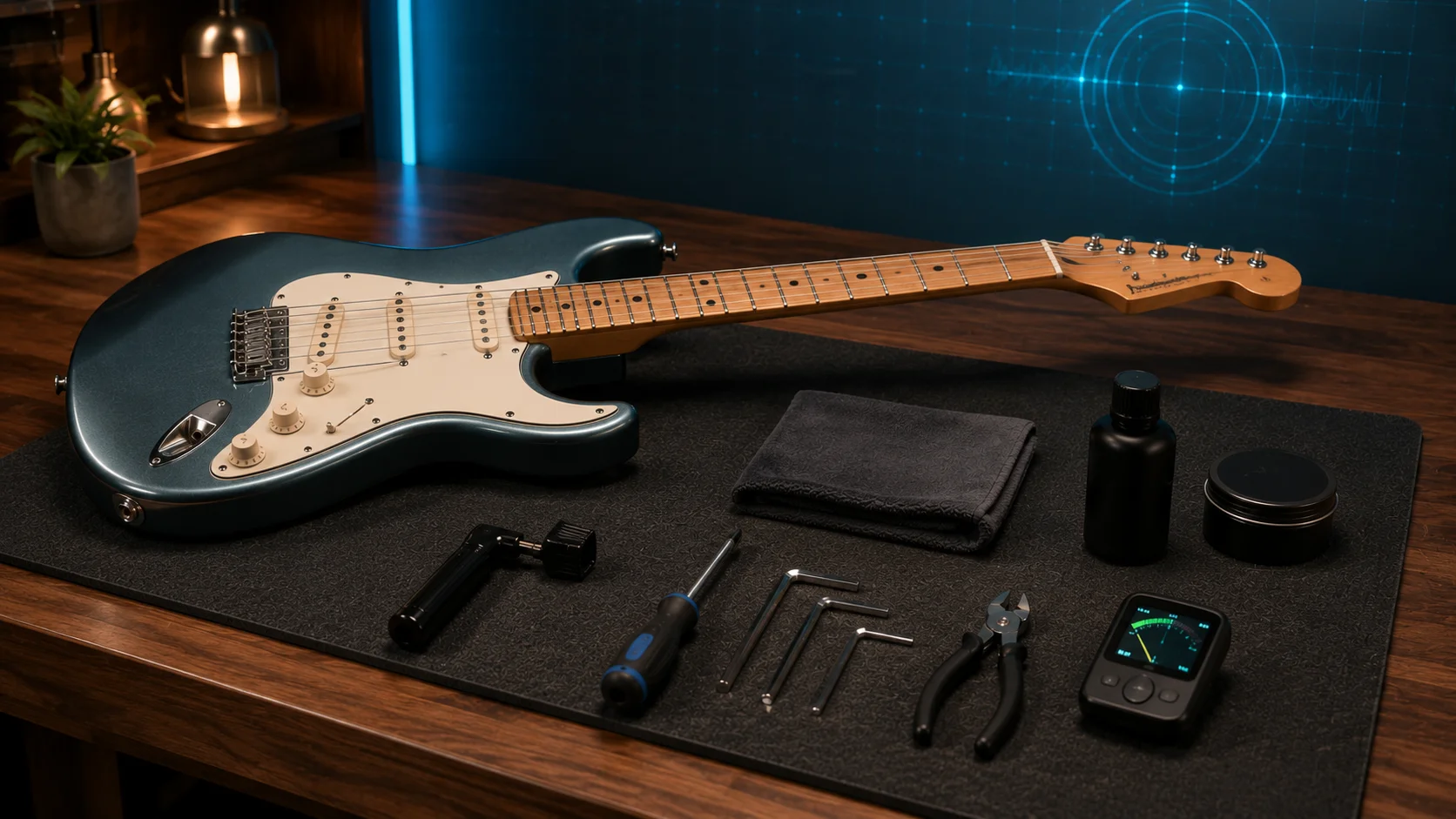
Walk into any guitar shop or browse online and you will find far more guitar care products than most players actually need. There are polishes, conditioners, string wipes, lubricants, buffers, sprays, and deluxe bundles that promise to solve every maintenance problem at once. In reality, most guitars do not need that much.
A good care kit should be simple, safe, and useful. The best tools are the ones that help you clean the instrument, protect the finish, change strings, and keep the guitar playing well. Everything else is optional at best and unnecessary at worst.
What you actually need
A practical guitar care kit usually comes down to a few core items. You want something safe for the body, something safe for the fretboard, a reliable restringing tool, and a good microfiber cloth. Those basics cover most routine maintenance.
If you play regularly, these are the items that will get used again and again. They are simple, but they solve real problems. That is what makes them worth buying.
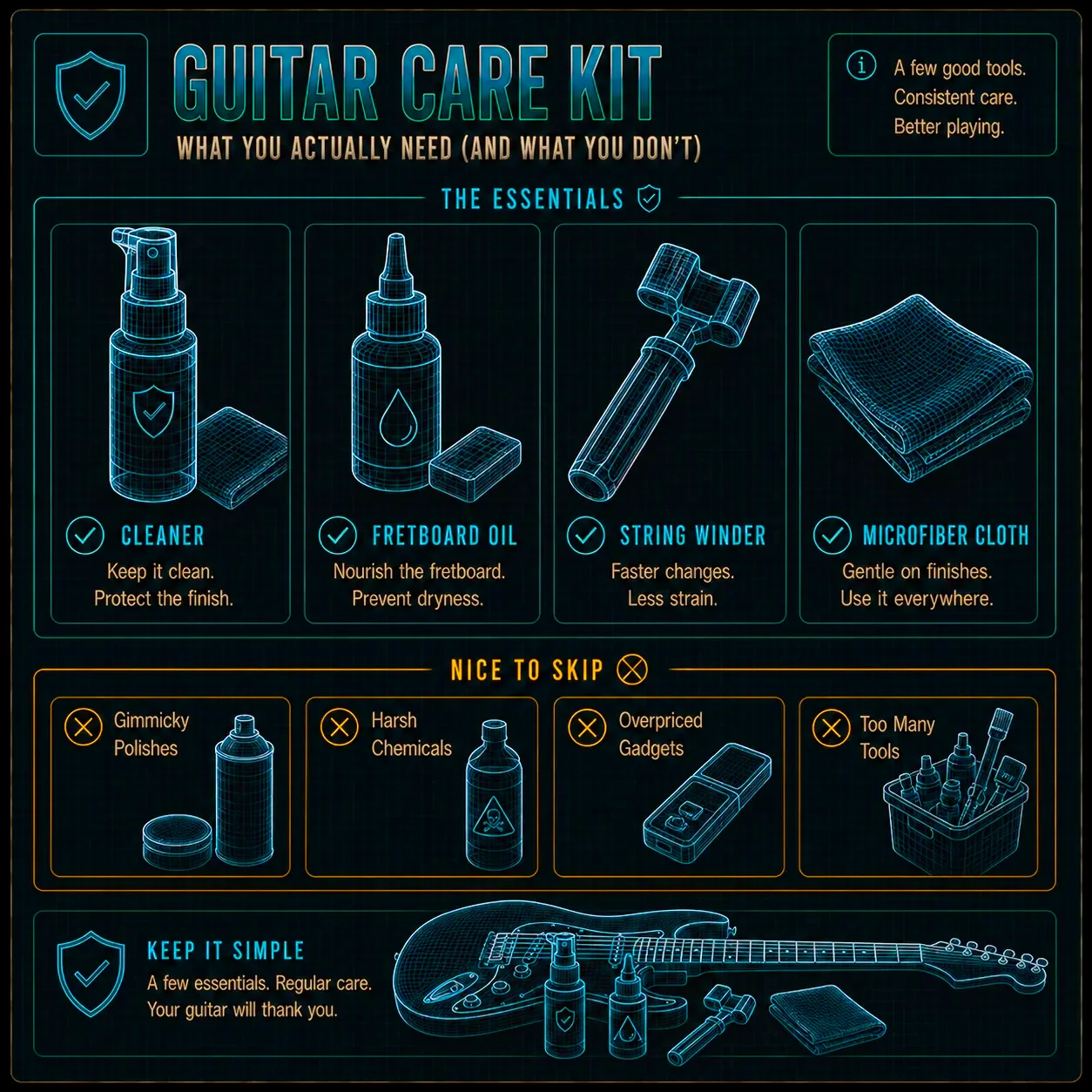
Body cleaner
A good body cleaner helps remove sweat, dust, and grime without harming the finish. That matters because the wrong cleaner can leave residue or damage the clear coat. For most players, a guitar-safe polish or cleaner is enough.
You do not need anything overly aggressive for routine maintenance. If the guitar just needs fingerprints and light buildup removed, a safe body cleaner does the job. The goal is maintenance, not restoration.
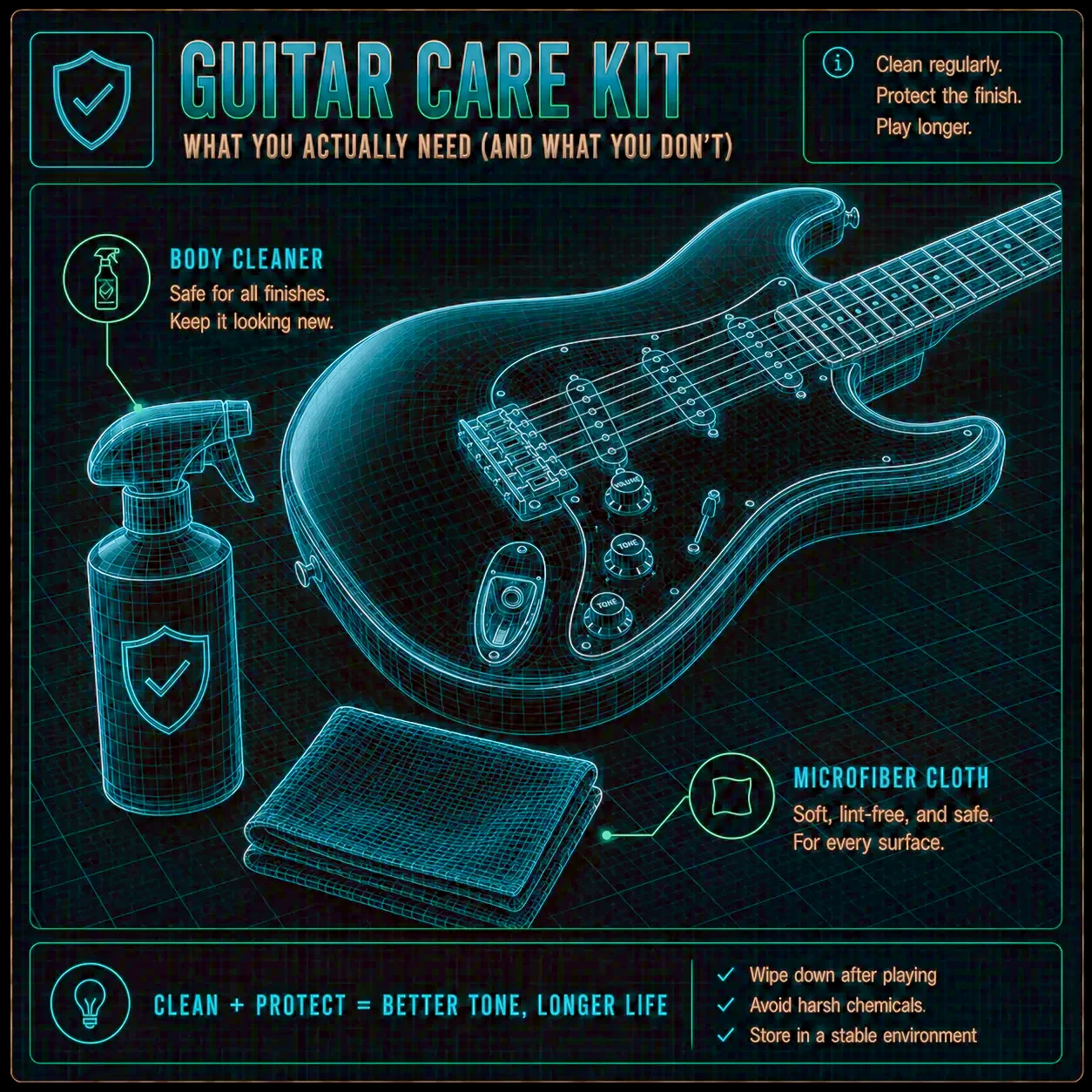
Fretboard hydrator
Unfinished fretboards need the right kind of care too. A safe fretboard conditioner or hydrator helps keep the wood from drying out and looking neglected. That matters most for woods like rosewood or ebony.
This is not a product you need to use constantly or in heavy amounts. A little goes a long way. The point is to keep the wood healthy, not saturated.

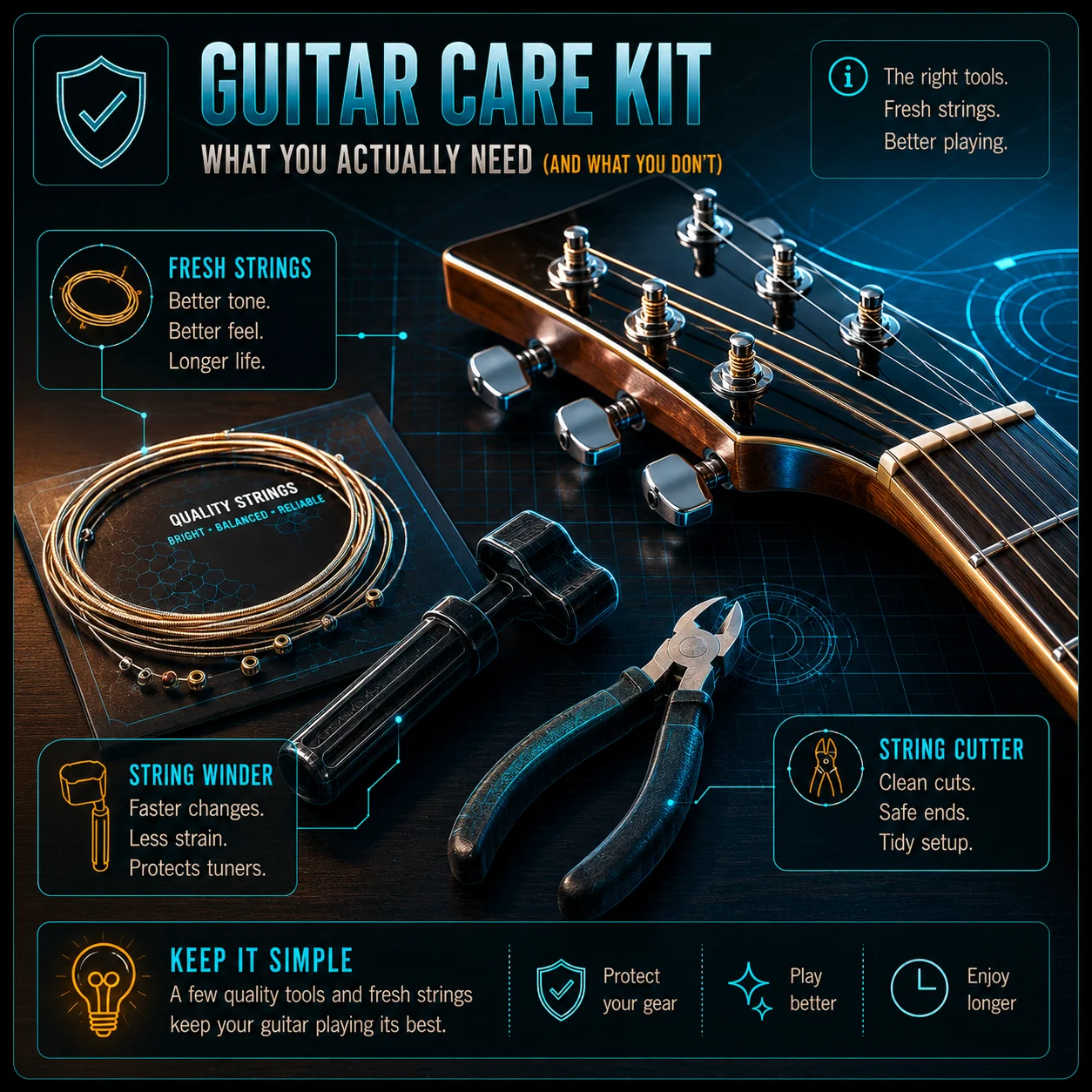
Restringing multi-tool
A good winder and cutter is one of the most useful tools a guitarist can own. It speeds up string changes and makes the job much easier. For players who restring often, it is one of the first things worth buying.
If the tool also helps with bridge pins or has a strong cutter built in, even better. That makes it a practical bench tool instead of just a convenience item. This is one of those purchases that tends to pay for itself quickly.
Microfiber cloths
A quality microfiber cloth is one of the most underrated things in a care kit. It helps remove dust and fingerprints without scratching the finish. Compared with old towels or rough cloths, it is a much safer choice.
You do not need a drawer full of specialty cloths. One or two good cloths are enough for most players. If the cloth is soft, clean, and lint-free, it will do the job.

If you want to put a kit together, this is the whole list — four items that earn their place, and nothing you don't need.
Heads up: some links below are affiliate links. If you buy through them, Pocket Roady may earn a small commission at no extra cost to you. We only point to gear we'd reach for ourselves.
- Guitar-safe body cleaner — lifts sweat and fingerprints without risking the finish. The one item it's worth not improvising on.
- Fretboard conditioner — keeps rosewood and ebony from drying out. A little goes a long way, so one bottle lasts.
- String winder with built-in cutter — turns a slow restring into a quick one. Pays for itself the first week.
- Microfiber cloths (3-pack) — soft and lint-free, so they won't haze the clear coat the way an old towel can.
What to avoid
A lot of care kits are padded with extras you probably do not need. That includes heavy silicone polishes, overly aggressive metal buffers, and random specialty wipes that sound useful but add little value. Some of those products can actually create problems later.
The safest rule is to avoid anything that seems more like household chemistry than guitar care. If a product sounds too strong, too shiny, or too generic, it probably is. Simple and guitar-safe usually wins.
Buy the four, skip the bundles. A small kit you actually reach for beats a big one gathering dust — and it is gentler on both your guitar and your wallet. Add a specialty product only when you hit a problem the basics cannot solve.
Use the hub and tools
This guide fits into a broader maintenance system. The Guitar Care Hub gives you a single place to connect cleaning, string changes, humidity care, and setup checks. That makes the care kit feel like part of a larger routine instead of a random shopping list.
From there you can move into the more specific guides when you need them. If you are restringing, the string-change workflow keeps your setup intact. If the body or fretboard needs attention, How to Clean Your Guitar Safely covers what to use on each surface. That keeps the whole cluster useful and connected.

Restringing soon? The assistant walks you through clean, stable wraps.
Open String Change Assistant →The Pocket Roady order
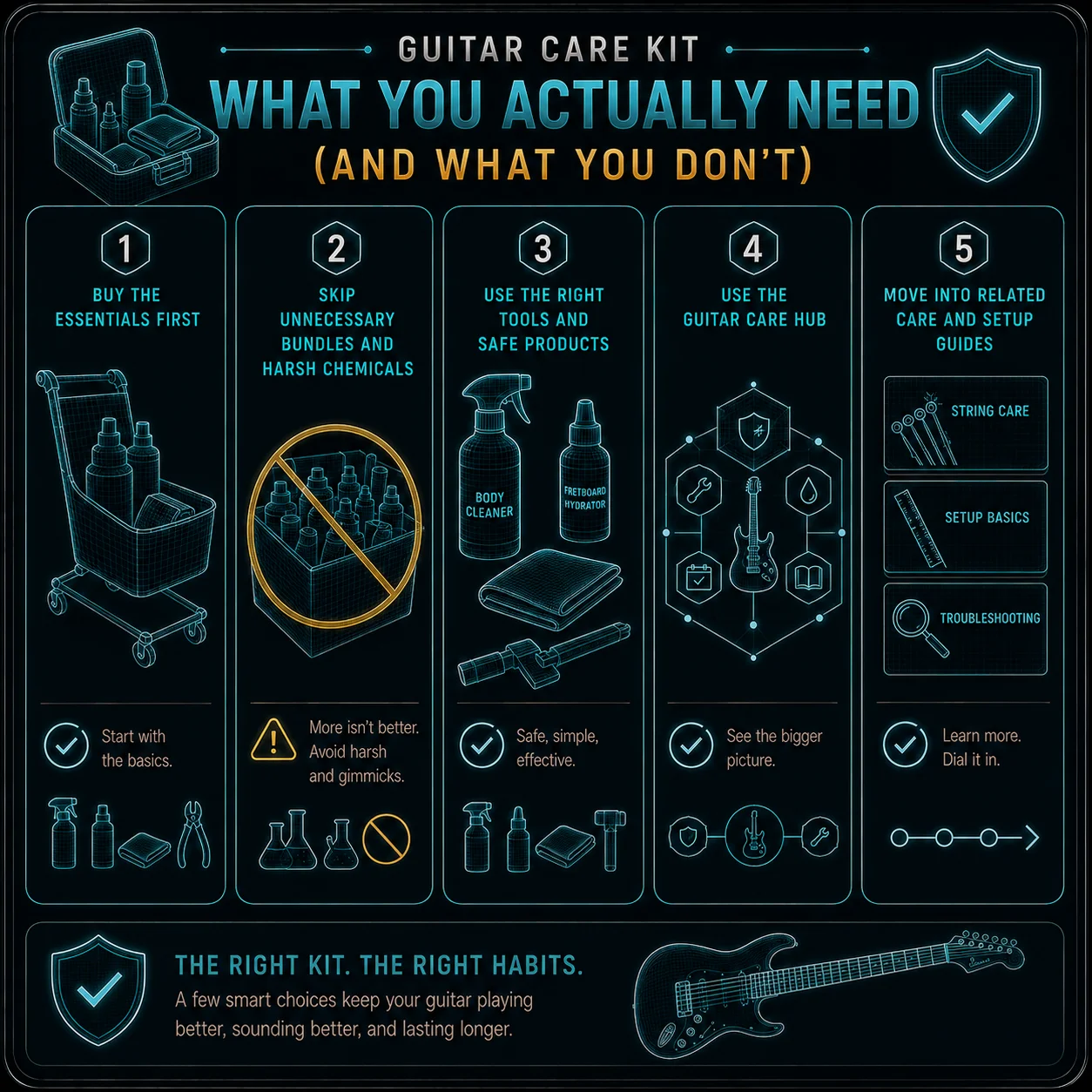
Here is the simplest workflow — start at the top and work your way down:
Start with the four essentials — body cleaner, fretboard hydrator, a microfiber cloth, and a restringing tool.
Skip the bundles and harsh chemicals. If a product sounds more like household chemistry than guitar care, leave it.
Clean and condition only when the guitar needs it. This is maintenance, not restoration.
Use the Guitar Care Hub to connect cleaning, string changes, humidity, and setup in one place.
Move into the related care and setup guides whenever a specific job comes up.
That sequence keeps the topic calm and practical. A small, smart care kit is usually all most players need to keep their instrument in great shape.
Where to go next
If you want a guitar care kit that actually helps, keep it simple and buy only what you will really use. The best kits protect the instrument without wasting money on fluff.
Want the full maintenance picture? Start with the Guitar Care Hub, then use it to connect cleaning, string changes, humidity care, and setup checks in one place.