How to Clean Your Guitar Safely
A clean guitar plays and feels better, but the wrong cleaner can cause real damage. Here is the safe way to clean your instrument from top to bottom.
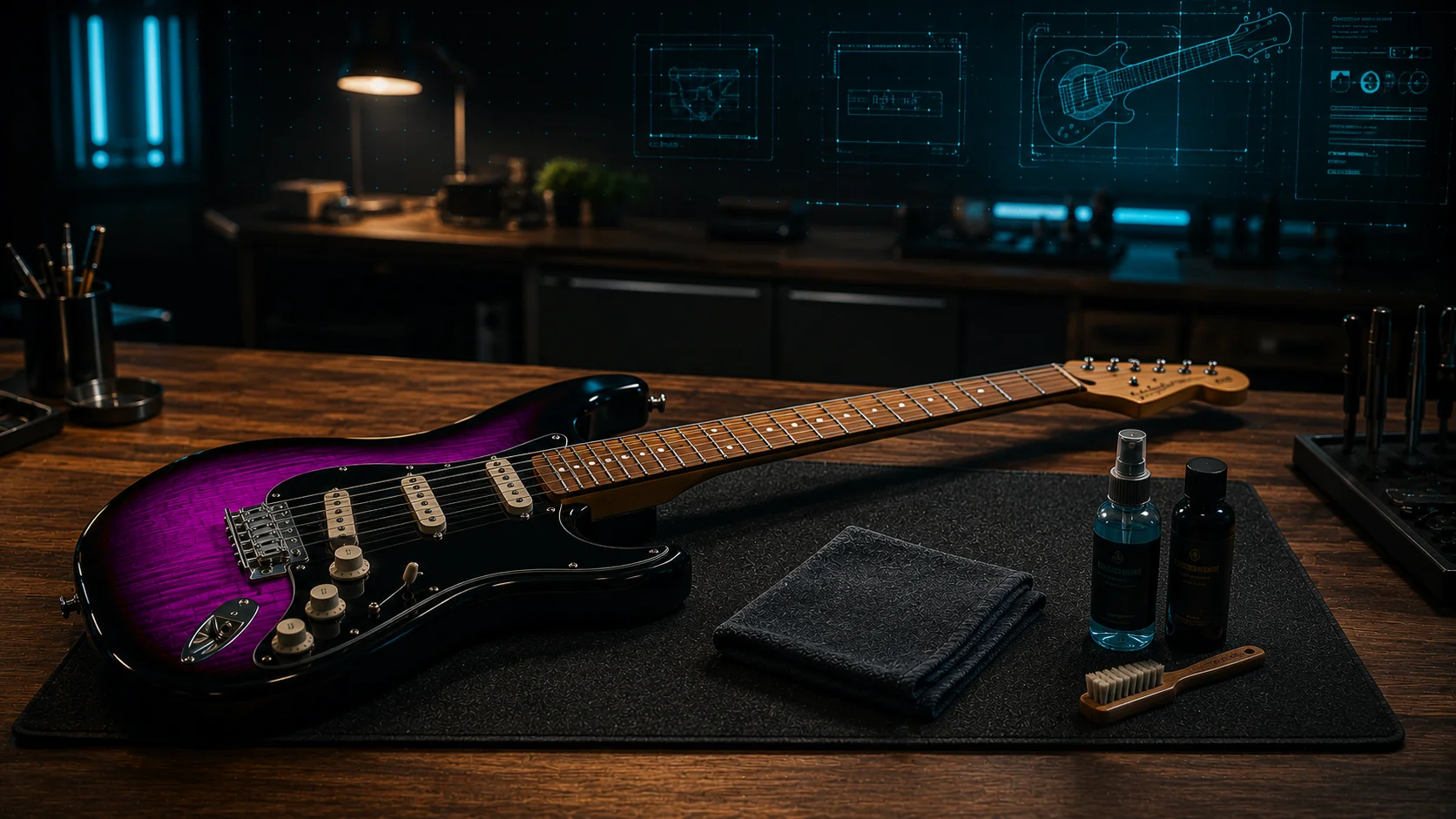
Take a close look at a guitar that has not been cleaned in a while and you will usually see the same things: fingerprints, dust, fret grime, and a dull haze on the body. It is tempting to grab a household cleaner and wipe it down quickly. That is where problems start.
Guitar finishes and fretboards need the right cleaning approach. The wrong chemical or cloth can cloud the finish, scratch the surface, or dry out the wood. A safe cleaning routine protects the instrument and keeps it feeling better to play.
Know the finish
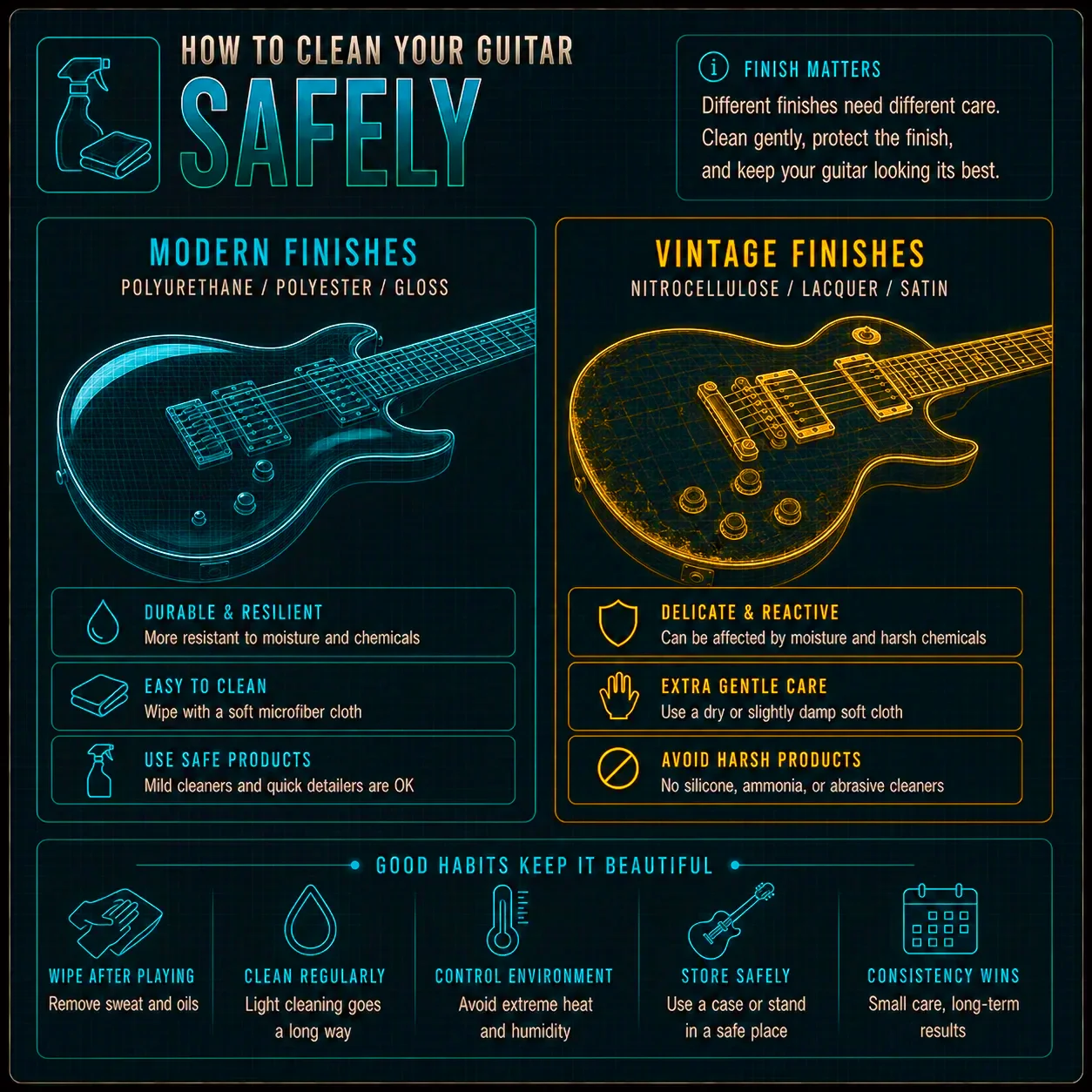
Before you clean the body, it helps to know what kind of finish you are dealing with. Most modern guitars use a tougher polyurethane or polyester finish, which is more forgiving. Vintage-style nitrocellulose finishes are more delicate and need extra caution.
That difference matters because some cleaners are safe on one finish but risky on another. If you are not sure, the safest move is to use a guitar-safe product and avoid harsh household chemicals. A little caution now can prevent expensive finish damage later.
Clean in zones
The safest way to clean a guitar is to work in sections. The fretboard, body, and hardware all need slightly different care. Cleaning the whole instrument at once without a plan can lead to missed spots or unnecessary wear.
A good routine usually starts during a string change, when the fretboard is fully accessible. That gives you room to clean the grime that builds up under the strings and around the frets. Working in zones keeps the process controlled and easy to repeat.

Cleaning during a restring? The assistant keeps your wraps clean and stable.
Open String Change Assistant →Treat the fretboard carefully
Fretboards collect a lot of skin oil and dirt. Unfinished woods like rosewood or ebony often need a deeper clean than the body. The goal is to remove grime without damaging the wood surface.
After the fretboard is clean, a small amount of conditioner or fretboard-safe oil can help keep the wood from drying out. The key is moderation. You want the wood cared for, not soaked.

Polish the body safely
When cleaning the body, always put the cleaner on the cloth first. Spraying directly on the guitar can let liquid drift into hardware, electronics, or seams where it does not belong. A microfiber cloth gives you much more control.
Use light pressure and gentle motions. The goal is to lift dust and fingerprints without scratching the finish. If the cloth is good and the product is safe, the body usually cleans up quickly.
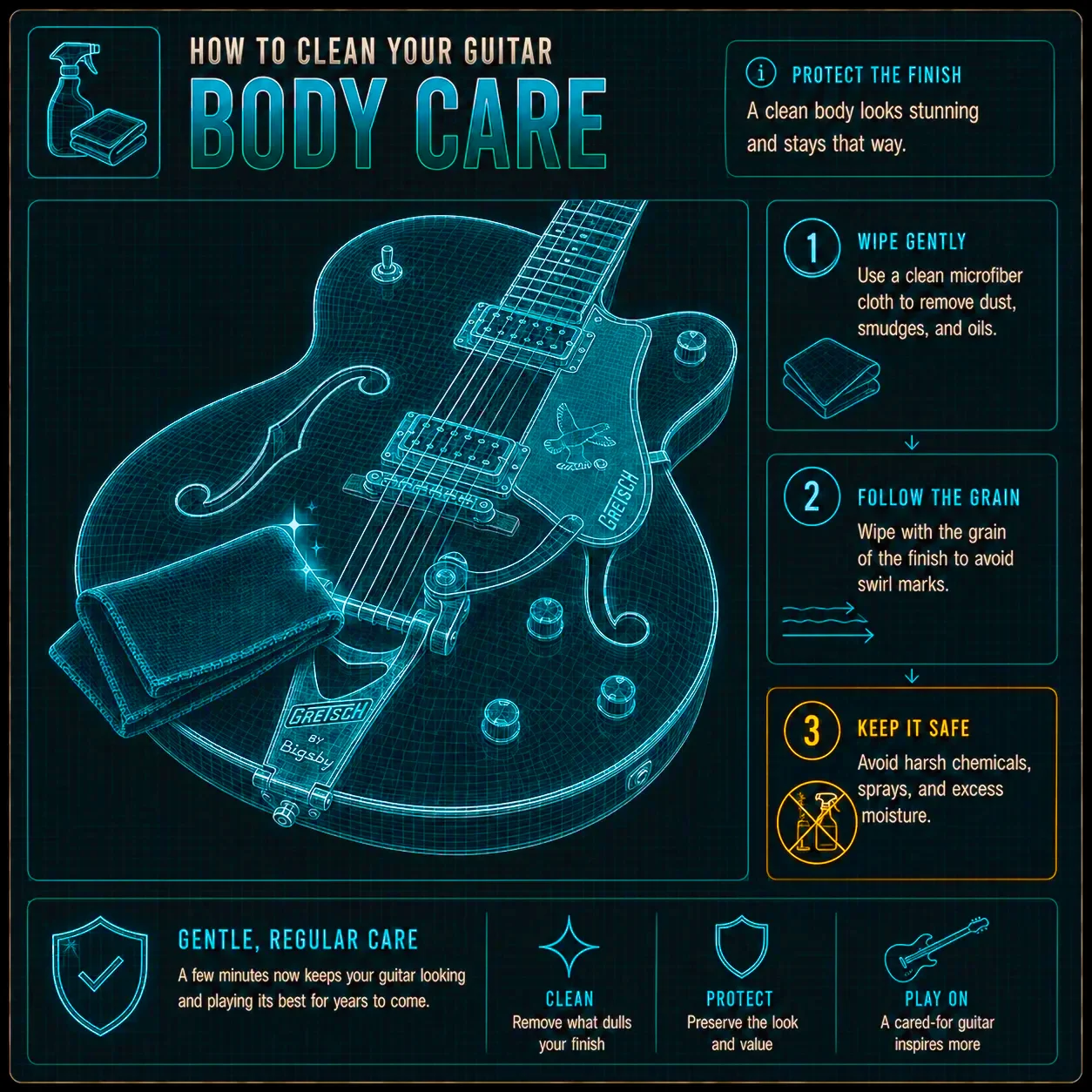
Cleaner goes on the cloth, never on the guitar. Spraying straight onto the body lets liquid creep into the bridge, pickups, and seams. A light spray on a microfiber cloth gives you all the control you need and keeps moisture away from the hardware.
Use the right gear
The cloth matters as much as the cleaner. A soft microfiber cloth is usually a safer choice than an old towel or paper product. For cleaning fluids, stick with products made for guitars rather than general household cleaners.
Safe cleaning comes down to gentle materials and guitar-specific products. These three cover the whole instrument.
Heads up: some links below are affiliate links. If you buy through them, Pocket Roady may earn a small commission at no extra cost to you. We only point to gear we'd reach for ourselves.
- Microfiber cloths (3-pack) — soft and lint-free, so they lift grime without hazing the finish. The single most important item here.
- Guitar-safe body polish — formulated for instrument finishes. Apply it to the cloth, not the guitar, and skip the household sprays.
- Fretboard conditioner — for unfinished rosewood or ebony. Use a small amount after cleaning so the wood stays healthy, not soaked.
Use the hub
This guide fits naturally into the broader maintenance system. The Guitar Care Hub helps connect cleaning, string changes, humidity care, and seasonal upkeep into one place. That makes it easier to treat guitar care as a routine instead of a one-off fix.
If you already track your string changes and maintenance habits, cleaning becomes much easier to schedule. The whole instrument stays in better shape when care is coordinated instead of reactive.
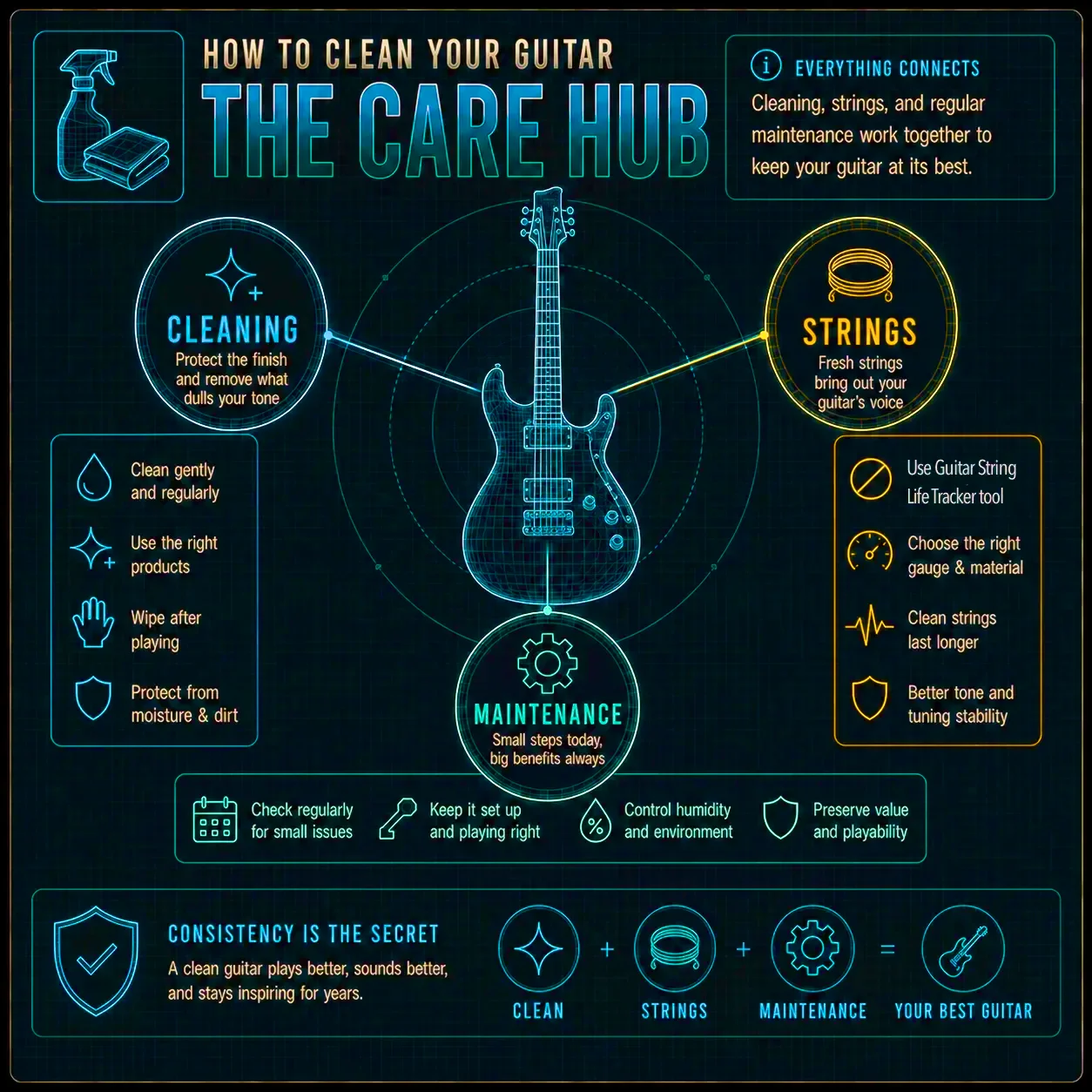
The Pocket Roady order
Here is the simplest workflow — start at the top and work your way down:
Identify the finish before you clean.
Clean the fretboard, body, and hardware in separate zones.
Use guitar-safe products and microfiber cloths.
Use the Guitar Care Hub to connect cleaning with the rest of your maintenance routine.
That sequence keeps the topic calm and practical. A safe cleaning habit protects the instrument and helps it stay ready to play.

Where to go next
If you want your guitar to look and feel its best, cleaning it safely is one of the highest-value habits you can build. The trick is using the right materials and not rushing the process.
Want the full maintenance picture? Start with the Guitar Care Hub, then use it to keep your cleaning routine, string changes, and seasonal care in sync.