Intonation
How to Tell if Your Intonation Is Actually the Problem
If your guitar sounds fine open but goes sour higher up the neck, intonation may be the real issue. Here is how to check before you start turning screws.
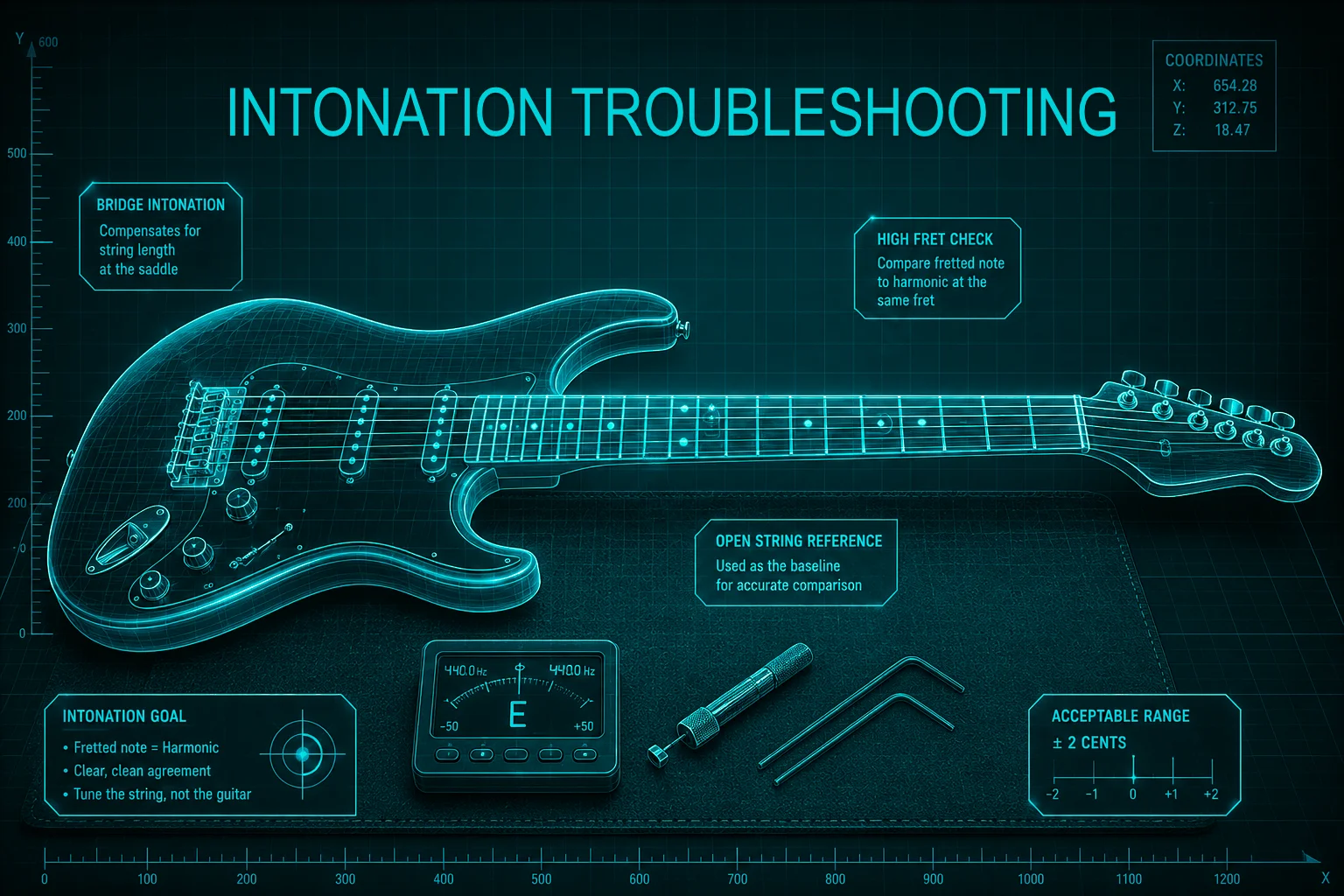
Few things are more frustrating than a guitar that refuses to play nice. You tune it carefully, the open strings look perfect, and then the moment you move up the neck, everything sounds wrong. A chord that should ring clean suddenly feels sour, and a lead line sounds just slightly off in a way that is hard to ignore.
That is where intonation comes in. Intonation is the part of the setup that helps your guitar stay in tune as you move from the open strings to the higher frets. If the bridge saddles are not positioned correctly, your guitar can sound perfectly fine at the headstock but noticeably out of tune farther up the fretboard.
What Intonation Actually Means
Think of your guitar as a carefully measured system. The frets are placed according to the string length, and the bridge saddles help keep that system balanced. When everything is correct, the notes you play in different parts of the neck line up the way they should.
The complication is that strings do not behave like perfect mathematical lines. When you press a string down to a fret, it stretches slightly. That small stretch affects pitch, which is why the saddles need to be adjusted to compensate.
The Sign of a Real Intonation Problem
The clearest clue is this: the guitar sounds in tune on open strings, but goes noticeably sharp or flat as you play higher up the neck. If that keeps happening even after you retune, intonation is worth checking.
This is different from a guitar that is simply out of tune everywhere. If the open strings are wrong, the first step is tuning. If the open strings are good but higher notes sound off, the problem may be in the bridge setup instead.
A guitar that goes sour only as you move up the neck is almost always an intonation issue, not a tuning issue. Retuning the open strings will not fix it — the saddles need attention.
The Quick Intonation Check
A basic check only takes a moment. Play the open string, then compare that same string fretted at the 12th fret. If the fretted note is drifting away from the open note in a way that does not make sense, the bridge saddle may need adjustment.
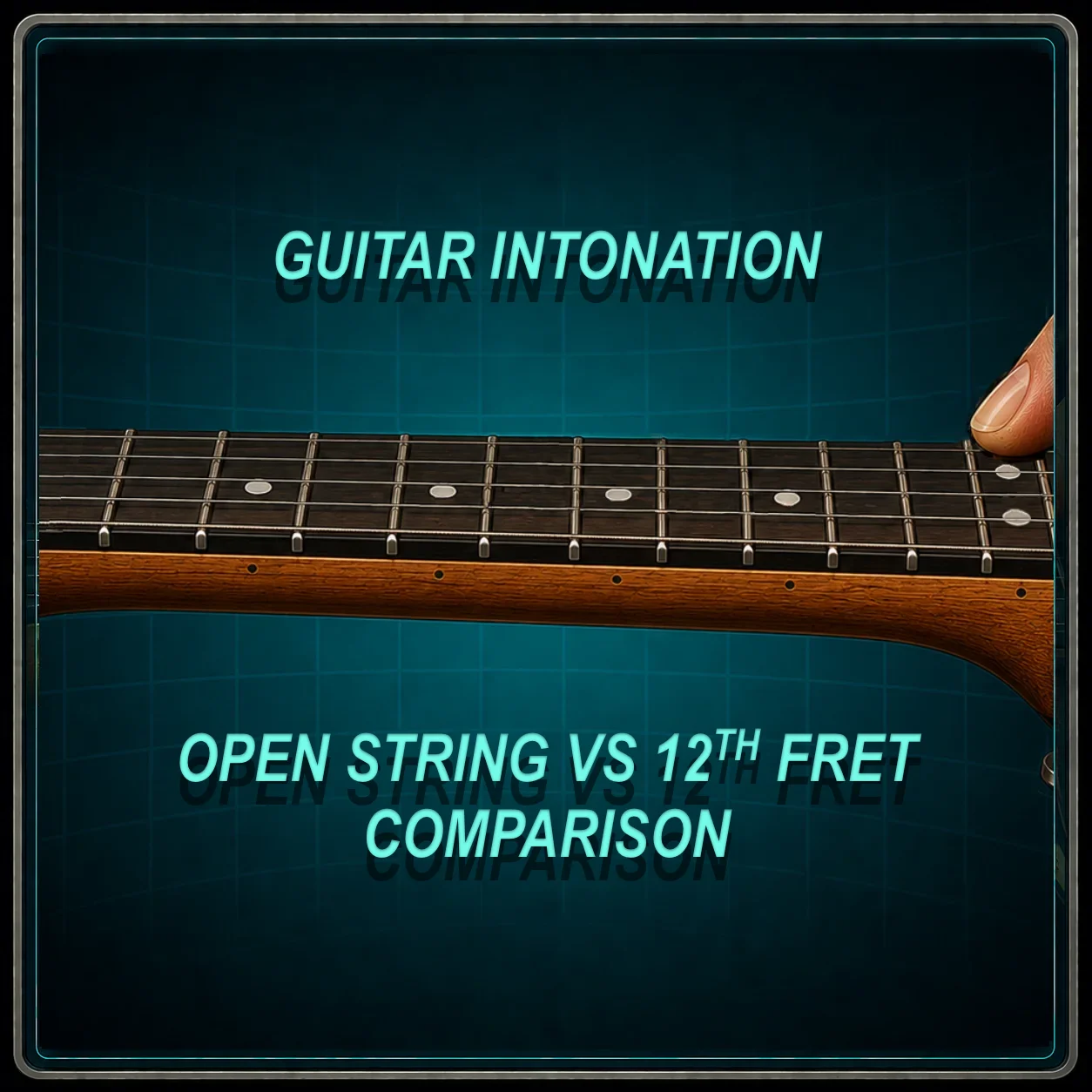
You do not need to guess at the direction. The important thing is to compare the same string in both places and listen for whether the note is sharper or flatter than it should be. If you want the math handled for you, the Intonator is the cleanest place to start.
Compare your open string to the 12th fret and get a clear result.
Open the Intonator →Why Open Strings Can Mislead You
Open strings are useful, but they do not tell the whole story. A guitar can be perfectly tuned at the nut and still be wrong once you start fretting notes farther up the neck. That is because fretting changes the tension of the string.
This is why players sometimes retune over and over without solving the real issue. The guitar may not have a tuning problem at all — it may have an intonation problem that only shows up once the string is being pressed down.
Check the Setup First
Before turning the bridge screws, make sure the guitar is not being thrown off by something else. Old strings can behave unpredictably, and high action can make fretted notes go sharp because the string has to travel farther to reach the fret.
That is why intonation is always the last step in the setup chain. If the strings are old or the action is unusually high, you may be chasing the wrong thing. In that case, the Setup Assistant is the better first check.
Still feels stiff, buzzy, or hard to play? Check the setup before touching the saddles.
Start the Setup Assistant →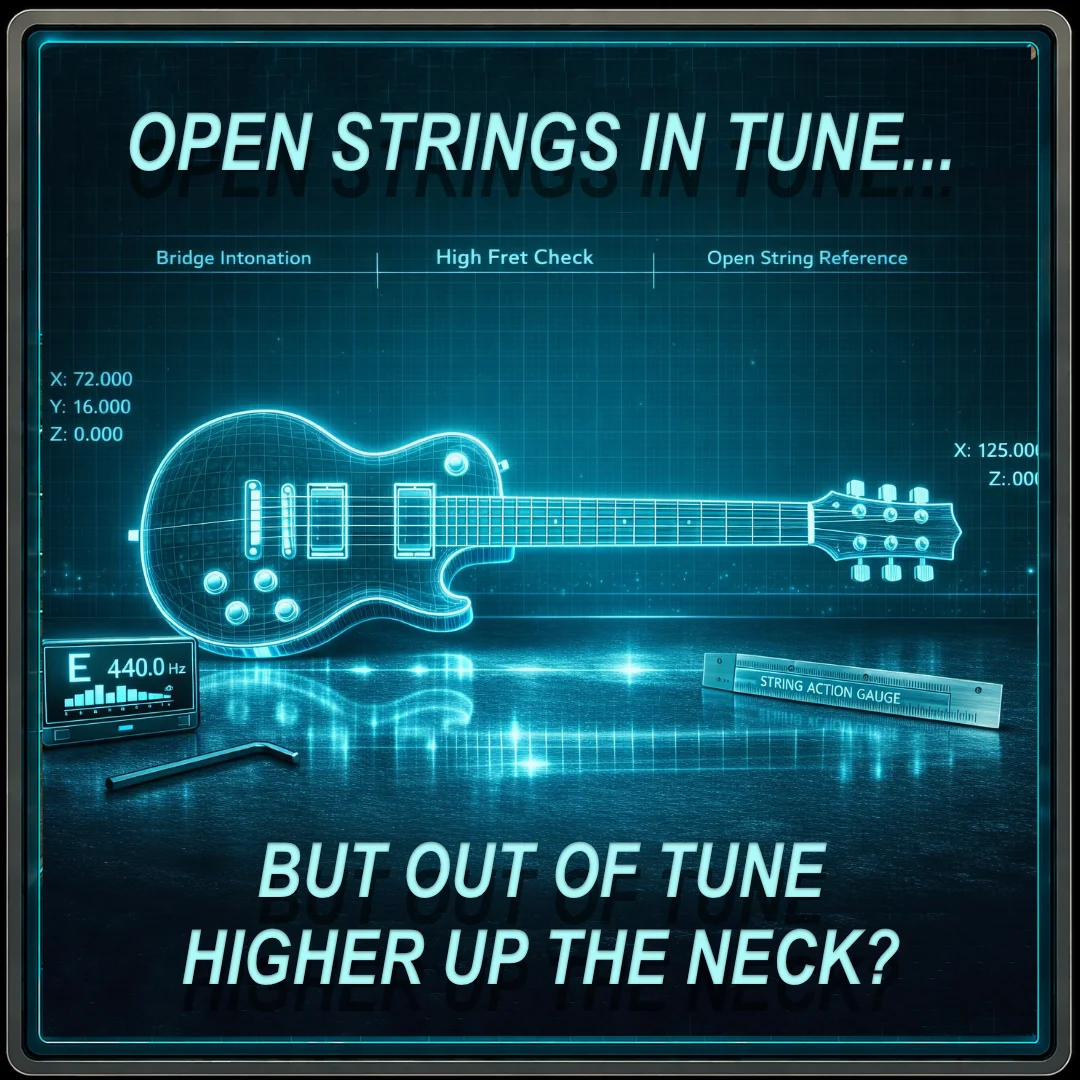
When the Bridge Is the Real Problem
If fresh strings are on the guitar, the action is reasonable, and the open notes still go sour higher up the neck, the bridge saddles are the likely culprit. That is when intonation adjustment starts to matter.
The goal is not perfection in a vacuum. It is to get the guitar balanced so that it sounds musically consistent across the fretboard. A small saddle movement can make a surprisingly big difference.
The Pocket Roady Order
The smartest way to handle it is simple — work through these steps before touching any screws:
Tune the guitar properly. Intonation checks only make sense when the open strings are already at pitch.
Compare the open string to the 12th fret. That is the key test. If the fretted note drifts, intonation is likely involved.
Check that the strings are fresh. Old strings can sound off anywhere on the neck and make intonation look worse than it is.
Make sure the action is not too high. High action pushes fretted notes sharp and can look like an intonation problem.
Use the right guide before adjusting the saddles. Route the symptom to the right fix instead of turning screws and hoping.
That order keeps you from blaming intonation too early. It also saves time and prevents unnecessary adjustments.
Where to Go Next
If the guitar sounds right open but wrong higher up the neck, start with the Intonator. If the guitar still feels stiff, buzzy, or physically awkward before you even get to the bridge, check the Setup Assistant first.
That way, you are not just reacting to the symptom — you are routing the problem to the right fix.
Not sure yet? Start with the Intonator if the guitar sounds wrong higher up the neck, or check the Setup Assistant first if the guitar still feels stiff, buzzy, or hard to play.