How to Fix a Guitar That Sounds Out of Tune on Higher Frets
The Essential Guide to Perfect DIY Intonation
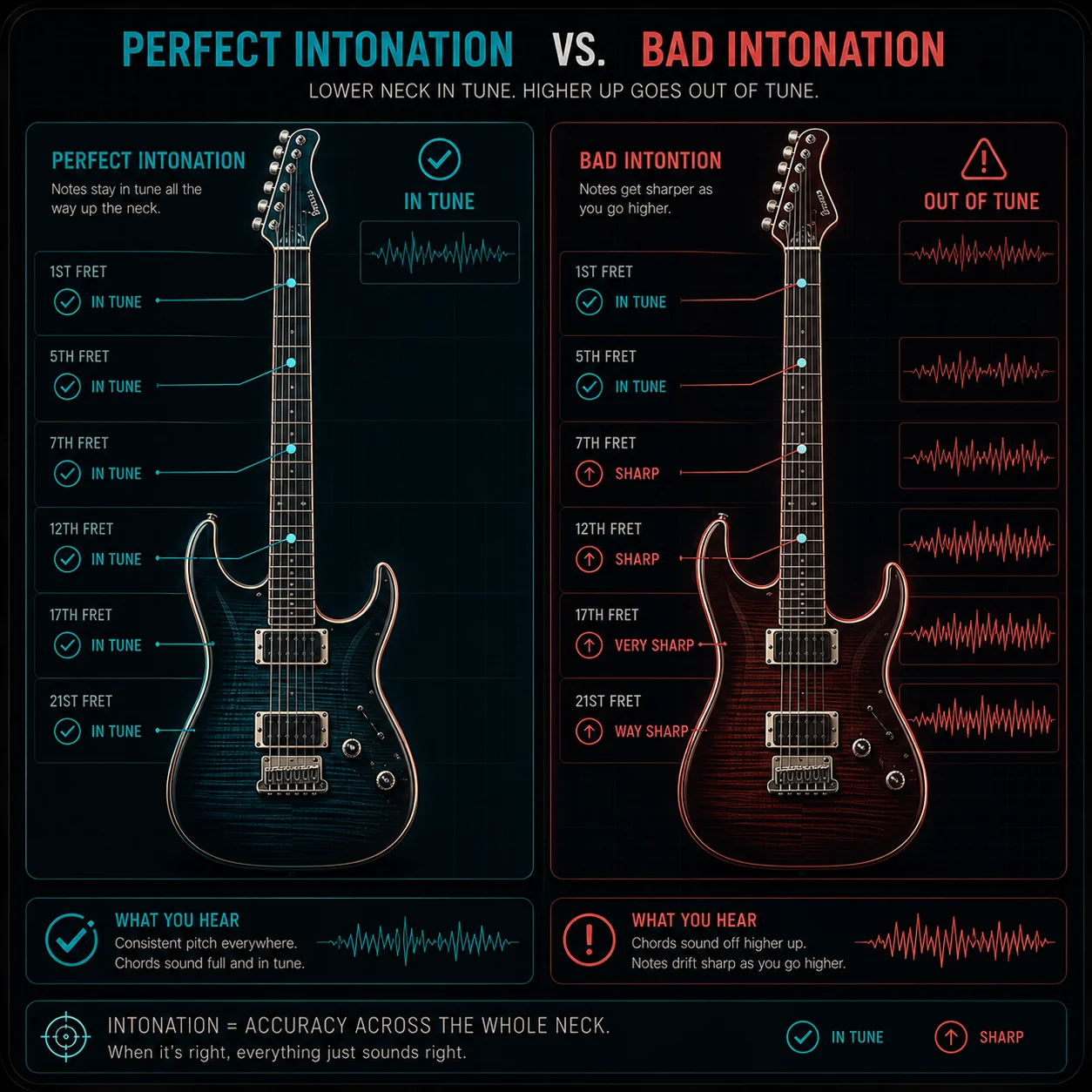
You tune the open strings, everything looks perfect, and then the guitar starts sounding wrong once you move up the neck. That usually means the intonation needs attention.
Tuning gets the strings to the right pitch. Intonation makes sure those notes stay accurate as you play higher on the fretboard. If the guitar sounds fine open but starts to feel sour or off higher up, intonation is the first thing to check — but only after the strings and setup are stable.

Think of it like alignment on a car. Tire pressure matters, but if the alignment is off, the car still pulls in the wrong direction. Guitar setup works the same way: the basics need to be right before the final adjustments mean anything.
Before You Adjust Anything
Intonation should always be the last step in a setup, not the first. If the guitar is not stable yet, your readings will not mean much.
Before you start, make sure of these basics:
- The strings are fresh.
- The strings are stretched and holding pitch.
- The action and neck relief are already close to where they should be.
- You are using the tuning you actually play in.

Not sure if your guitar is ready to intonate? The Guitar Setup Assistant can walk you through what needs attention before you start.

Old strings can develop flat spots and lose consistency, which makes intonation harder to trust. If the strings have been on for a while, change them first. New strings also need to be stretched before they settle in, or they will keep drifting out of tune while you are trying to check them.
A quick stretch-and-retune cycle usually helps a lot. Pull each string gently away from the fretboard, retune, and repeat until the pitch holds more steadily.
Hold a note firmly with your fretting hand at the lower frets while stretching, to avoid damaging the nut or tuning pegs.
A Simple Way to Check Intonation
The basic method is straightforward: compare the open string to the fretted note at the 12th fret.
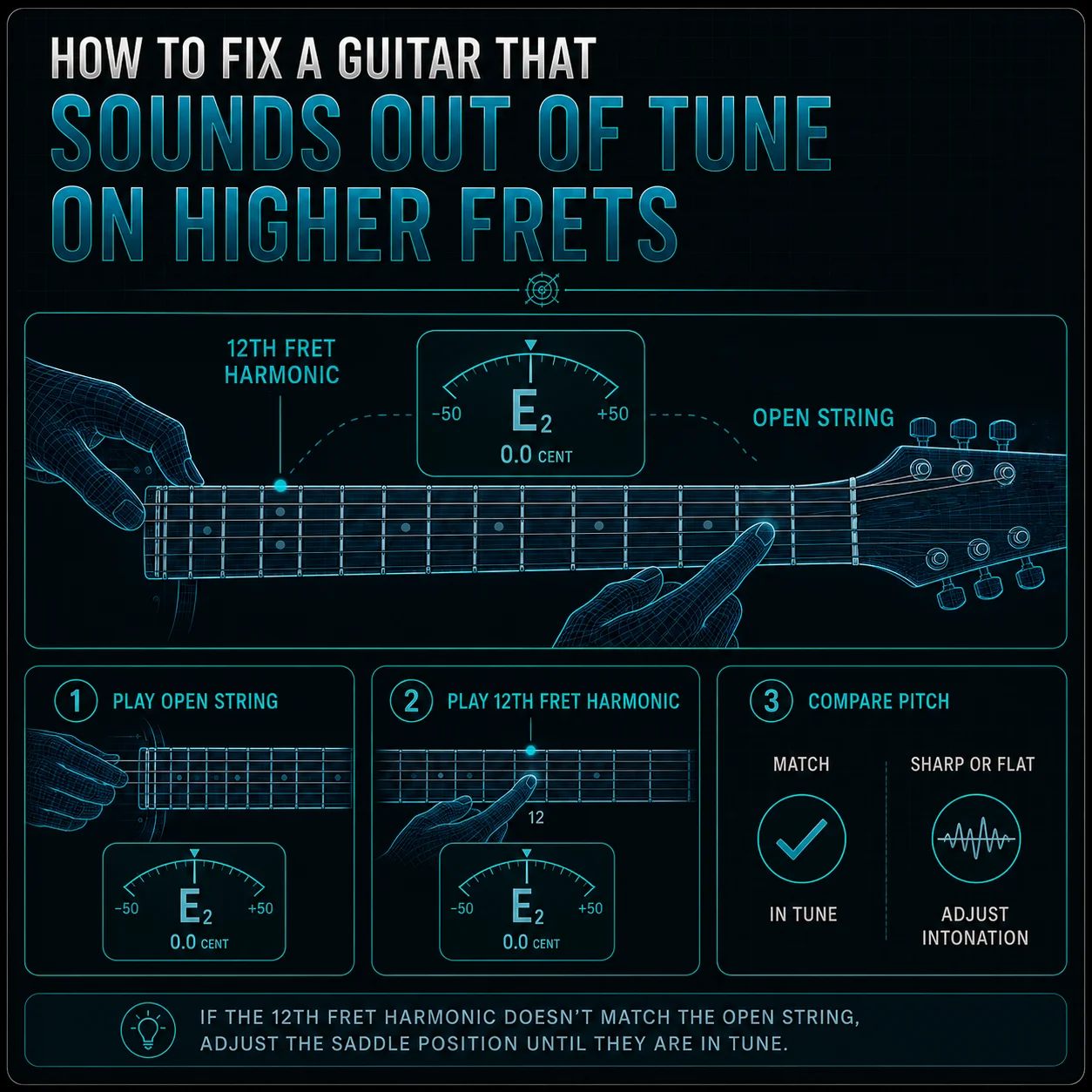
If the fretted 12th fret note is sharp, the saddle needs to move back.
If the fretted 12th fret note is flat, the saddle needs to move forward.
That is the whole idea in one sentence: sharp goes back, flat goes forward.
After every adjustment, retune the open string before checking again. Moving the saddle changes the string tension, so the note you were just comparing will no longer be accurate until you bring it back to pitch.
Small changes matter here. Do not rush it. A little movement, retune, check again, repeat.
Not comfortable with this process? The Intonator is here to help and guide you through every step of the way.
Open the Intonator Tool →A Few Things That Help
Use a light fretting touch when checking the 12th fret note. Pressing too hard can stretch the string slightly and give you a false reading.
It also helps to intonate in the tuning you actually use for playing. If you perform in E-flat, Drop D, or another alternate tuning, check intonation in that tuning instead of standard E.
If the saddle feels stuck or the adjustment seems inconsistent, stop and make sure the hardware is moving freely. Sometimes the problem is not the intonation target — it is the bridge or saddle not seating properly.
Why It Matters
Intonation is what makes the guitar feel correct all the way up the neck. Without it, the open strings might sound great while higher chords and melodies sound a little wrong.
That is why intonation should come after the neck, nut, and action are already close. If one of those earlier steps is off, it can make the intonation look worse than it really is.
A guitar setup is a chain, not a single fix. If one link is wrong, the others can start to look guilty.
When the Bridge Type Matters
Different bridges need slightly different approaches.
- Fender-style 6-saddle bridges are good for precise individual adjustment.
- Vintage 3-saddle bridges use a different balance method.
- Tune-O-Matic bridges need their own saddle and travel considerations.
- Floyd Rose systems require a separate workflow because the bridge itself behaves differently.
The core idea stays the same, though: get the guitar stable first, then adjust intonation carefully and retune after every change.
If a guitar sounds in tune open but goes sour higher up the neck, do not start chasing random fixes. Start with the basics.
Fresh strings. Stable setup. Careful 12th fret checks. Small saddle moves. Retune every time.
That is the cleanest path to a guitar that feels easier to trust and makes more sense from top to bottom.
Related Tools & Guides