Stage Guide
How to Keep Your Guitar in Tune Live
Live tuning problems usually come from setup, friction, or temperature changes. Here's how to prep your guitar so it stays stable under stage pressure.

There is a special kind of panic that only a live musician understands. You are under stage lights, the room feels huge, and suddenly a chord sounds wrong. Your guitar has drifted out of tune, and now the rest of the set feels a lot less fun.
The good news is that live tuning problems are usually not random. They are often caused by string slippage, friction, or temperature changes that can be managed before you ever walk on stage. A little preparation goes a long way toward stage confidence.
Restring early
If you change strings right before a show, they often have not had enough time to settle. Fresh strings stretch, shift, and settle under tension, which can make them drift during the set. That is why changing strings well before a gig is one of the easiest ways to improve tuning stability.
A day or two of settling time is much safer than an hour of panic before doors open. Once the strings have stabilized, they are much less likely to move unexpectedly under stage pressure. That makes the whole instrument feel more trustworthy.

Lock the strings properly
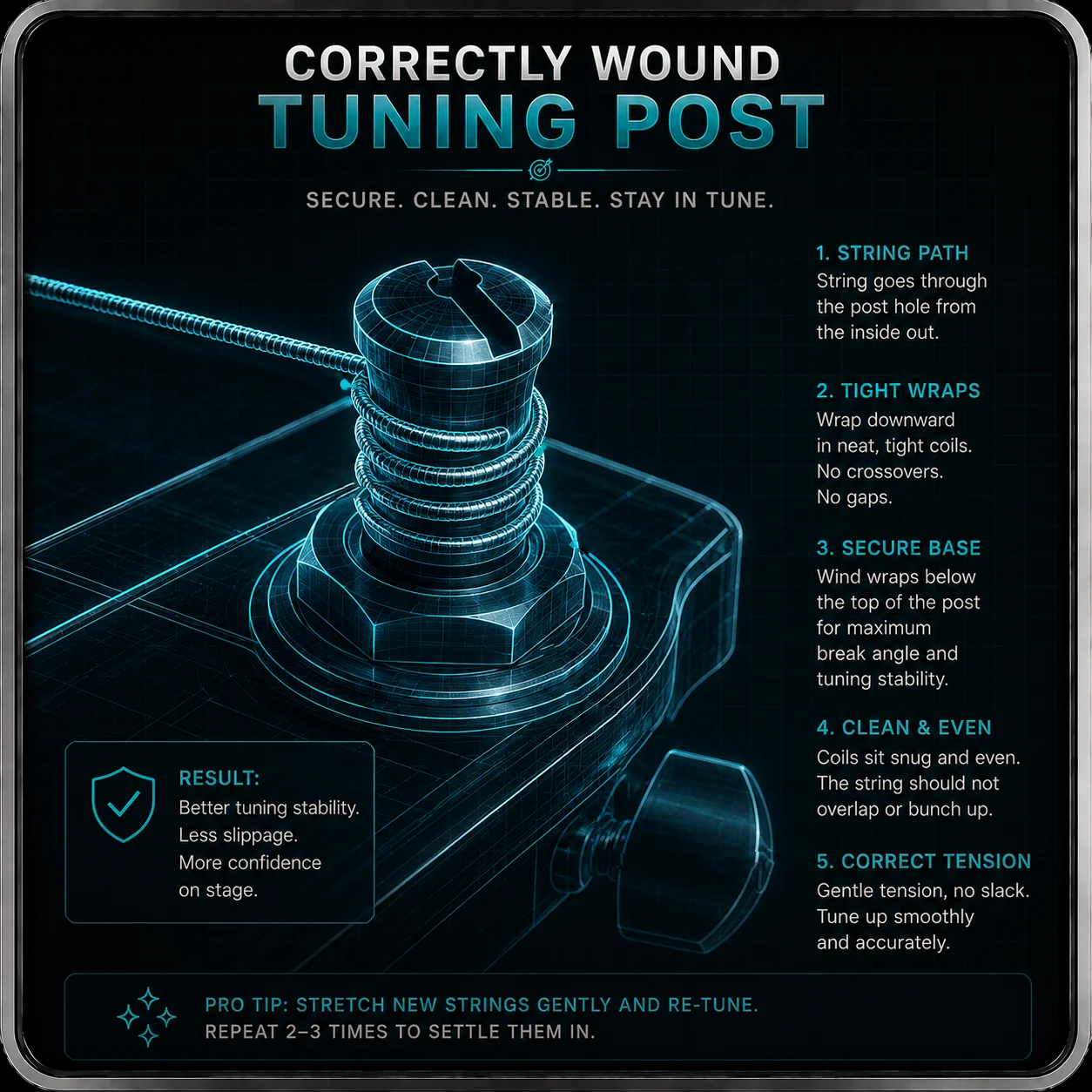
A lot of tuning drift starts at the tuning posts. If the wraps are loose or poorly wound, the string can slip under tension and go flat during a song. A clean locking-style wrap helps reduce that movement.
The goal is simple: keep the string anchored firmly so it cannot creep as easily when you hit hard or bend aggressively. That does not have to be complicated, but it does need to be done carefully. A stable wrap makes a big difference on stage.
Stretch and retune
New strings usually need to be stretched before they behave predictably. If you skip that step, the string can keep settling every time you play hard or bend. That is why a manual pre-stretch is so useful.
Tune the guitar, stretch each string gently, then retune and repeat until the pitch stays put. The point is not to force the strings — it is to let them settle before the audience hears them. A little patience here prevents a lot of tuning panic later.
Watch friction points
The nut and bridge are common sources of tuning trouble. If the strings bind in the slots, they may not return to pitch cleanly after bends or tremolo use. That can leave the guitar sounding sharp or flat even when the tuner says it should be fine.
A small amount of lubrication can help the strings move more smoothly. The important thing is reducing friction so the string can return to its resting point. This is one of the simplest mechanical fixes for live tuning problems.

Mind the environment
Temperature and humidity can affect tuning more than players expect. A guitar taken from a cold car into a warm room may shift as the wood and hardware adjust. Stage lights can also add extra heat and movement once the set starts.
The safest approach is to let the guitar acclimate before tuning up. Take it out of the case early, let it settle in the room, and tune only once the instrument has had time to adjust. That helps reduce surprise drift once the show begins.
Use the checklist
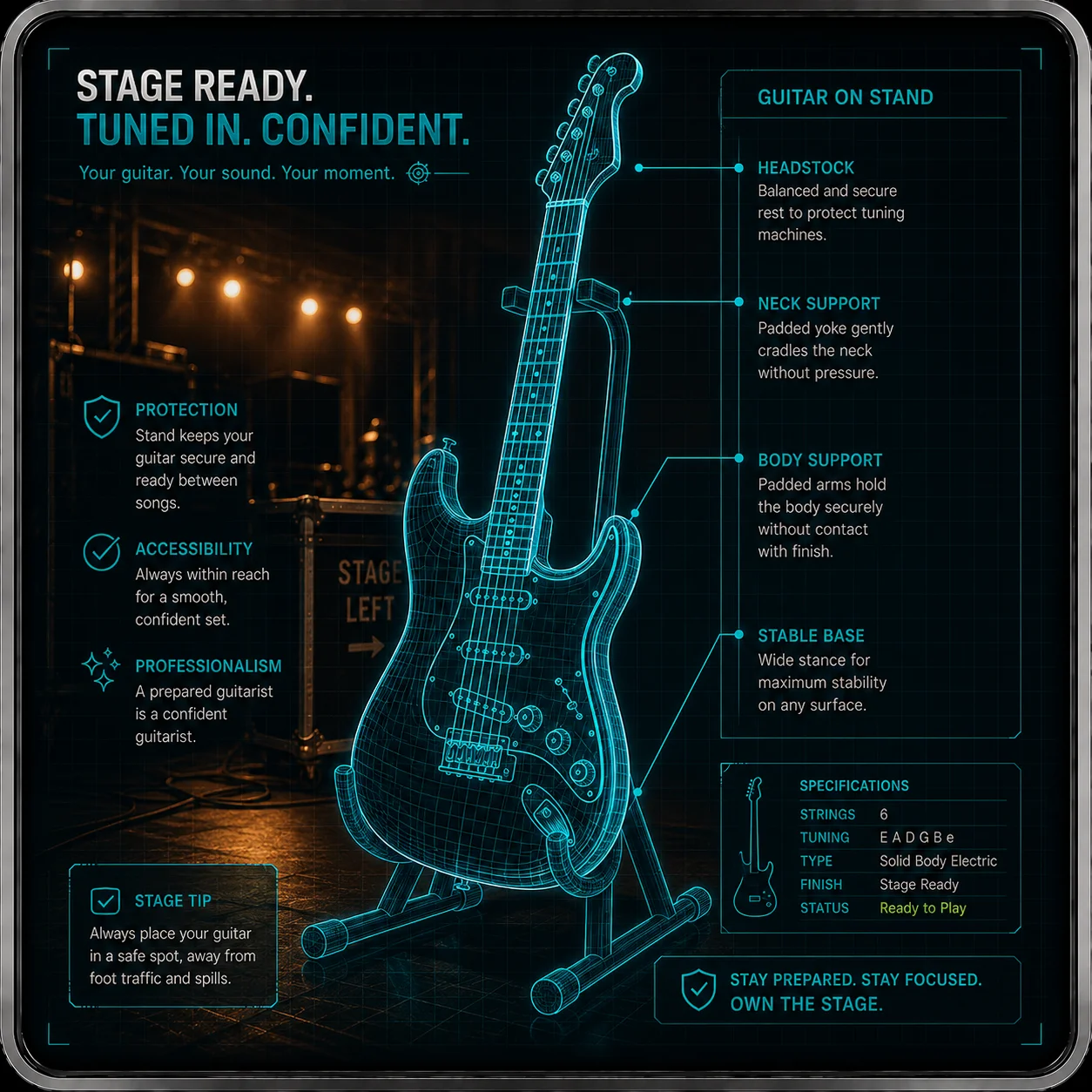
This is exactly where the Gig Prep Checklist helps. It turns all the small pre-show steps into a simple routine so nothing gets missed when you are under pressure. That includes string settling, friction checks, and environment prep.
If you want to step onstage with more confidence, the checklist gives you a calm pre-flight process. That makes tuning stability feel less like luck and more like preparation.

Want a calmer pre-show routine? Open the Gig Prep Checklist to walk through restringing, tuning stability, and stage-ready setup before your next show.
Open Gig Prep Checklist →The Pocket Roady order
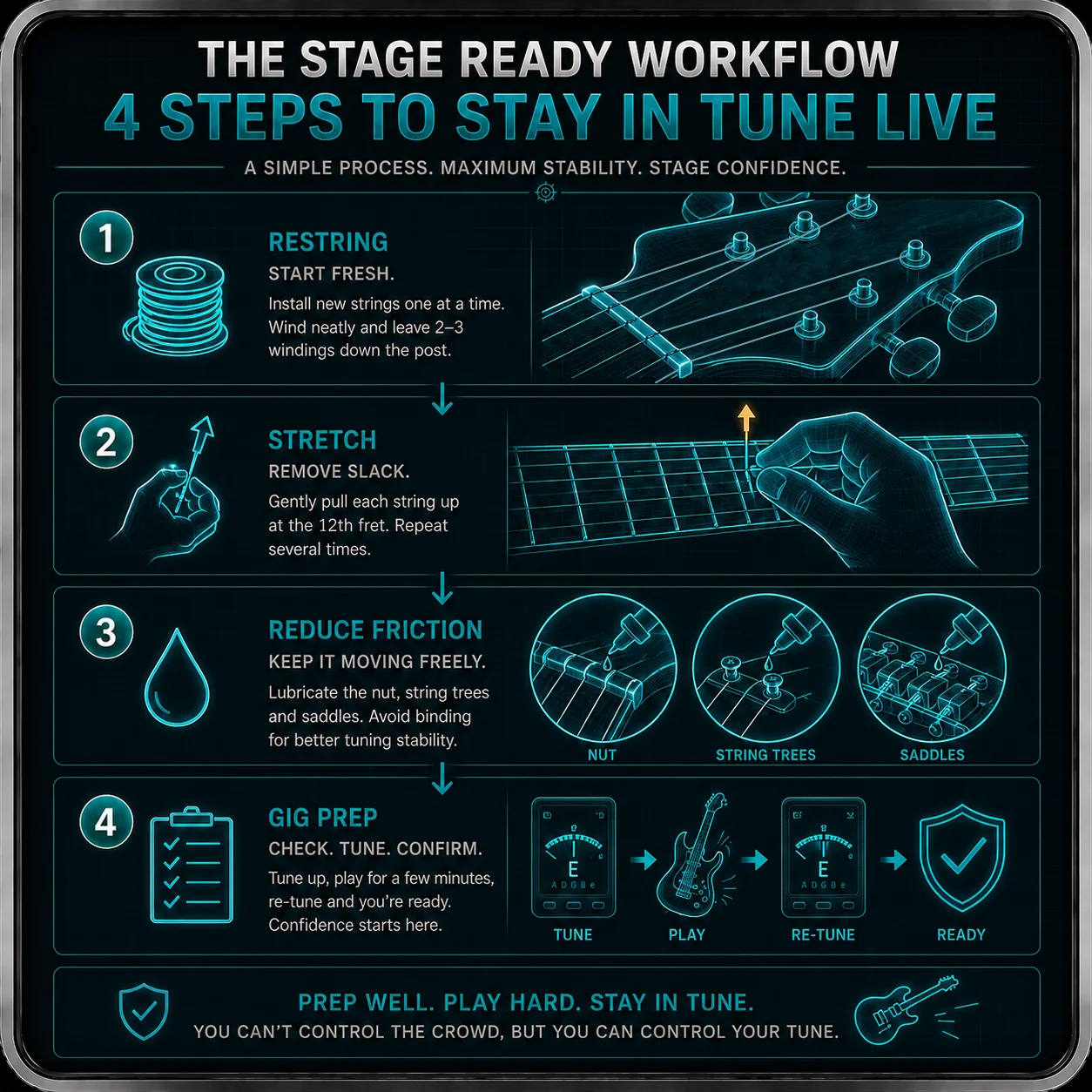
Here is the simplest workflow — start at the top and work your way down:
Restring well before the gig. A day or two of settling time beats an hour of pre-show panic.
Stretch and retune. Cycle through until the pitch holds steady after each pull.
Make sure the wraps are secure. A clean wind at the post stops strings from creeping flat mid-song.
Reduce friction at the nut and bridge so strings return to pitch cleanly after bends.
Let the guitar acclimate to the room before you tune up. Don't rush straight from the case.
Run the Gig Prep Checklist before the show so nothing gets missed under pressure.
The more of these variables you control ahead of time, the less you have to think about tuning once the lights come up.
Where to go next
If you want to keep your guitar in tune live, the biggest win is preparation. Strings need time, hardware needs to move freely, and the instrument needs to settle into the room before the show starts.
Want a calmer pre-show routine? Open the Gig Prep Checklist to walk through every step before your next show — or use the Online Guitar Tuner to confirm you are locked in before you hit the stage.