Setup Guide
How to Tell if Your Action Is Too High
If your guitar feels like a workout, the action may be too high. This guide shows you how to tell before you start turning screws.
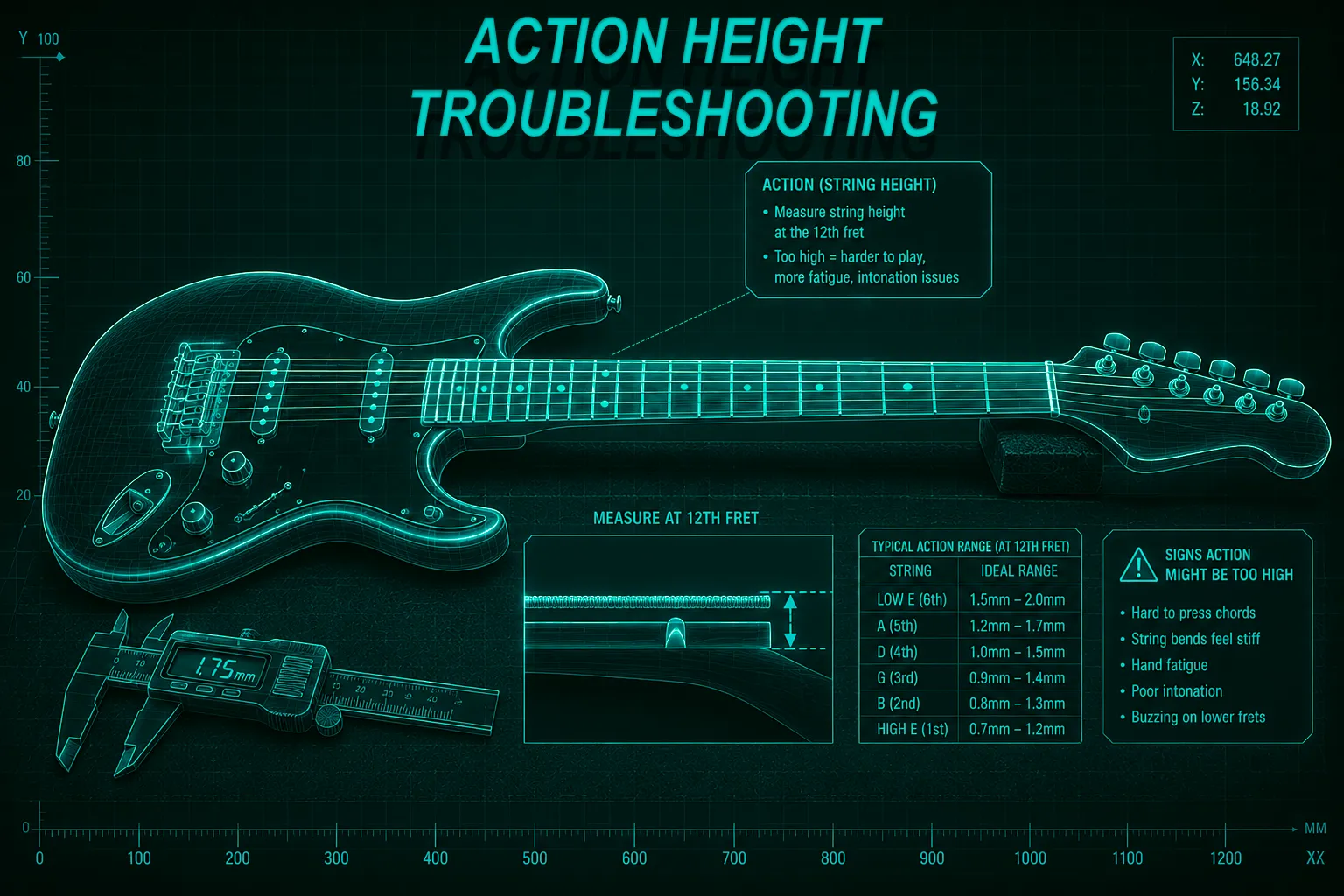
We have all been there. You pick up a guitar, excited to practice, but within ten or fifteen minutes your fretting hand is completely worn out. Barre chords feel like a workout, single notes take more pressure than they should, and higher up the neck everything seems stiff and slightly harder to control.
That is often a sign that the action is too high. Action is the distance between the strings and the frets, and if that gap is bigger than it should be, the guitar can feel tiring and unresponsive. The good news is that you can usually spot the issue with a calm, simple check before you touch a single adjustment screw.
The Subtle Signs
High action does not always announce itself dramatically. More often it shows up as friction under your fingers — a quiet but persistent resistance that makes the guitar feel harder than it should.
Fretting hand fatigue — chords and single notes require noticeably more pressure than they should, especially after 10-15 minutes of playing.
Increasing stiffness up the neck — frets 1 to 3 feel manageable but the upper neck feels progressively harder to control.
Pitch drift when fretting hard — the guitar sounds fine open but goes slightly sharp when you press down firmly, because the extra distance stretches the string more than it should.
Barre chords that feel like a test — full barre shapes require significantly more grip strength than they do on a well-set guitar.
The 12th Fret Check
A quick check at the 12th fret can tell you a lot. Tune the guitar first, then look at the gap between the bottom of the string and the top of the 12th fret wire. You are not trying to guess by feel alone — you are looking for a clear visual clue.
If the gap looks unusually large, or if the strings sit noticeably high over the fretboard, the action may be beyond a comfortable range.
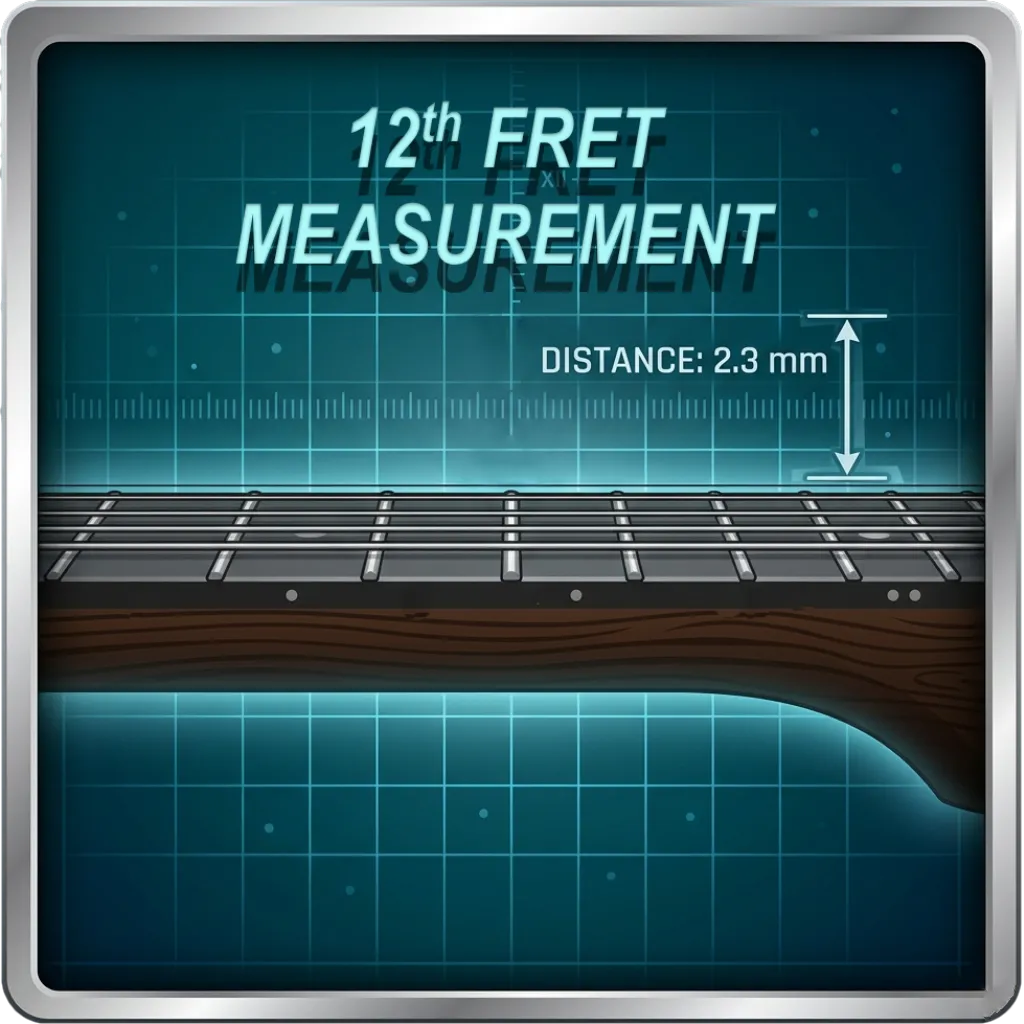
Measure from the top of the fret wire to the bottom of the string — not from the fretboard wood. That distinction gives you a repeatable reading you can actually compare against a target range.
Want an exact number? The Action Calculator compares your reading to a practical target range.
Open the Action Calculator →Bridge or Neck?
High action can come from the bridge, but it can also be caused by neck relief. That is why action should not be treated as a standalone problem. If the bridge is too high, the strings will sit too far from the frets. If the neck has bowed forward too much, the middle of the fretboard can end up much higher than it should be.
This is where setup order matters. Before lowering anything at the bridge, it is worth checking whether the neck is already too bowed. If that seems likely, the neck relief guide should come first.
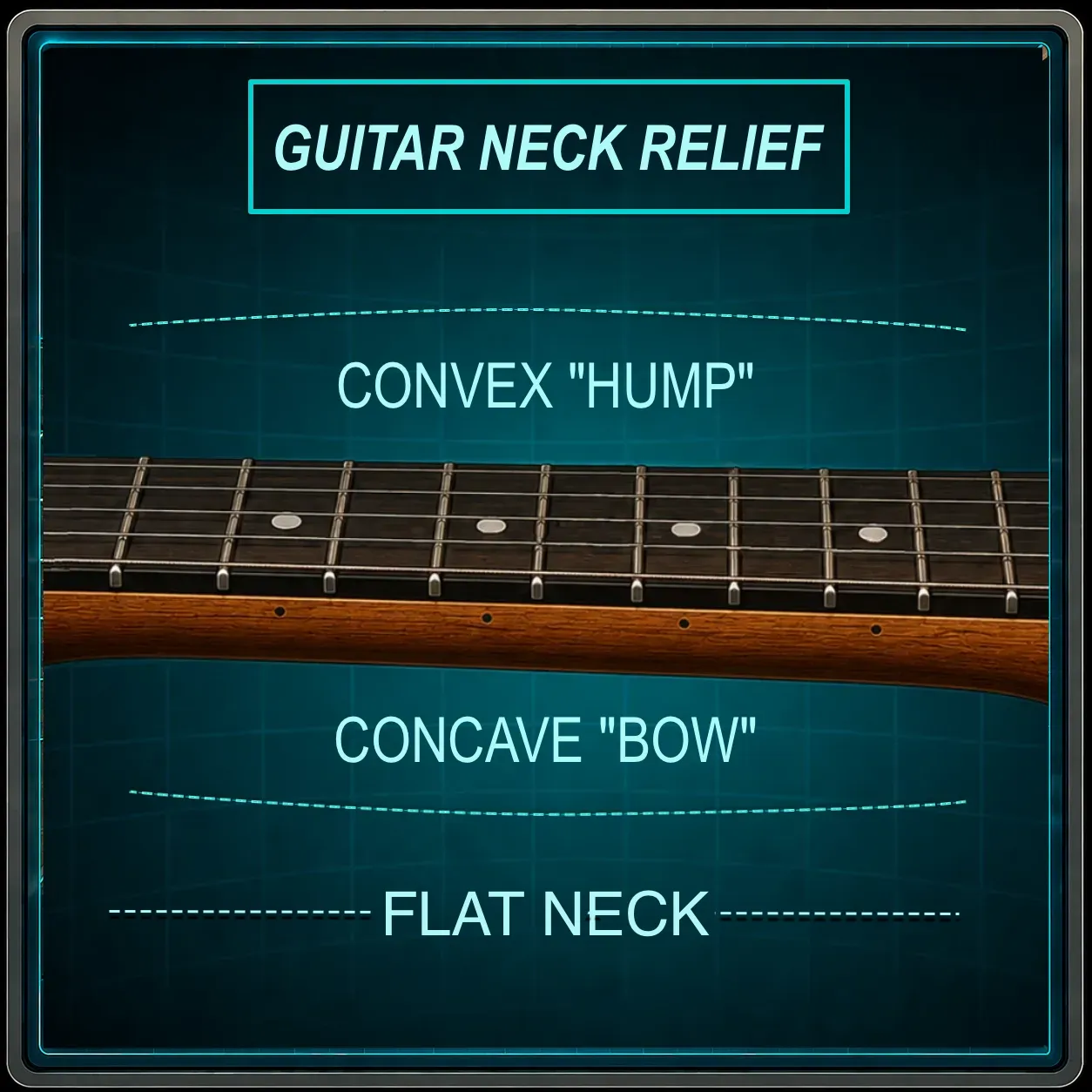
Think the neck might be too bowed? Check relief before touching the bridge.
Read the Neck Relief Guide →What High Action Feels Like
Players usually notice high action through discomfort before they notice numbers. Barre chords feel harder than they should. Fast passages take more effort. Notes up the neck may sound slightly sharp because the string is being pushed farther than necessary.
That does not mean the guitar is unusable. It just means the setup is asking more from your hands than it should. A small correction can make the whole instrument feel more relaxed and responsive.
The Pocket Roady Order
The safest way to handle it is to check the height first, then confirm whether the neck is part of the issue. That way you are not lowering the bridge blindly when the real cause is somewhere else.
Tune the guitar properly. String tension affects the neck angle and action readings.
Check the 12th fret string height visually — look for an unusually large gap.
Compare the feel across the neck — note if the middle feels higher than the first few frets.
Check neck relief if the middle of the neck feels unusually bowed forward.
Use the right guide before making any adjustments.
That sequence keeps the process calm and avoids unnecessary tinkering.
Where to Go Next
If the guitar feels stiff, tiring, or hard to press cleanly, start with the Guitar Action Calculator. If the middle of the neck seems bowed forward and the action looks high because of that shape, use the Neck Relief Guide first.
The goal is not to chase a theoretical perfect number. It is to find the setup that makes the guitar comfortable, musical, and easy to play.
Not sure where the problem starts? Use the Guitar Action Calculator to check the height, then use the Neck Relief Guide if the neck seems too bowed.