Intonation Guide
How to Use a Capo Without Throwing Off Intonation
A capo can make a guitar sound sour if it is clamped too hard, too far behind the fret, or slightly sideways. Here is how to keep your chords in tune.

It is one of the most common frustrations for guitarists. You clamp a capo on the neck to match your vocal range, strum a familiar chord, and suddenly the whole guitar sounds sour. Take the capo off and the tuning seems fine. Put it back on, and the problem returns.
The good news is that this usually is not a sign that the guitar is broken. A capo changes how the strings are pressed against the frets, and if it is placed or tightened poorly, it can push the strings sharp. A few simple habits make the difference between a clean capoed chord and a tuning headache.
Why capos make guitars go sharp
A capo works a little like a mechanical finger, but it does not behave exactly like one. If it clamps too hard, or sits too far behind the fret, it can stretch the string downward more than needed. That extra stretch raises the pitch and makes the guitar sound sharp.
The higher the action, the more obvious that effect can become. A guitar with tall strings already has more room for the capo to bend the string before it reaches the fret, so the problem becomes easier to hear. That is why capo placement and setup quality both matter.
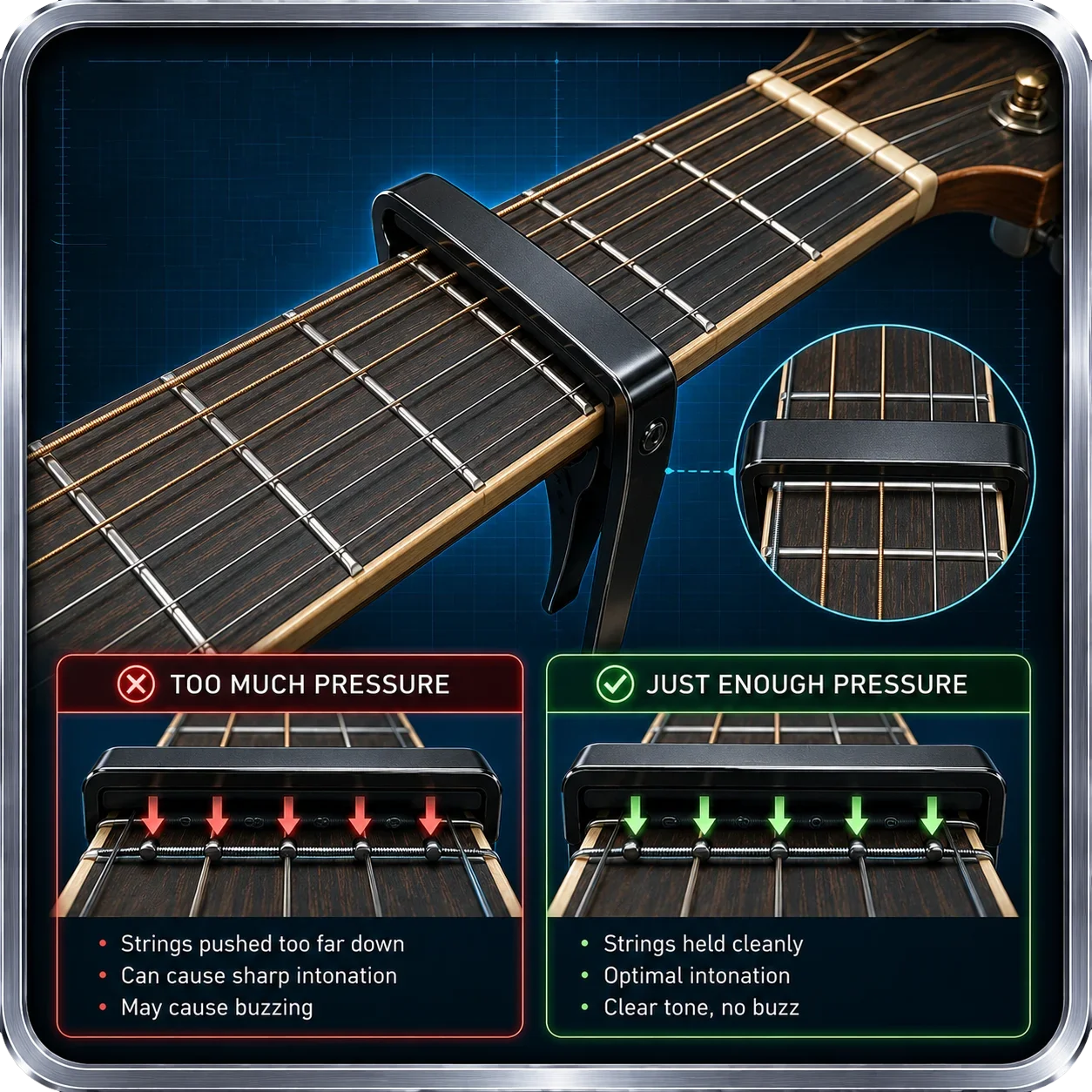
Rule 1: Place it close to the fret
The best capo placement is usually right behind the fret wire, not in the middle of the space between frets. If the capo sits too far back, it has to bend the strings farther before they contact the fret, which can make the notes go sharp.
A capo placed close to the fret needs less force to do its job. That small change often makes a surprisingly big difference in tuning stability. If a capo sounds sharp, placement is the first thing to check.

As close to the fret wire as possible without going past it. If it sounds sharp and you have not checked placement yet, start there — it solves the problem more often than anything else.
Rule 2: Use the minimum pressure needed
Too much tension is just as much of a problem as bad placement. A spring capo can clamp harder than necessary, while an adjustable capo lets you dial in only the pressure you actually need. The goal is not to crush the strings into the fretboard — it is to hold them cleanly.
If the capo buzzes, add only a little pressure at a time until the notes ring clearly. Stop as soon as the buzz disappears. More pressure than that usually just makes the pitch sharper without adding anything useful.
Enough to stop buzz. No more. If you have an adjustable capo, this is where it earns its keep — dial it in rather than guessing.
Rule 3: Keep it straight
A capo can also throw off tuning if it pushes the strings sideways. Even a small sideways shift can pull the strings toward the edge of the fretboard and make chords sound unstable or sour. That is easy to miss when you are clamping quickly.
After placing the capo, look straight down the neck and check that the strings still run in a clean line. If they are being nudged sideways, reset the capo before you assume the guitar itself is the issue. That simple check solves a lot of capo problems fast.
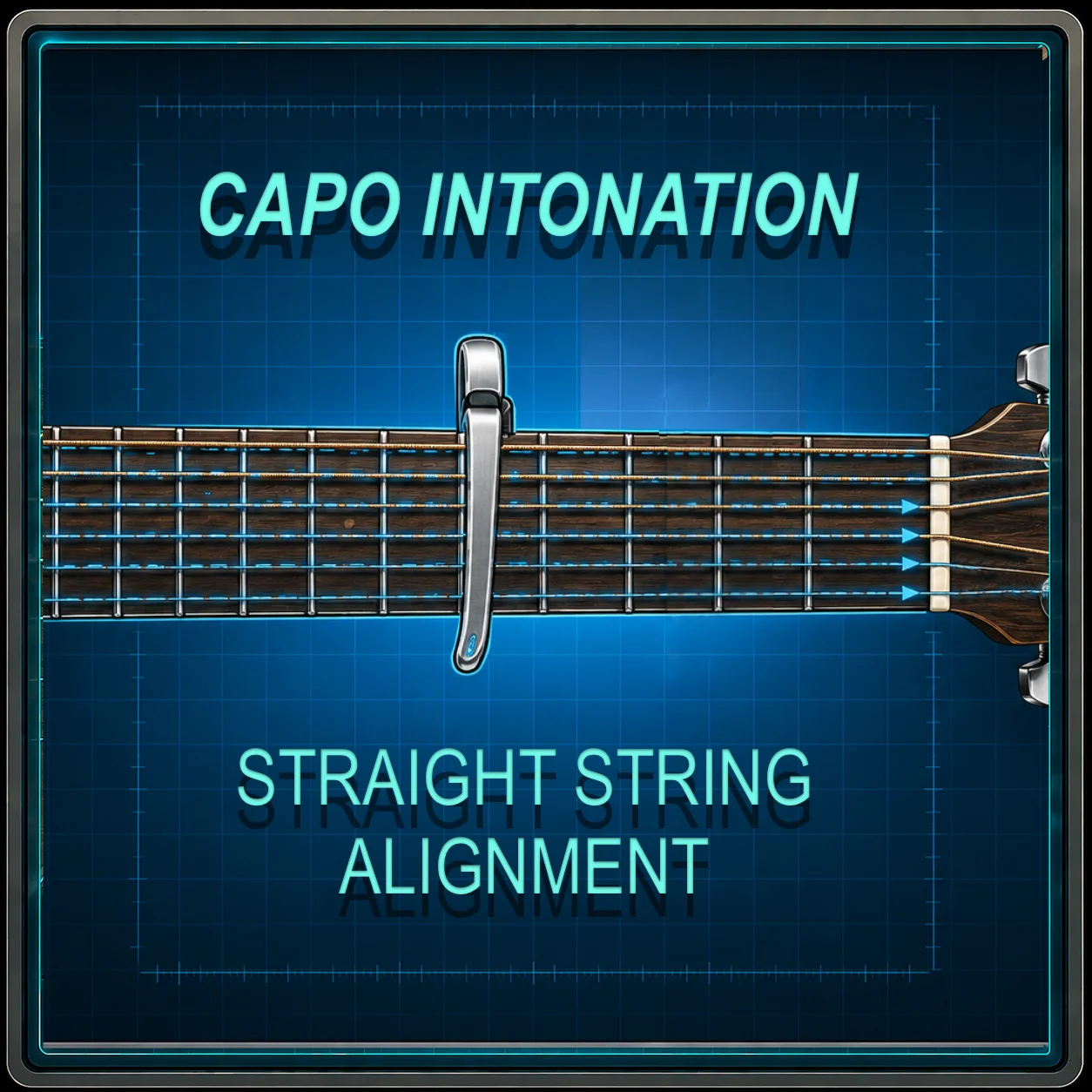
Look down the neck after clamping. The strings should still run in a straight, even line. A capo that pulls sideways is the most overlooked cause of sour capoed chords.
When the setup is part of the problem
If you have already placed the capo carefully and it still sounds sharp, the guitar setup may be making the issue worse. High nut slots can make the strings sit too far above the fretboard near the headstock, which gives the capo more distance to bend the strings down. That can make the guitar seem much more sensitive than it really is.
Worn or uneven frets can also make capoed chords sound uneven from string to string. In that case, the capo is exposing a setup problem that was already there. If the guitar keeps fighting you even after careful capo placement, the Capo Intonation Helper is the next place to check.
Still sounds off after checking placement, pressure, and alignment?
Use the Capo Helper →The Pocket Roady order
Here is the simplest workflow — start at the top and stop when the problem is solved:
Place the capo as close to the fret wire as possible.
Use only enough pressure to stop buzz — no more.
Check that the capo is not pulling the strings sideways.
Retune if needed after placing the capo.
If the guitar still sounds sour, check the setup.
That order keeps the problem-solving calm and practical. Most capo intonation issues are solved before you ever need to think about anything more complicated.
Where to go next
If a capo keeps making your chords sound sharp, do not assume the guitar is broken. Start with placement, then pressure, then alignment. If you want a quick mechanical check, the Capo Intonation Helper is the best next step for turning that frustration into a fast fix.
A capo should make the guitar easier to use, not harder. When it is placed well, it disappears and lets the music do the work.
Still hearing sharp chords after using a capo? Check the capo placement first, then use the Capo Intonation Helper to test pressure and alignment, and revisit your setup if the guitar still feels unusually sensitive.
Open the Capo Intonation Helper →