Root
Chord
Voicing
Strum
Fret
Pocket Roady
Tool Stack Deluxe
Power
CAGED Navigator
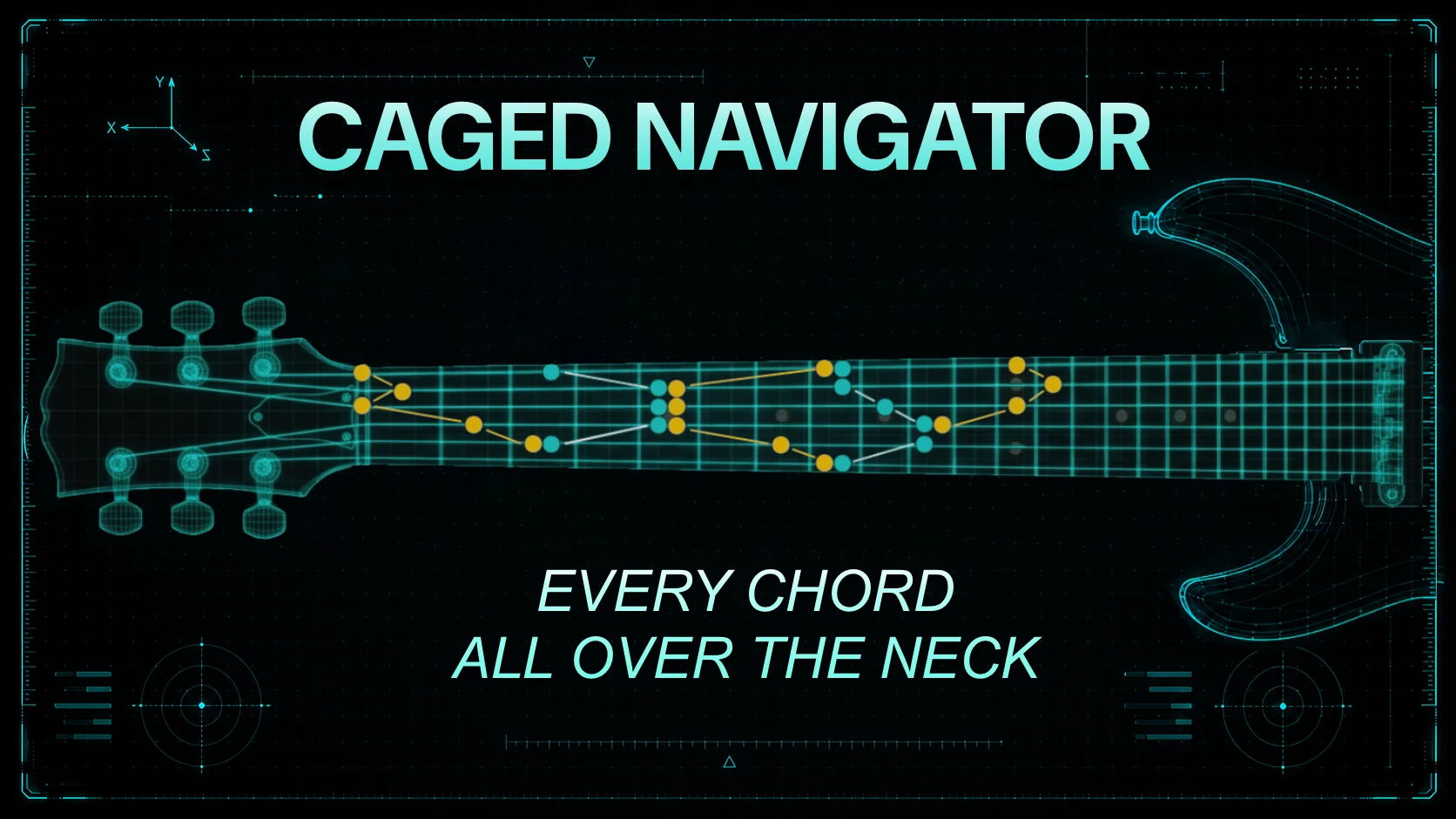
Every chord. Every shape.
Pick a chord and see it everywhere — all five CAGED shapes, plus triads and inversions, mapped right up the neck.
Open E major
Movable shape
1 / 1
Tap to hear this voicing
🎸 Roady Hint
Amber = root. Teal = chord tone. The root is your anchor — the note the chord is named after. Every other dot is a chord tone telling you which interval it plays. Switch to Intervals view to see R, 3, 5, and 7 instead of note names.
🎸 Roady Hint
Triads up the neck are the songwriter's secret weapon. Root position, first inversion, second inversion — the same three notes, three different bass notes, three different sounds. Moving between inversions on the same string group creates smooth voice leading and gives you a full map of chord tones across the neck.
Know your chord shapes — now see how the notes connect as scales and arpeggios, or find any single note on the neck.
Good to Know
CAGED Navigator questions, answered
What is a chord voicing?
A voicing is one specific way to play a chord — the same notes arranged in a different order, on different strings, or at a different position on the neck. Two voicings of C major are still C major, but they sound and feel different under your fingers.
What is the CAGED system?
CAGED is a way of mapping five movable chord shapes across the neck, named after the open chords they derive from: C, A, G, E, and D. Each shape can be moved to any root by shifting the fret position, giving you five ways to play any major or minor chord anywhere on the neck.
What is a chord inversion?
An inversion changes which note is in the bass. Root position has the root as the lowest note. First inversion has the third in the bass. Second inversion has the fifth in the bass. Inversions are useful for smoother voice leading between chords in a progression.
How do I use triads up the neck?
Triads are three-note chord shapes that sit on adjacent string groups. The same triad in root position, first inversion, and second inversion appears on every string group up the neck, giving you a full map of compact chord shapes for soloing and rhythm playing.