Bridge Guide
Floyd Rose Intonation Guide
A Floyd Rose bridge gives you great tuning stability and a lot of expressive range, but it asks for a little more patience when you set it up. Because the bridge floats on springs, changing one saddle can affect the whole system. That is not a problem — it just means the setup has to stay balanced from start to finish.
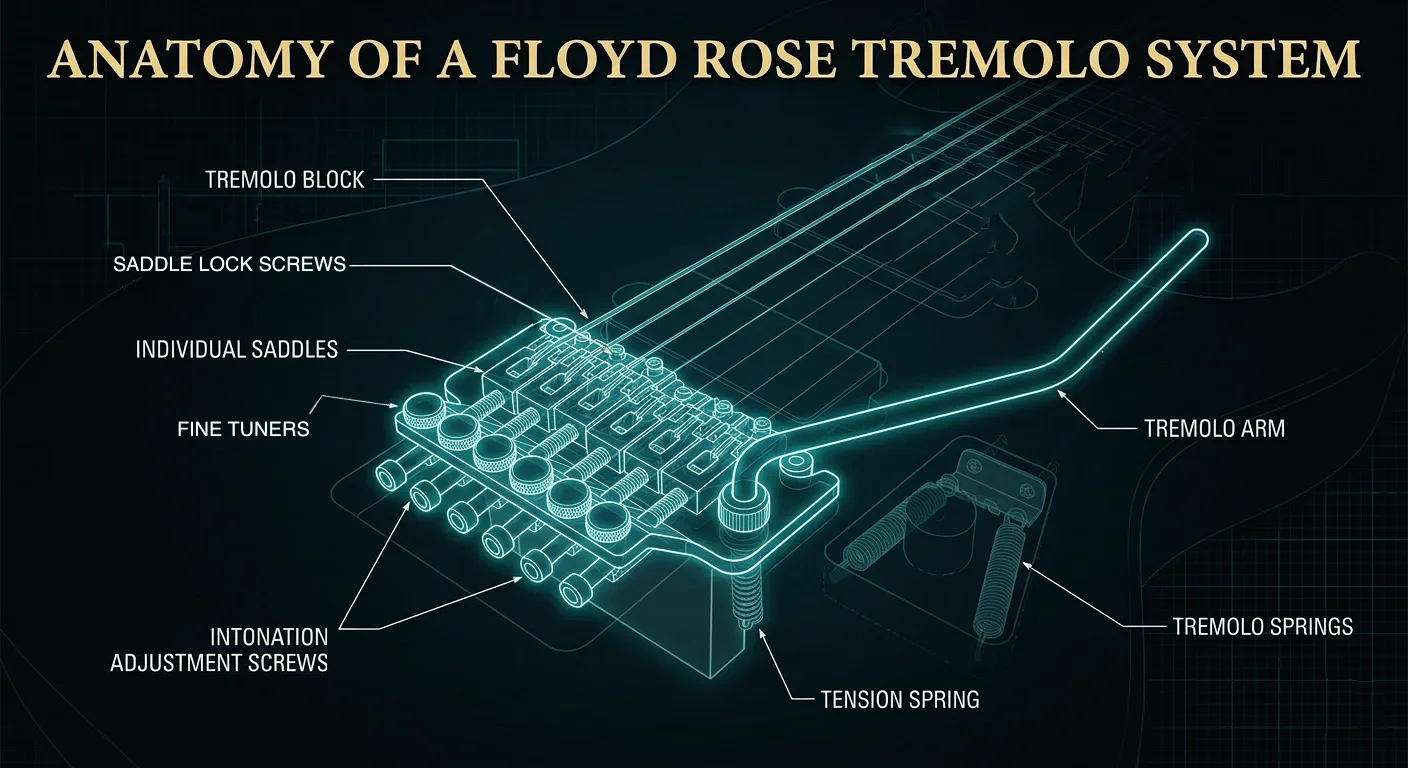
Start With the Bridge Level
Before you check intonation, make sure the bridge is sitting level and parallel to the body. If the bridge is tilted too far forward or back, your intonation readings can shift while you work.
This is one of the most important parts of the process. A Floyd Rose bridge only behaves predictably when the spring tension and string tension are in balance.
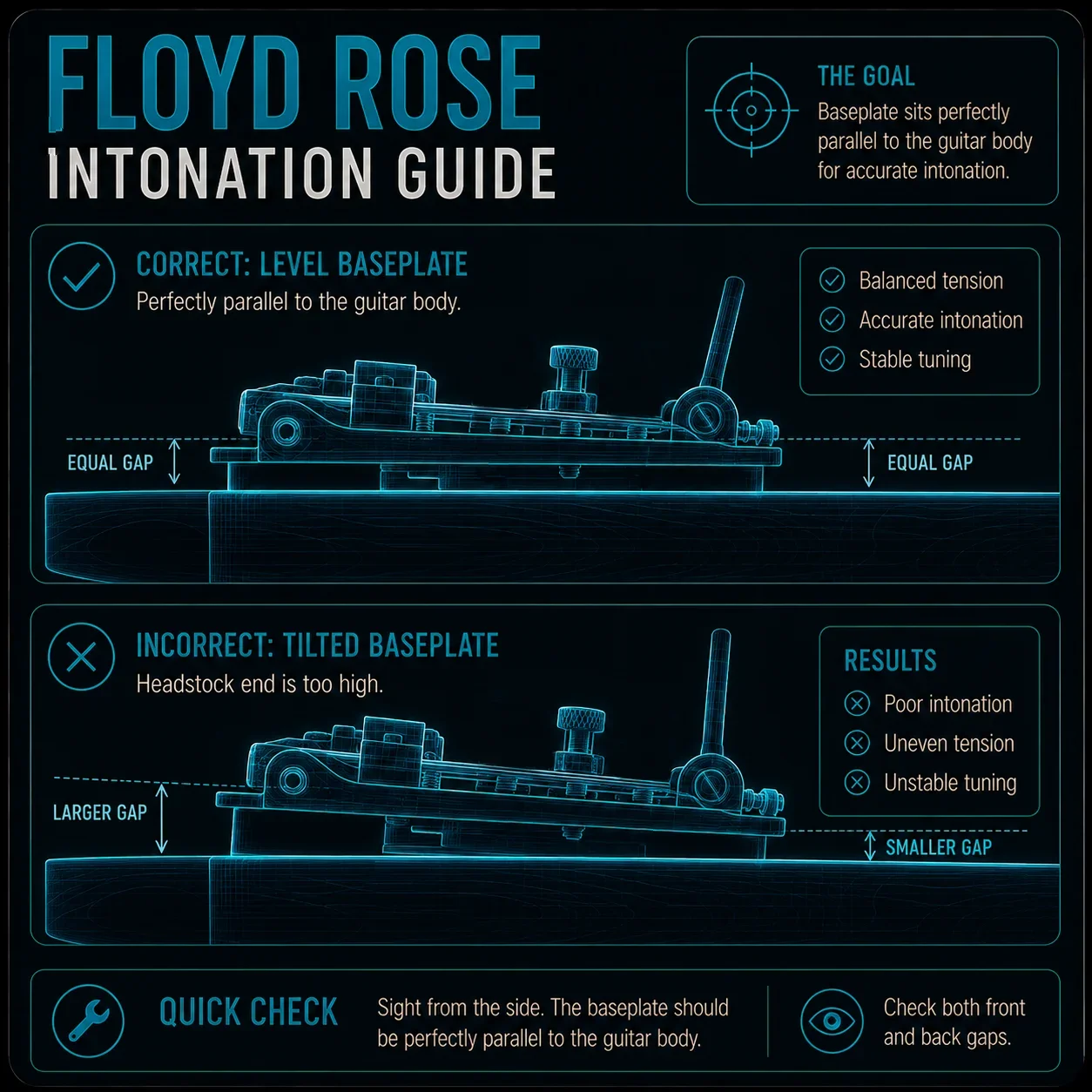
If the bridge is not level, fix that first. Intonation is much easier when the bridge is already sitting where it should.
Tune Before You Compare
For the cleanest reading, tune the guitar first. If the nut is unlocked or the strings are still settling, the readings can move around while you are trying to compare them.
Once the guitar is stable, check the open string and the fretted 12th fret note. That comparison tells you whether the saddle needs to move forward or back.

Move One Saddle at a Time
If the fretted note is sharp, move the saddle back — away from the neck. If the fretted note is flat, move the saddle forward — toward the neck.
⚠️ Floyd Rose bridges do not use intonation screws. Locking screws are holding back the Saddles which need to be moved manually instead.
Loosen the locking screw for that saddle, make the movement, then retighten it before checking again. Keep the changes small so you do not overshoot the target.
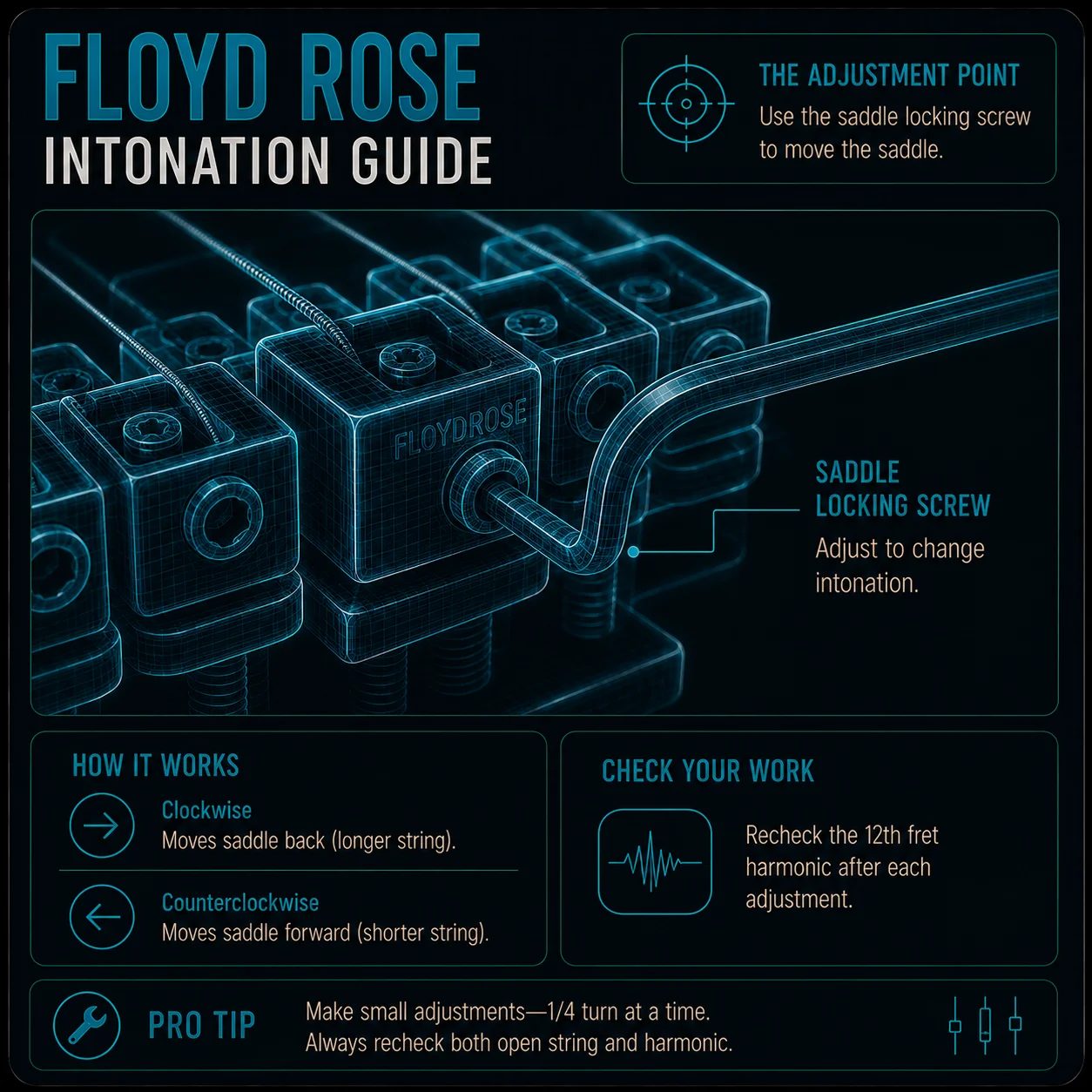
Small changes matter more than big ones on a Floyd Rose. The bridge is a balanced system, so a tiny move can change more than you expect.
Retune After Every Move
After each saddle adjustment, retune the string and compare the notes again. Do not trust the pitch until the guitar is back at pitch.
If you skip the retune step, you can end up chasing a moving target. That is one of the fastest ways to make a Floyd Rose setup feel frustrating instead of controlled.
Check the Whole Bridge
As you work, keep an eye on the overall bridge angle. A single adjustment can change how the bridge sits, especially if the springs are tight or the guitar is heavily set up.
If the bridge starts drifting out of level, pause and rebalance it before continuing with the intonation work.
Locking Nut and Fine Tuners
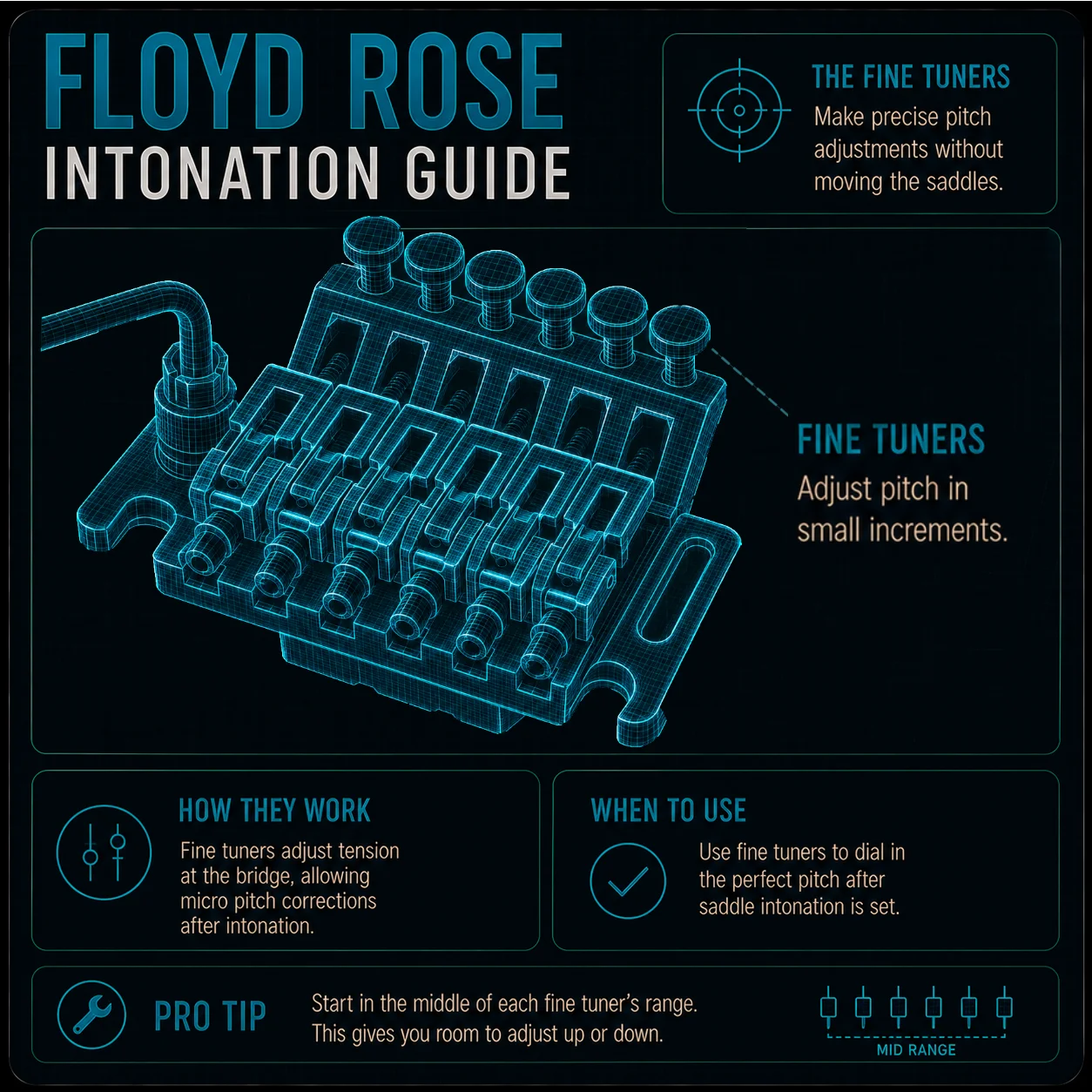
Only lock the nut at the headstock once the intonation is balanced and the guitar is tuned properly across the neck. Once the nut is locked, use the fine tuners on the bridge for the final small tuning changes.
That sequence matters. The locking nut is the last step, not the first one.
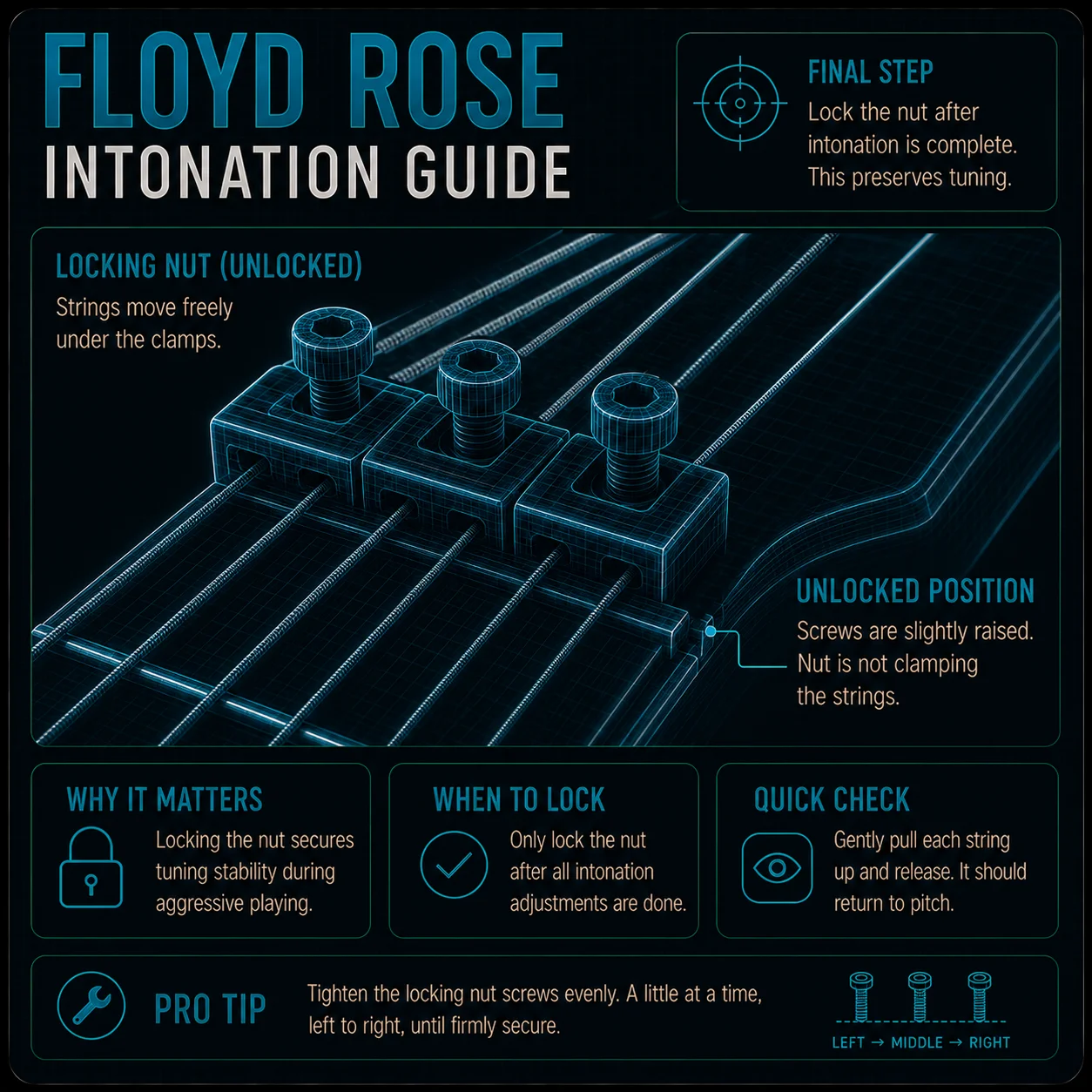
Set the bridge first, lock the nut last, and use the fine tuners for cleanup. That order saves a lot of frustration.
The Basic Workflow
Tune the guitar.
Make sure the bridge is level.
Check the open string against the fretted 12th fret note.
Move the saddle forward or back.
Retune.
Recheck.
Repeat until the notes are balanced.
Lock the nut only after the setup is stable.
That is the whole setup in a nutshell. The Floyd Rose is not hard once you respect the fact that everything is connected.
Closing Note
A Floyd Rose can feel intimidating at first, but it is really just a balance system. Once the bridge is level and the tuning is stable, the rest becomes a careful process of small moves and repeated checks.
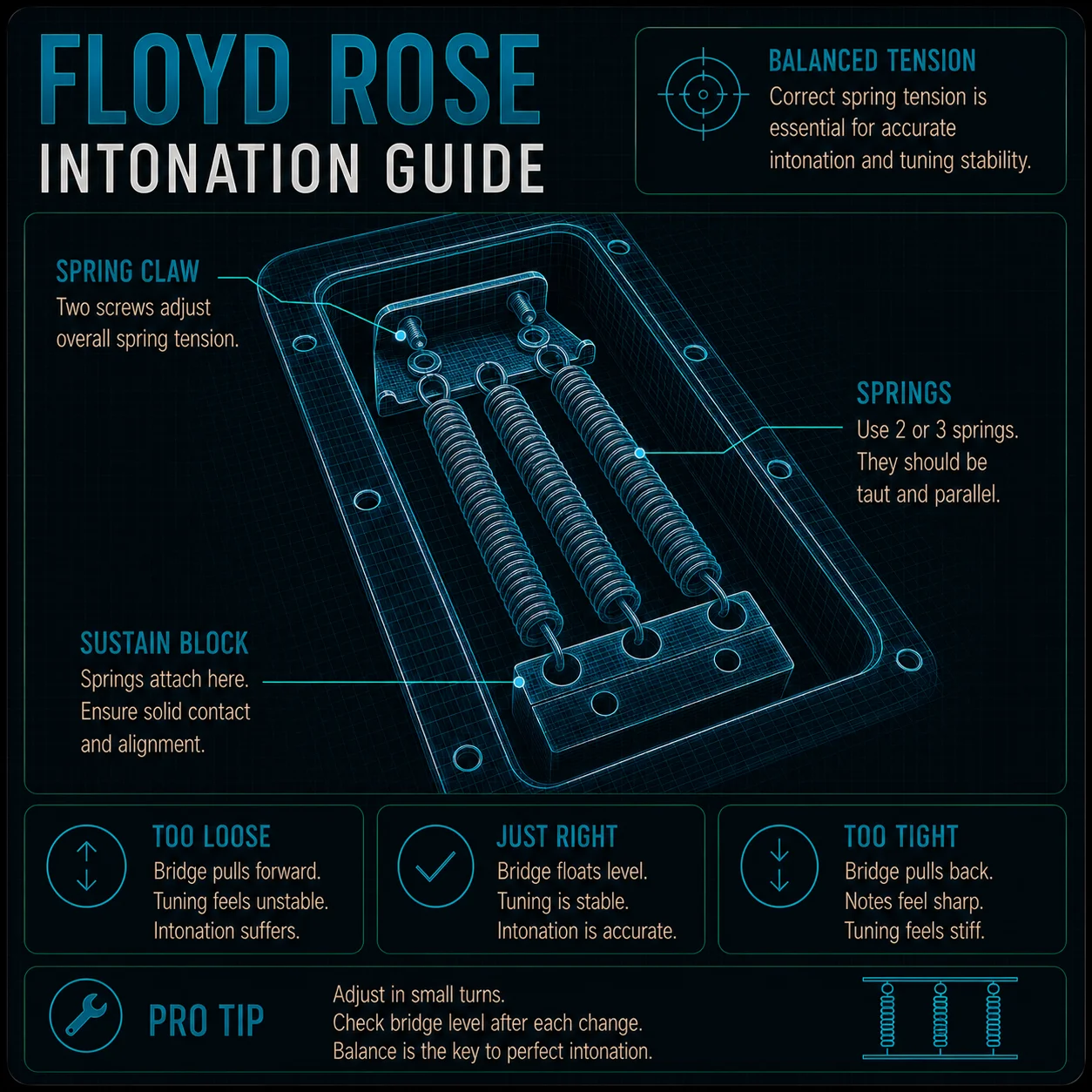
Take your time, keep the bridge balanced, and do not lock anything down until the guitar is actually ready.
Next Step
Use the Intonator Tool while you work so you can compare each string cleanly as you go. If the bridge is fighting you, stop and rebalance before making more changes.
Not sure if you actually have an intonation problem? The Guitar Setup Assistant can help you figure out where to start — it walks you through the most common setup issues so you know what to tackle first.
Ready to check your intonation?
Open the Intonator Tool →Floyd Rose questions, answered
How should a Floyd Rose bridge sit when it's right?
Parallel to the body — level, not tipped forward or back. That balance point is the whole foundation. If the bridge is diving or lifting, intonation and tuning will keep slipping no matter how carefully you set the saddles.
How do I adjust action on a Floyd Rose?
Through the two posts the bridge pivots on, rather than at the individual saddles. Raising or lowering the posts moves the whole bridge, so both sides need to move together to keep it level. Recheck the bridge angle afterward — moving the posts can change how the springs balance.
Why does intonating one take so long?
Because every saddle move means unlocking, detuning, adjusting, retuning, and rechecking. Moving one saddle shifts the spring tension slightly, which nudges the others. It's not you doing it wrong — that back-and-forth is just how a floating bridge behaves.
Do I need special tools?
A set of Allen keys sized for your bridge, and a small screwdriver for the fine tuners. Some players like a Floyd-specific saddle tool, but it's a convenience rather than a requirement.
Do I have to redo everything if I change string gauge?
Usually yes, at least partly. A different gauge changes the pull on the springs, so the bridge finds a new resting angle. Expect to rebalance the springs, then recheck relief and intonation.