How to Know When Your Picks Are Affecting Your Tone
Your pick may be the smallest part of your rig, but it can change attack, clarity, and feel in a big way. Here is how to tell when it is time to switch.
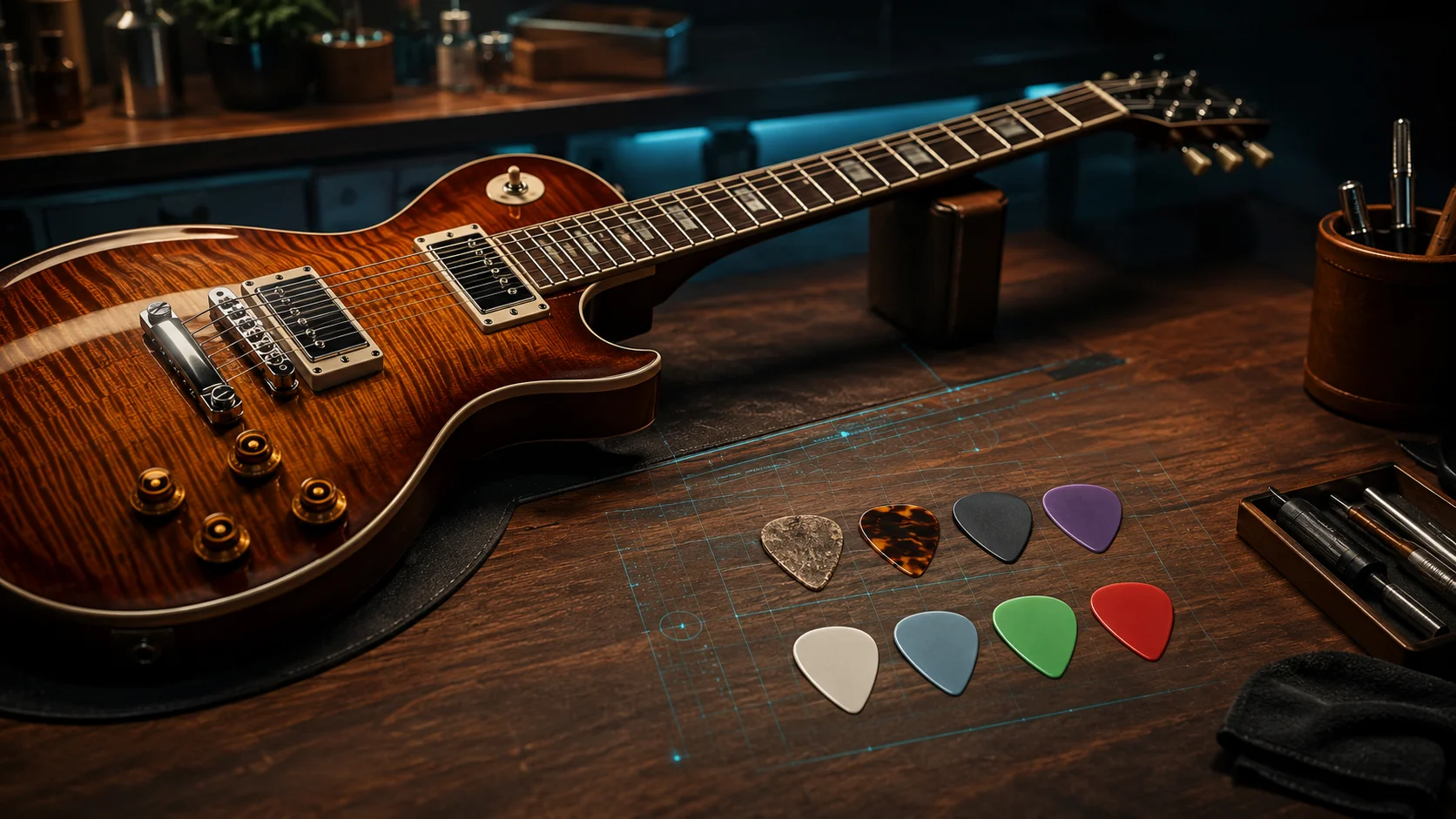
When guitar players think their tone is dull, scratchy, or thin, they usually look at strings, pedals, cables, or amp settings first. Those things matter, but sometimes the biggest change comes from the smallest part of the chain. The pick you use can shape attack, volume, and the amount of string noise you hear.
Because the pick is the physical bridge between your hand and the string, its shape, material, and wear level all affect how your notes start. A worn or mismatched pick can make clean playing feel harder than it should. That makes pick choice a small but very real part of guitar maintenance.
Check for wear
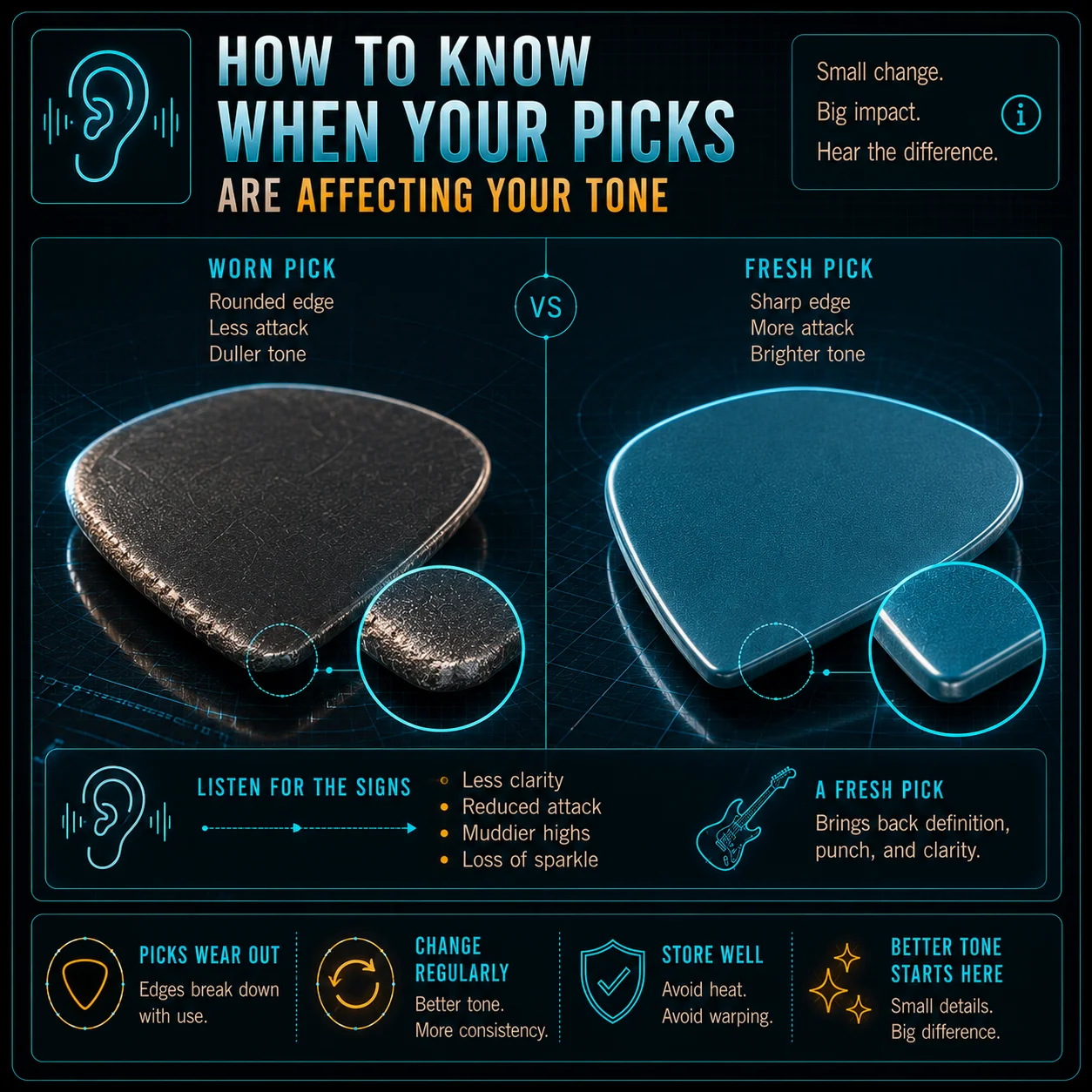
A pick changes over time, even if it looks fine at first glance. The striking edge can become chipped, rough, or rounded from constant contact with strings. When that happens, the attack starts to feel less precise.
A quick visual and tactile check is usually enough. If the edge feels jagged or the point has lost its shape, the pick may be affecting your tone more than you realize. Replacing a worn pick is one of the easiest tone fixes available.
Listen for tonal changes
Pick wear often shows up as changes in attack. A sharp, fresh pick usually gives a clearer and more immediate note start. A rounded or damaged pick can sound softer, duller, or slightly cloudy.
You may also notice more scrape or chirp on the string. That does not always mean the pick is bad, but it can mean the edge or material is no longer matching your playing style. Listening closely is often the fastest way to tell.
Match material to feel
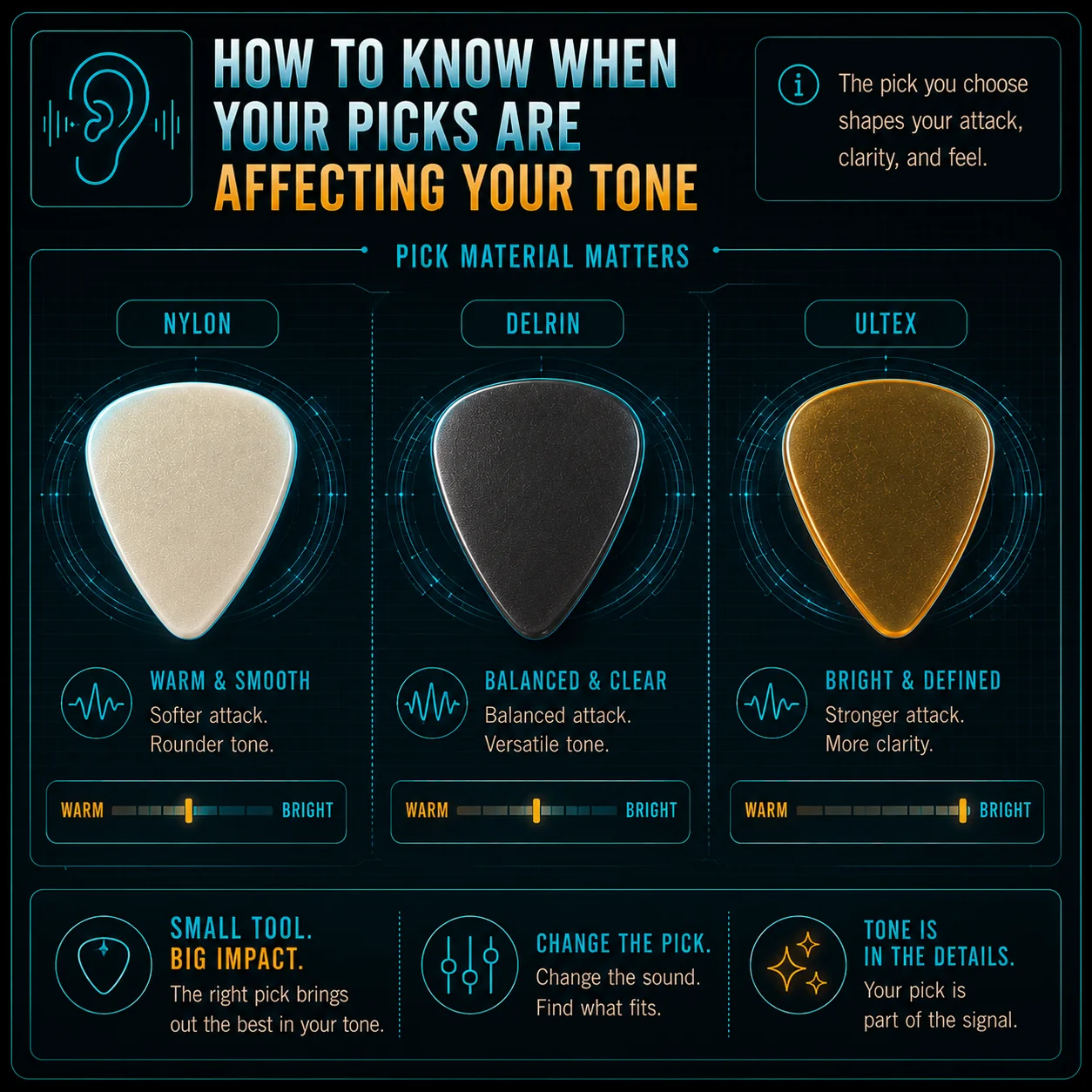
Pick material matters more than many players expect. Different plastics and compounds create different amounts of flex, snap, and resistance against the string. That changes the way the note begins and how the pick feels in the hand.
Some players prefer a warmer, softer attack, while others want a brighter and more percussive feel. The best material depends on the sound and control you want. A small pick test can reveal more than a lot of guesswork.
Chasing tone? String material is the other easy lever to pull.
Bright or Warm Tone →Try a few types
A variety pack is often the easiest way to compare pick shapes and materials without overspending. It lets you discover what actually works in your hands instead of chasing marketing language.
You do not need a huge collection. A few good comparisons are enough to show whether you prefer more snap, more warmth, or more control. That keeps the whole thing honest and low-pressure.
No need to overthink this one — the goal is to try a few and feel the difference. A small sampler tells you more than any spec sheet.
Heads up: some links below are affiliate links. If you buy through them, Pocket Roady may earn a small commission at no extra cost to you. We only point to gear we'd reach for ourselves.
- Pick variety pack — a mix of shapes and materials for a few dollars. The cheapest, fastest way to find what your hands like.
- Thickness sampler (thin to heavy) — same shape, different gauges, so you can feel how thickness changes snap and control.
- Textured grip picks — worth a try if the pick slips when your hands get sweaty. Grip problems often masquerade as tone problems.
Use the right context
Sometimes a pick issue is really part of a bigger setup problem. If the strings are old, the neck is off, or fret buzz is creeping in, the pick may be getting blamed for tone problems it did not create. That is why this topic connects naturally to the rest of the care system.
The Guitar Care Hub helps you move from one issue to the next without guessing. If the pick is not the whole answer, the related string and setup guides can help complete the picture. That keeps the whole thing useful and easy to navigate.
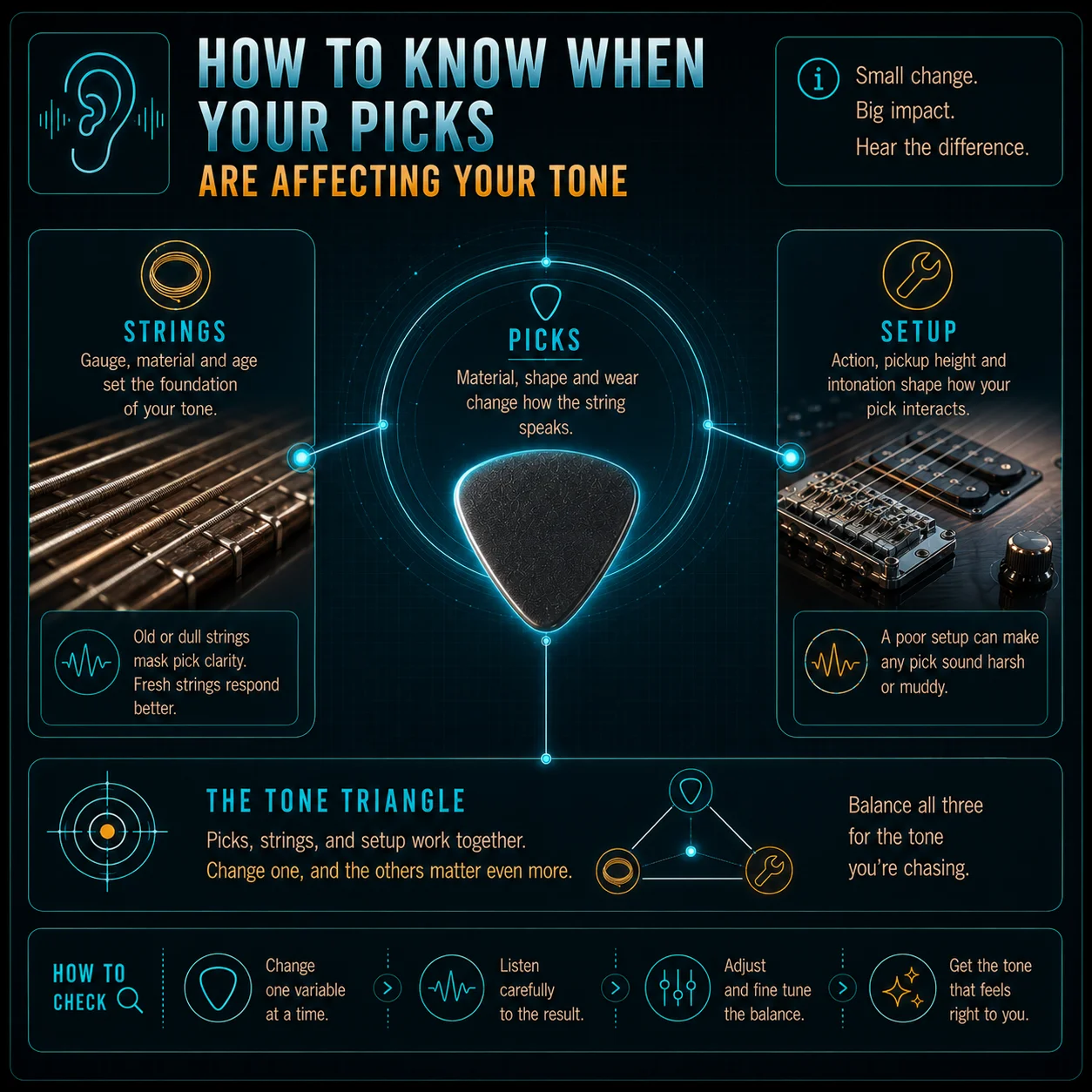
Rule out the pick before blaming the rig. It's the cheapest tone experiment you can run — swap to a fresh or different pick before you start tweaking pedals and amp knobs. If the attack snaps back, you just saved yourself a lot of fiddling.
The Pocket Roady order
Here is the simplest workflow — start at the top and work your way down:
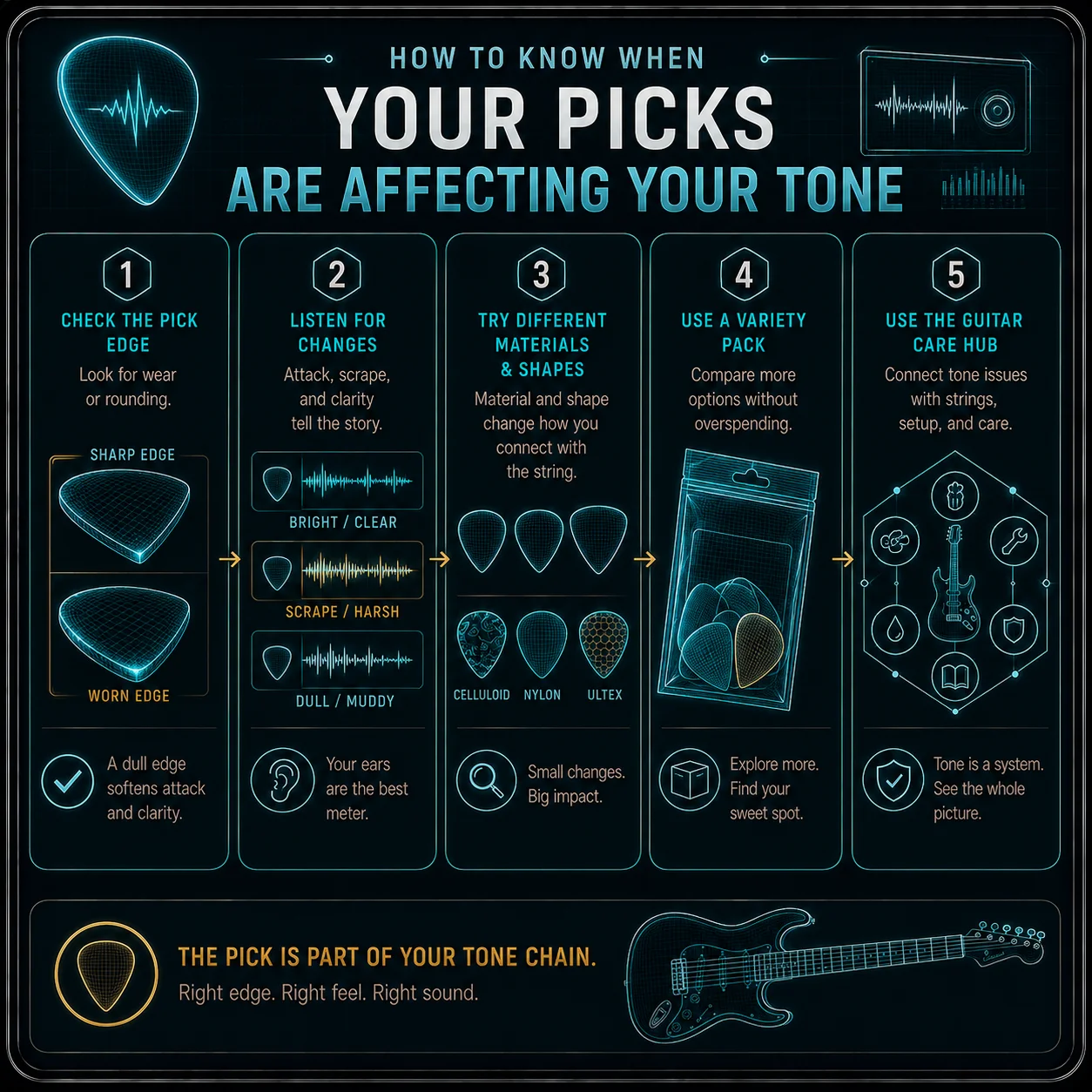
Check whether the pick edge is worn or rounded.
Listen for changes in attack, scrape, and clarity.
Try different pick materials and shapes.
Use a variety pack if you want to compare without overspending.
Use the Guitar Care Hub to connect tone issues with strings and setup.
That sequence keeps the topic calm and practical. A pick is small, but it can make a surprisingly big difference in how your guitar feels and sounds.
Where to go next
If your tone feels off, the pick is one of the easiest things to check first. It is cheap to replace, quick to compare, and often more influential than players expect.
Want to keep your whole playing setup in sync? Start with the Guitar Care Hub, then move into the related care and setup guides that match your current tone issues.