Practice Guide
How to Train Your Ear for Pitch and Intervals
A stronger ear helps you hear sharp and flat notes faster, recognize intervals more easily, and tune with more confidence. Here's how to start.
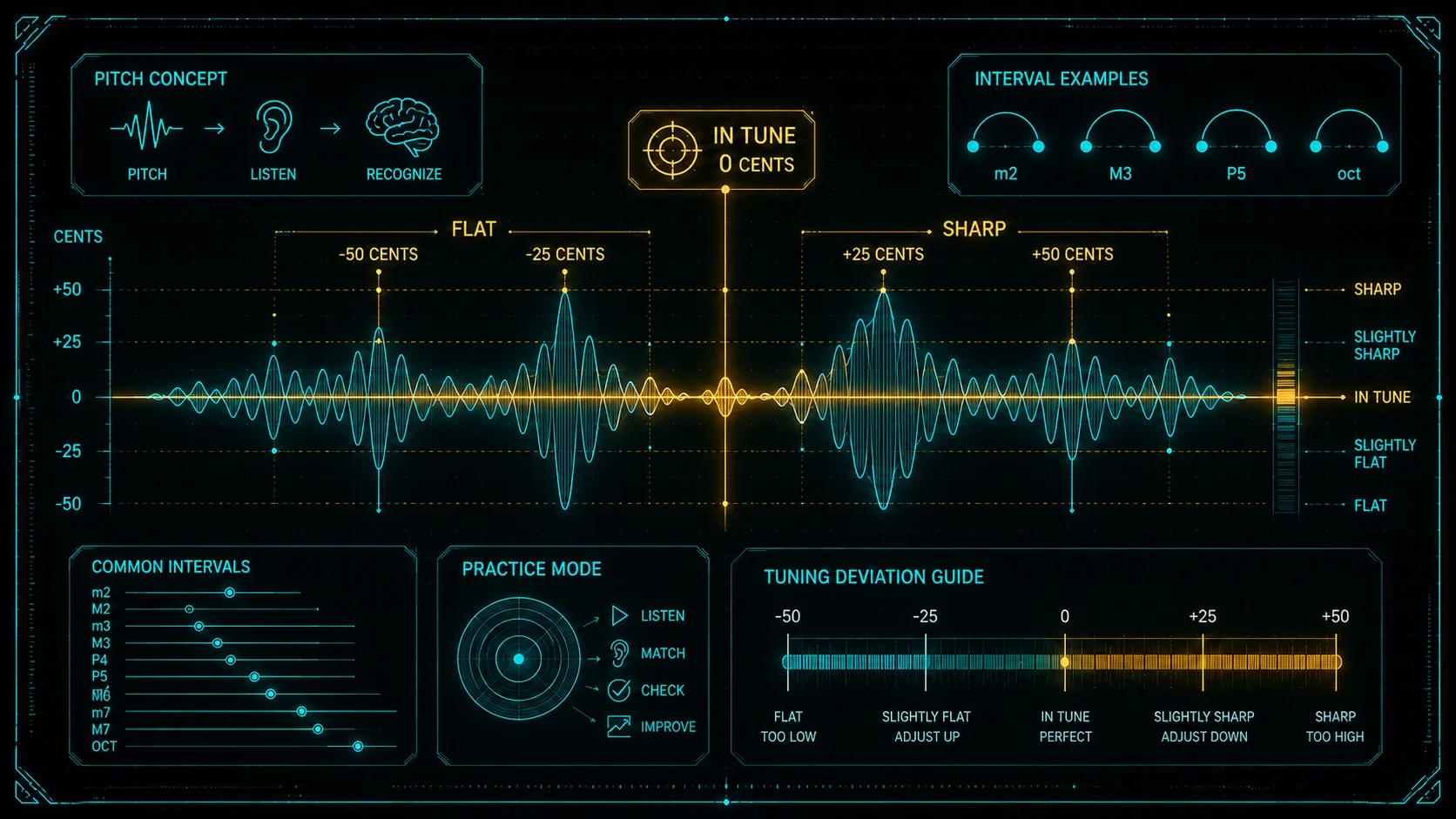
We have all been there. You are in the middle of a good practice session, and something sounds slightly off. A chord feels tense, a note does not settle right, or the guitar seems a little sour even though your hands are doing everything correctly. When that happens, your ear is often noticing the problem before your brain can explain it.
The good news is that a good ear is not magic. It is a skill you can train. Once you learn to hear pitch direction and interval distance more clearly, you become much better at tuning, ear training, and hearing when your guitar setup is working against you.
Hear sharp and flat
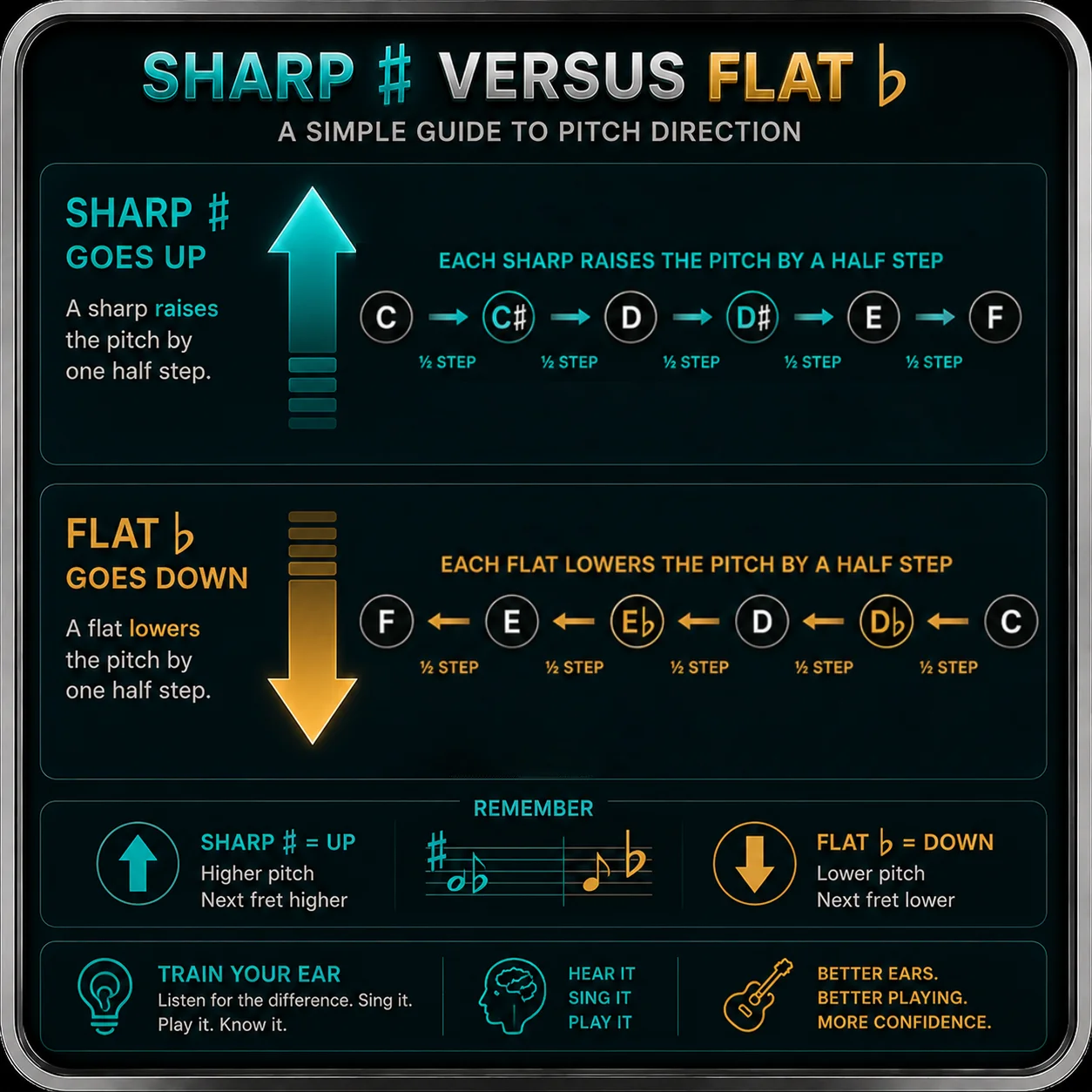
The first step is learning to hear whether a note is sharp or flat. Sharp means the pitch is too high. Flat means the pitch is too low. That basic direction skill is the foundation of all ear training.
Often sounds tense, squeezed, or pulled upward. The note wants to come down.
Often sounds looser, softer, or slightly drooping. The note wants to come up.
If you can tell which direction the pitch is drifting, you already have a much stronger sense of control over tuning.
Listen for beating
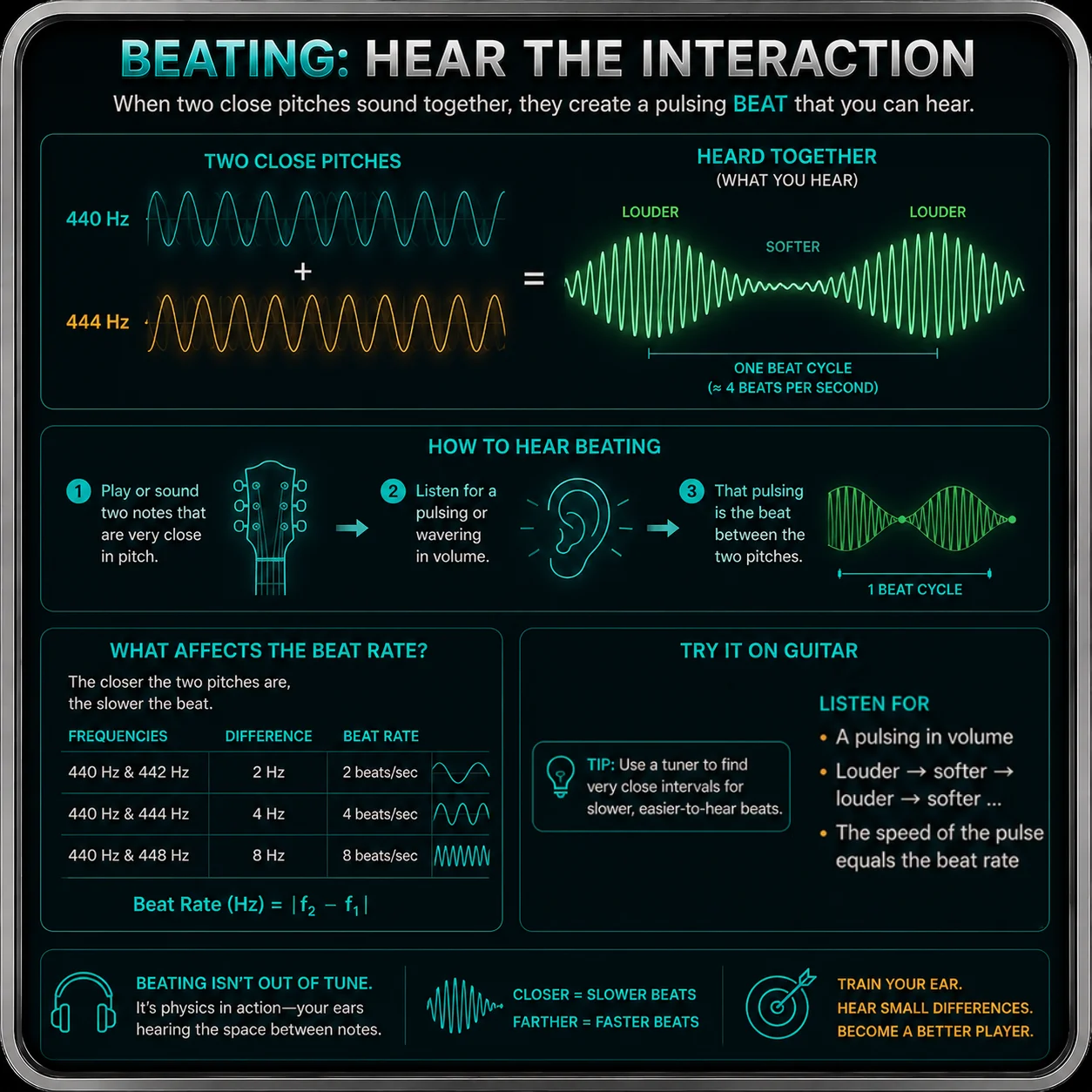
When two notes are close but not quite the same, you can often hear a fluttering or wobbling sound. That is called beating, and it is one of the clearest ways to hear pitch mismatch. The faster the wobble, the farther apart the notes are.
This is useful because your ear can start to recognize not just whether something is off, but how far off it is. That is a huge step toward more confident tuning and better pitch recall. It also helps you catch small intonation problems before they become obvious.
Learn intervals by sound
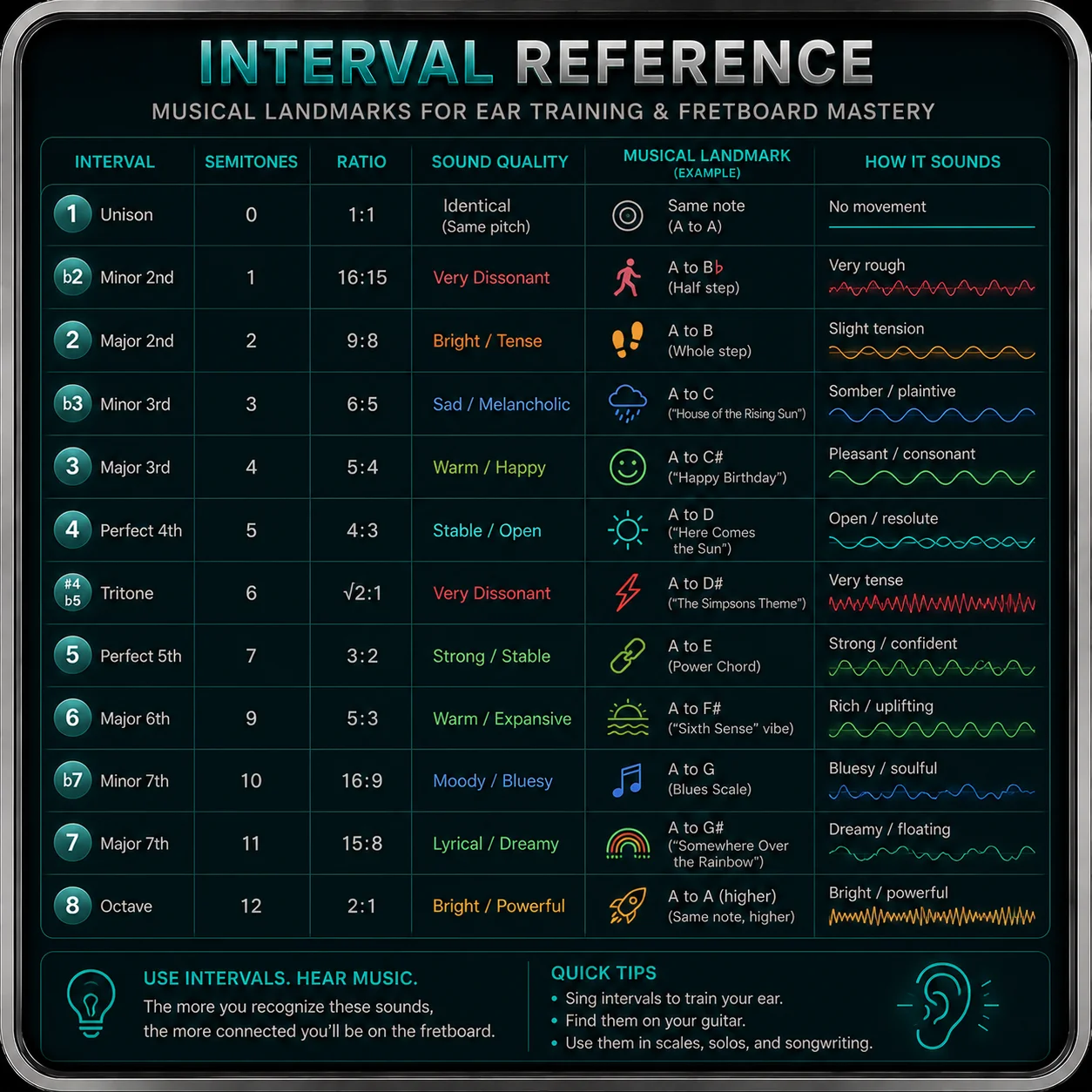
An interval is the distance between two notes, and the easiest way to remember them is often by associating them with songs you already know. A perfect fourth, perfect fifth, major sixth, and octave all have strong, recognizable sounds. Those familiar landmarks make interval training much less abstract.
The point is not to memorize theory for its own sake. The point is to give your ear a shortcut. If you can hear the character of an interval, you can recognize it much faster when it shows up in a melody, chord, or solo.
Use the fretboard connection
Your ear training and your fretboard knowledge should work together. If you know where an interval lives on the neck, you can hear it more clearly. If you can hear it clearly, you can find it faster on the guitar.
That is why ear training becomes much more powerful when you connect it to real notes on the instrument. You are not just guessing at pitch anymore. You are building a direct relationship between sound and shape.
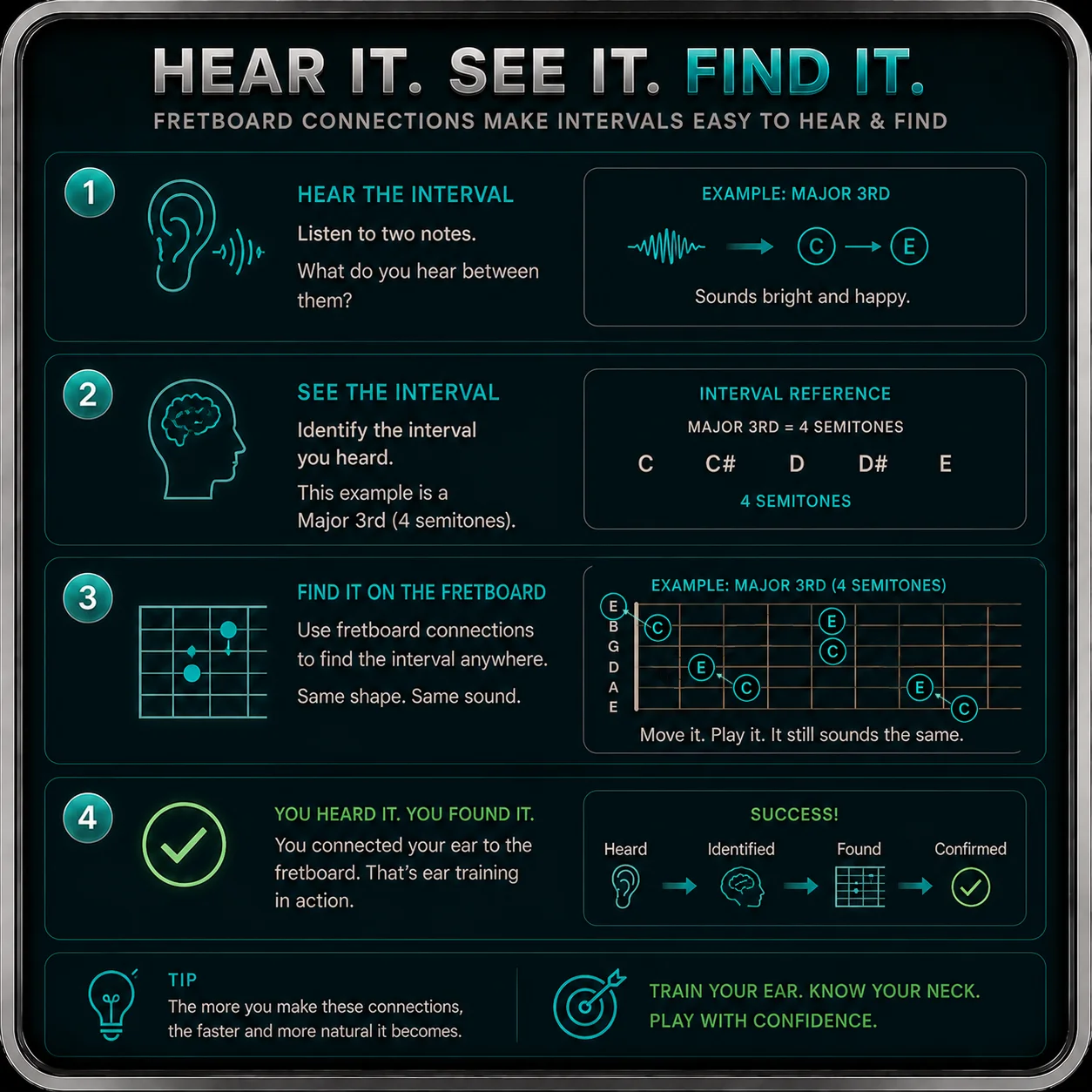
Understanding interval theory in your head is one thing, but instantly translating those pitch relationships onto the fretboard under your fingers is where real musical freedom happens. Whether you are trying to map out a major third across adjacent strings or visualize octave shapes in a specific position, target practice is key.
The interactive Guitar Interval Finder can help you build up your interval skills and really open up the fretboard like few exercises ever will!
Designed to bridge the gap between ear training and neck visualization, this tool let you explore full fretboard mappings, isolate intervals by position or string set, and test your knowledge with dedicated Melodic and Visual Drill Modes. Load it up, run a quick drill, and watch your fretboard fluency skyrocket!
Open the Interval Finder →Hear intonation problems
Once your ear gets sharper, you will start noticing when notes are pulling sharp or flat higher up the neck. That is not your imagination. Sometimes the guitar is open-string perfect but becomes inaccurate as you move up the fretboard.
That is where setup and ear training meet. If the guitar seems right at open position but wrong higher up, the issue may be intonation rather than your ear. The Intonator is the right next step when you want to connect what you hear to the mechanical setup.
Hearing pitch problems higher up the neck? The Intonator helps you measure and correct saddle position so what you hear matches what you play.
Open the Intonator →Use the Ear Trainer
This is exactly where the Ear Trainer helps. It gives you a simple way to practice interval recognition, pitch direction, and sharp-versus-flat listening without making the process feel dry or intimidating. The goal is to build confidence through repetition.
A few minutes a day is enough to start improving. The more often you listen actively, the faster your ear learns what "right" actually sounds like.

Want a faster way to build pitch confidence? Open the Ear Trainer to practice intervals, pitch direction, and sharp-versus-flat recognition in real time.
Open the Ear Trainer →The Pocket Roady order
Here is the simplest workflow — start at the top and work your way down:
Learn to hear sharp versus flat. That pitch direction skill is the foundation everything else builds on.
Practice listening for beating and pitch wobble. When the flutter disappears, the notes are in tune.
Train your ear on basic intervals. Anchor them to songs you know so recognition becomes automatic.
Connect what you hear to fretboard locations. Sound and shape reinforce each other.
Use the Ear Trainer regularly and the Intonator when pitch problems seem mechanical rather than musical.
That order keeps the process calm and practical. The more you train your ear, the better you get at hearing both musical and setup-related pitch problems.

Where to go next
If you want better tuning confidence and stronger interval recognition, ear training is one of the highest-value habits you can build. It helps with playing, writing, and diagnosing setup issues before they become a bigger problem.
Want a faster way to build pitch confidence? Open the Ear Trainer to practice intervals, pitch direction, and sharp-versus-flat recognition in real time — or check the Intonator if you suspect the guitar itself is the problem.