Practice Guide
How to Master Guitar Bending and Vibrato
Bending and vibrato are where guitar tone starts to sing. Learn how to hit the target pitch, stay in tune, and add control to every note.
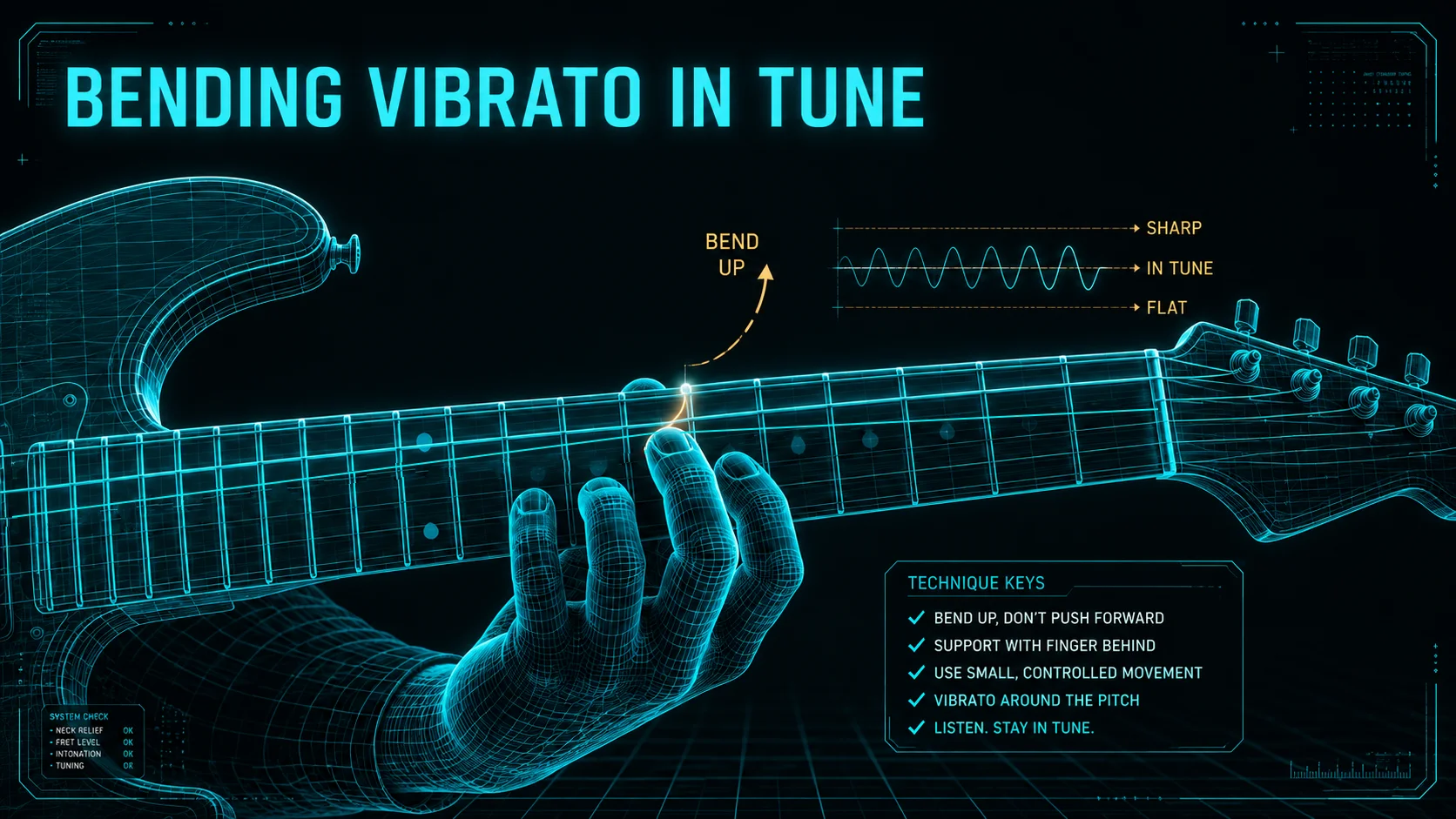
Think about your favorite guitar solo for a moment. When you hum it in your head, you are probably remembering a single note held with feeling, a smooth bend that lands perfectly, or a vocal vibrato that gives the line its shape. Those moments are often what make a solo feel unforgettable.
Bending and vibrato are the soul of the guitar, but they are also some of the hardest techniques to keep in tune. If a bend lands short or the vibrato shakes too nervously, the whole phrase can sound shaky. The good news is that both skills can be trained with a calm, repeatable approach.
String bending
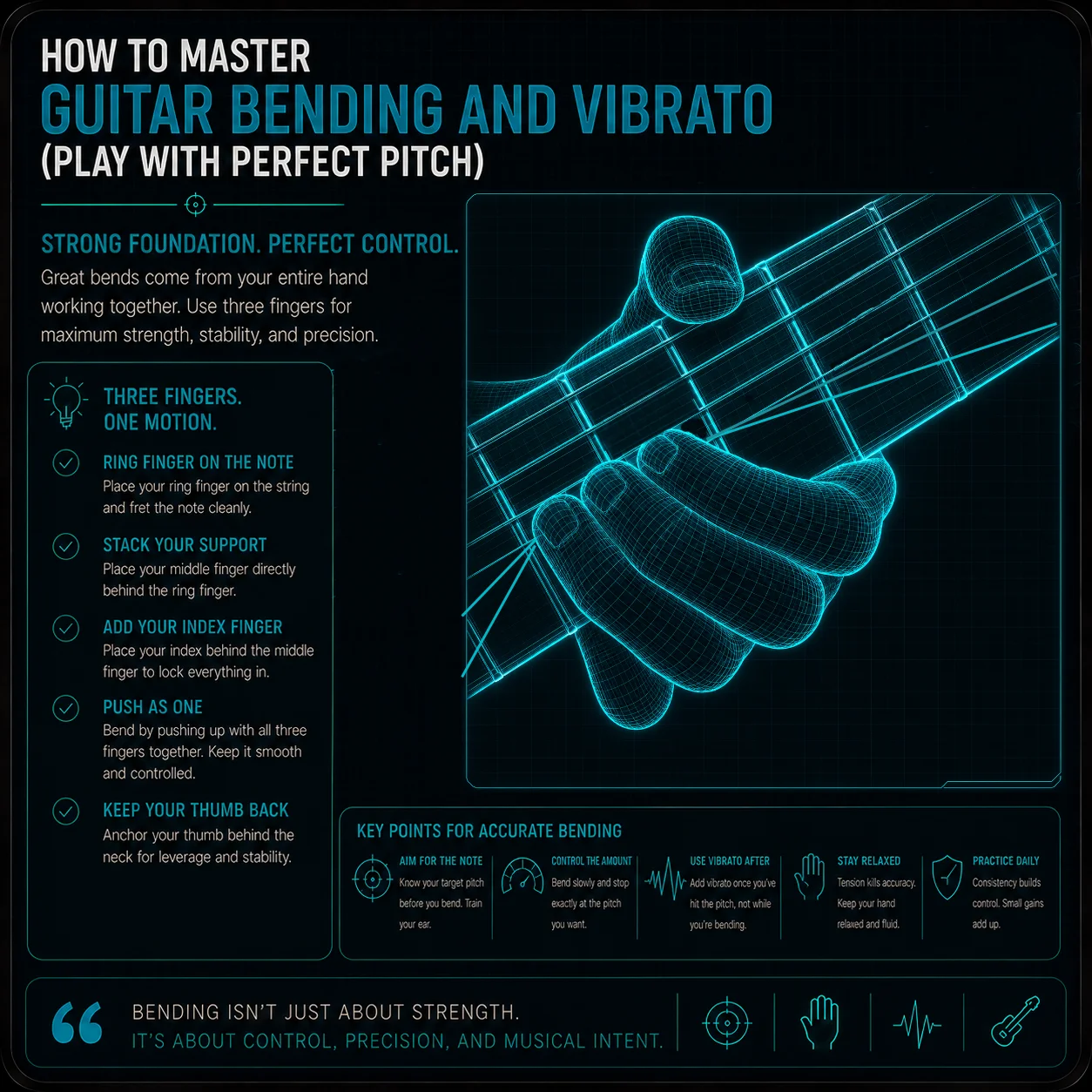
The biggest mistake guitarists make when trying to bend a string is relying entirely on the strength of one finger. A single finger alone can buckle under the tension, which makes the pitch harder to control. String bending works best when the fingers support each other.
Use the fingers behind the bending finger as reinforcements. If you are bending with your ring finger, let the middle and index fingers help push and stabilize the movement. That shared pressure gives you much better control over the pitch.
Pivot from the wrist
If you try to bend by curling just the finger joints, the motion gets weak and unstable. The better approach is to let the wrist and forearm drive the bend. That creates a smoother, more controlled movement.
Think of the bend as a small rotational push rather than a finger-only squeeze. When the wrist does the work, the pitch is easier to shape and the hand stays more relaxed. That is especially important for bends that need to land exactly in tune.
Hear the target pitch
A bend is not just a motion — it is a pitch destination. Before you bend, you should already know what note you are trying to hit. That is why ear training matters so much here.
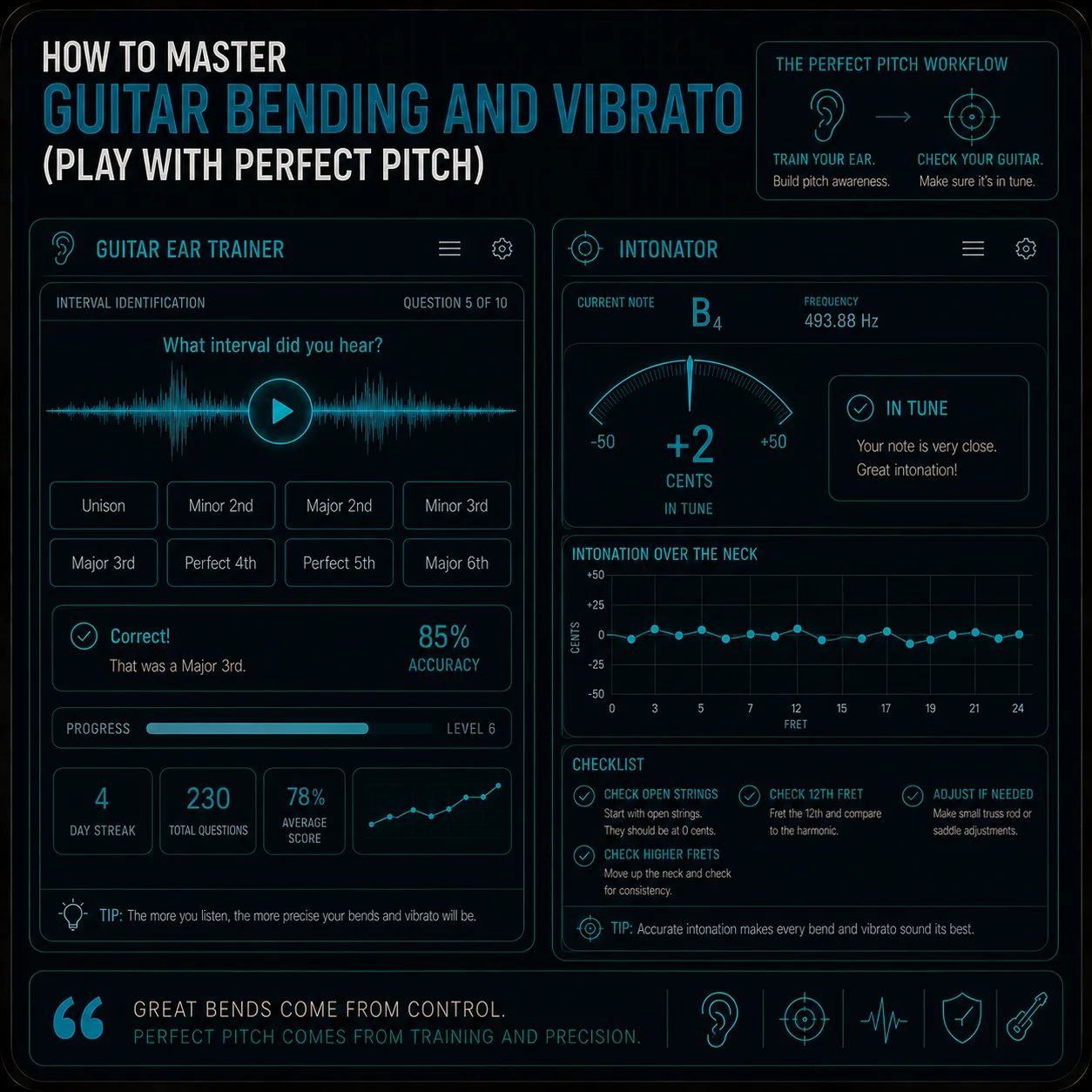
The Guitar Ear Trainer helps you hear the target before you move the string. If you can hear the note in your head first, your hand has a much better chance of landing there accurately. That connection between hearing and movement is what makes bends sound musical instead of random.

Want to hear the target pitch before you bend to it? Open the Guitar Ear Trainer to practice pitch matching in real time.
Open the Ear Trainer →Vibrato as controlled motion
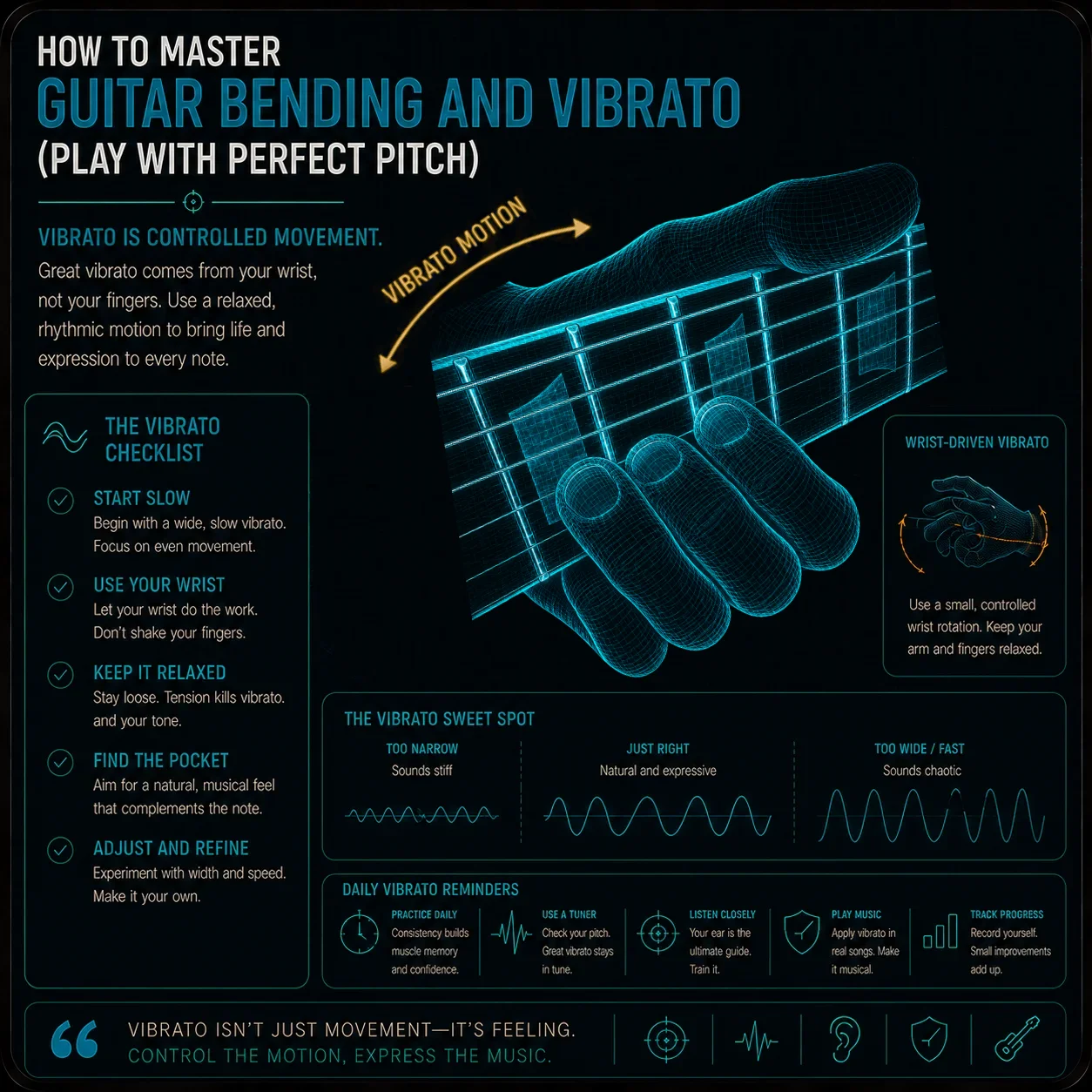
Vibrato is really a series of tiny bends and releases. The motion should start on pitch, move slightly above it, and return cleanly. If the movement is frantic, the note loses shape fast.
A steady vibrato feels more like a wave than a shake. Practicing it slowly with a metronome can help you keep the motion even and intentional. The goal is not speed — it is control.
Check the setup
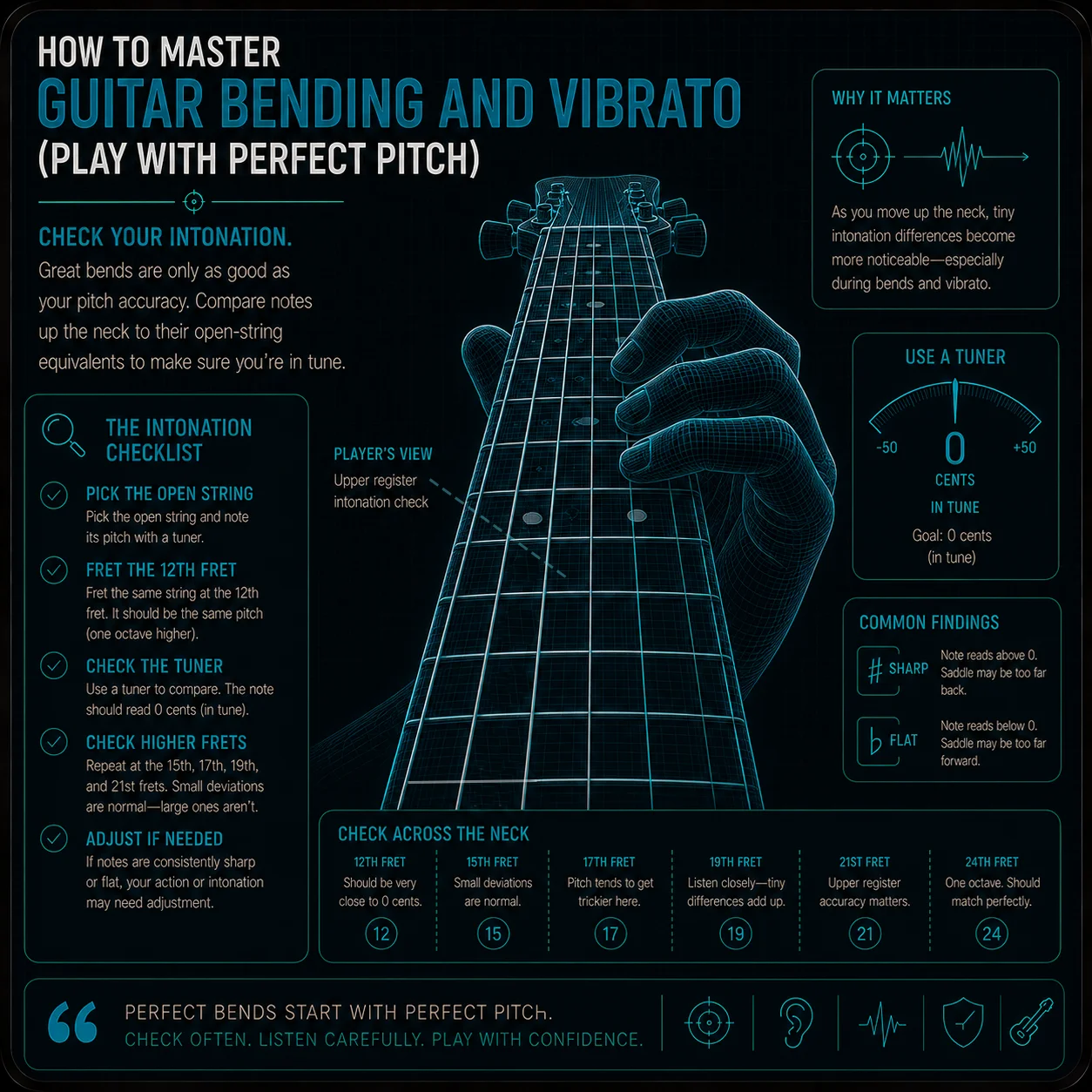
Sometimes a note seems out of tune even when your technique is decent. In that case, the guitar itself may be part of the problem. If higher-fret notes are consistently off, the issue may be intonation rather than touch.
That is where the Intonator comes in. You can use it to verify whether the guitar is actually intonated correctly before blaming your bends or vibrato. If the setup is off, even a good bend can feel impossible to trust.
Use the Ear Trainer and Intonator together
The Guitar Ear Trainer helps you hear whether a note is sharp or flat, while the Intonator helps you confirm whether the instrument is set up to play in tune. Together, they remove a lot of guesswork.
If you are serious about in-tune bending, this combination is hard to beat. It trains both the player and the instrument side of the equation.
The Pocket Roady order
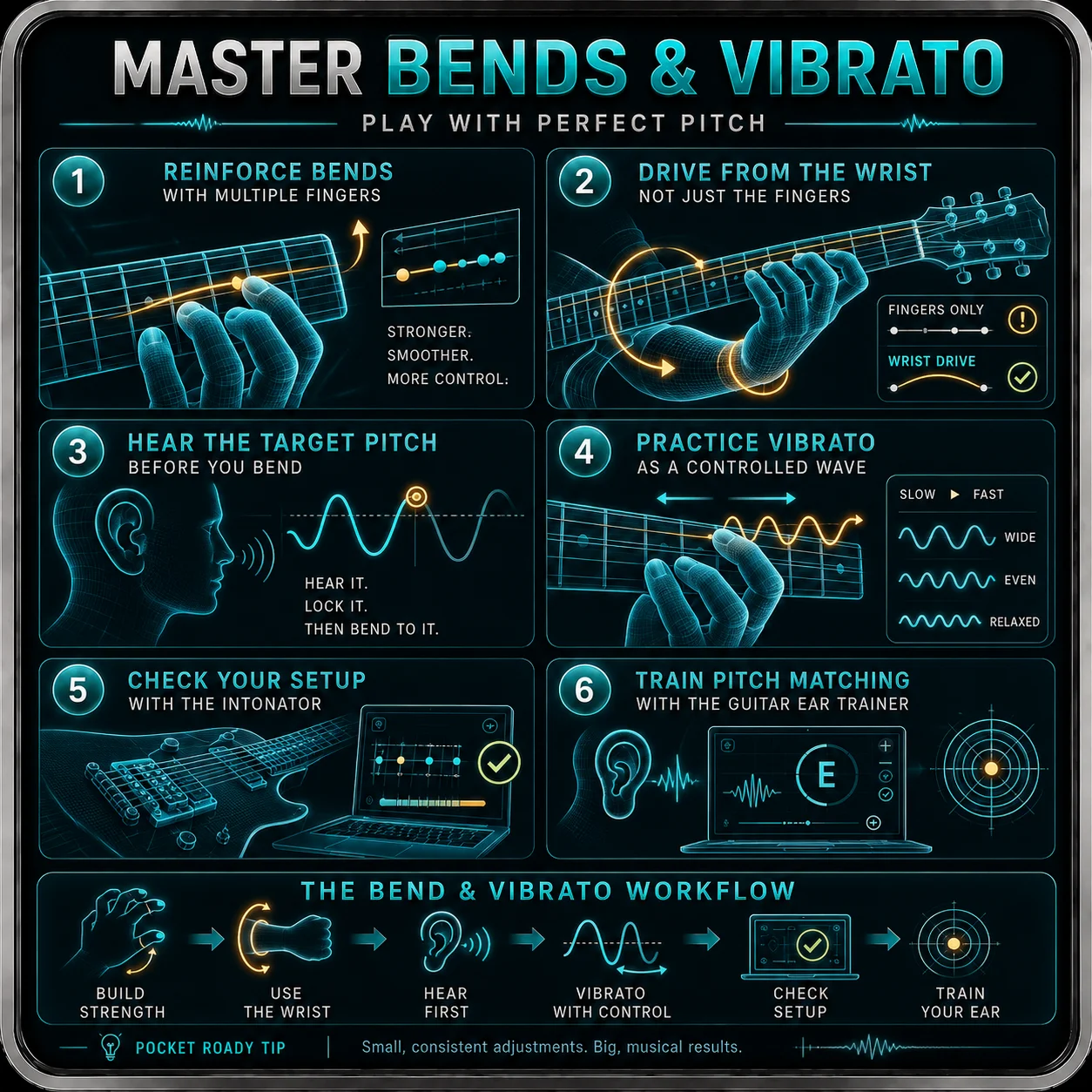
Here is the simplest workflow — start at the top and work your way down:
Reinforce bends with multiple fingers. Ring finger leads, middle and index support behind it.
Drive the bend from the wrist, not just the fingers. A rotational push is smoother than a squeeze.
Hear the target pitch before you bend. The note should be in your head before the hand moves.
Practice vibrato as a controlled wave. Start on pitch, push slightly above, return cleanly.
Check the guitar setup with the Intonator. If higher-fret notes are off, the guitar may need adjusting.
Train pitch matching with the Guitar Ear Trainer so your ear leads the hand, not the other way around.
Once your ears and hands work together, bends and vibrato start sounding much more expressive and much more in tune.
Where to go next
If you want your solos to sound more vocal and confident, bending and vibrato are two of the highest-value techniques to focus on. They are small movements, but they carry a lot of emotional weight.
Want to hear the target pitch before you bend to it? Open the Guitar Ear Trainer to practice pitch matching — then use the Intonator to confirm your guitar is set up correctly.