Practice Guide
The Complete Guide to Guitar Double Stops
Double stops add instant grit, harmony, and thickness to lead guitar. Learn how to find them, voice them, and play them cleanly.

If you have ever heard a blues solo, a country run, or an indie rock riff suddenly sound bigger than a single-note line, you were probably hearing double stops. They are one of the easiest ways to add instant texture to lead guitar without turning the phrase into a full chord.
A double stop is simply two notes played at the same time. That small idea opens the door to a lot of musical color. Once you know where to find them, double stops can make your leads sound thicker, more expressive, and much more alive.
What a double stop is
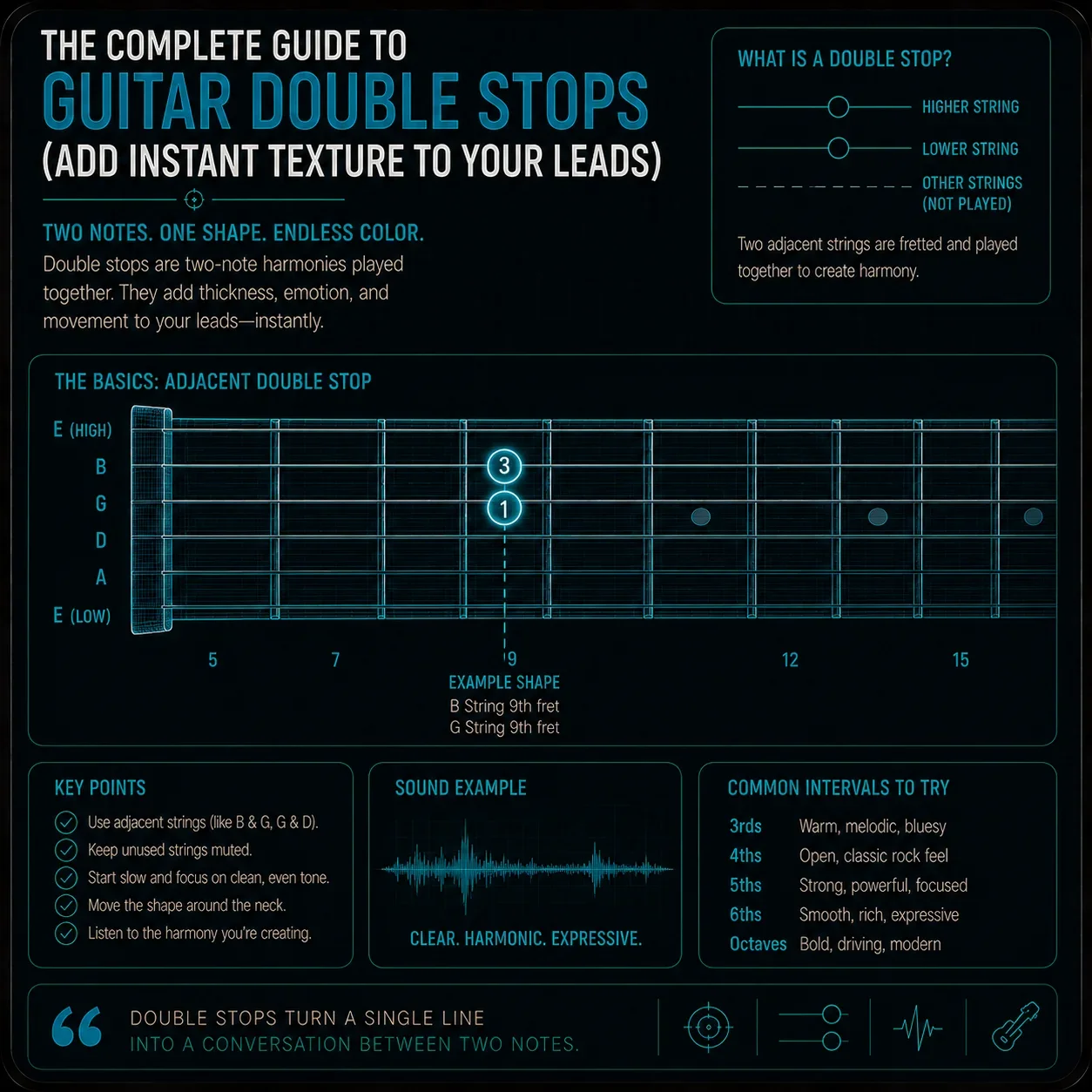
A double stop is any two notes played together. That can mean two strings on the same fret, a diagonal shape across neighboring strings, or any other small two-note harmony. The name sounds technical, but the concept is simple.
What makes double stops useful is that they give you harmony without the weight of a full chord. You still get movement, character, and attitude, but the line stays focused. That makes them perfect for lead fills, hooks, and solo lines.
Find them in pentatonic shapes
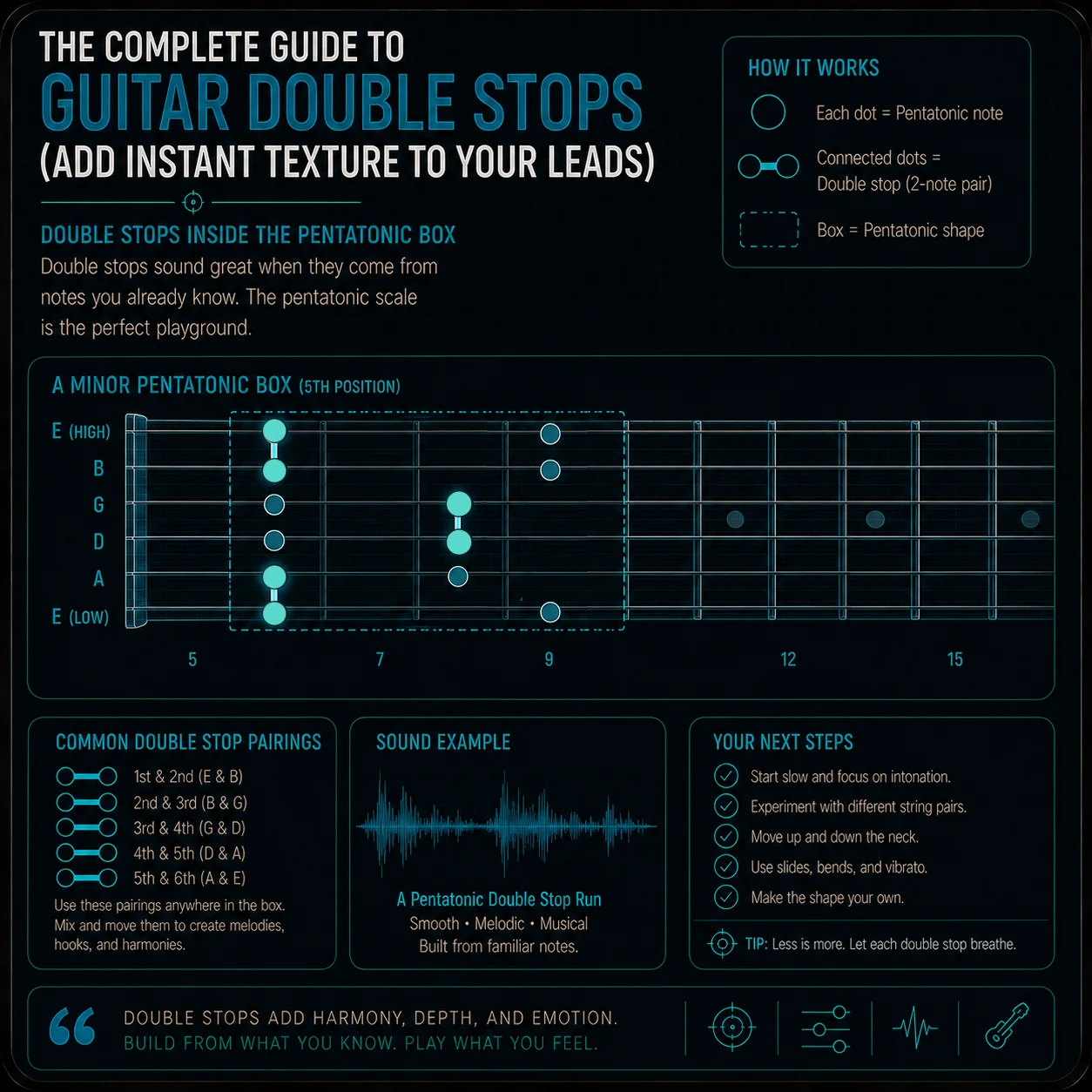
If you already know your minor pentatonic boxes, you already know some double stops. Many of them live right inside the scale shapes you are already playing. That means you do not need to learn a new system from scratch.
In a lot of cases, you can simply grab two neighboring strings that sit on the same fret or slightly offset frets. Once you start looking for them, they appear everywhere. That is why double stops feel like an upgrade to your existing lead vocabulary instead of a separate topic.
Hear the interval flavor
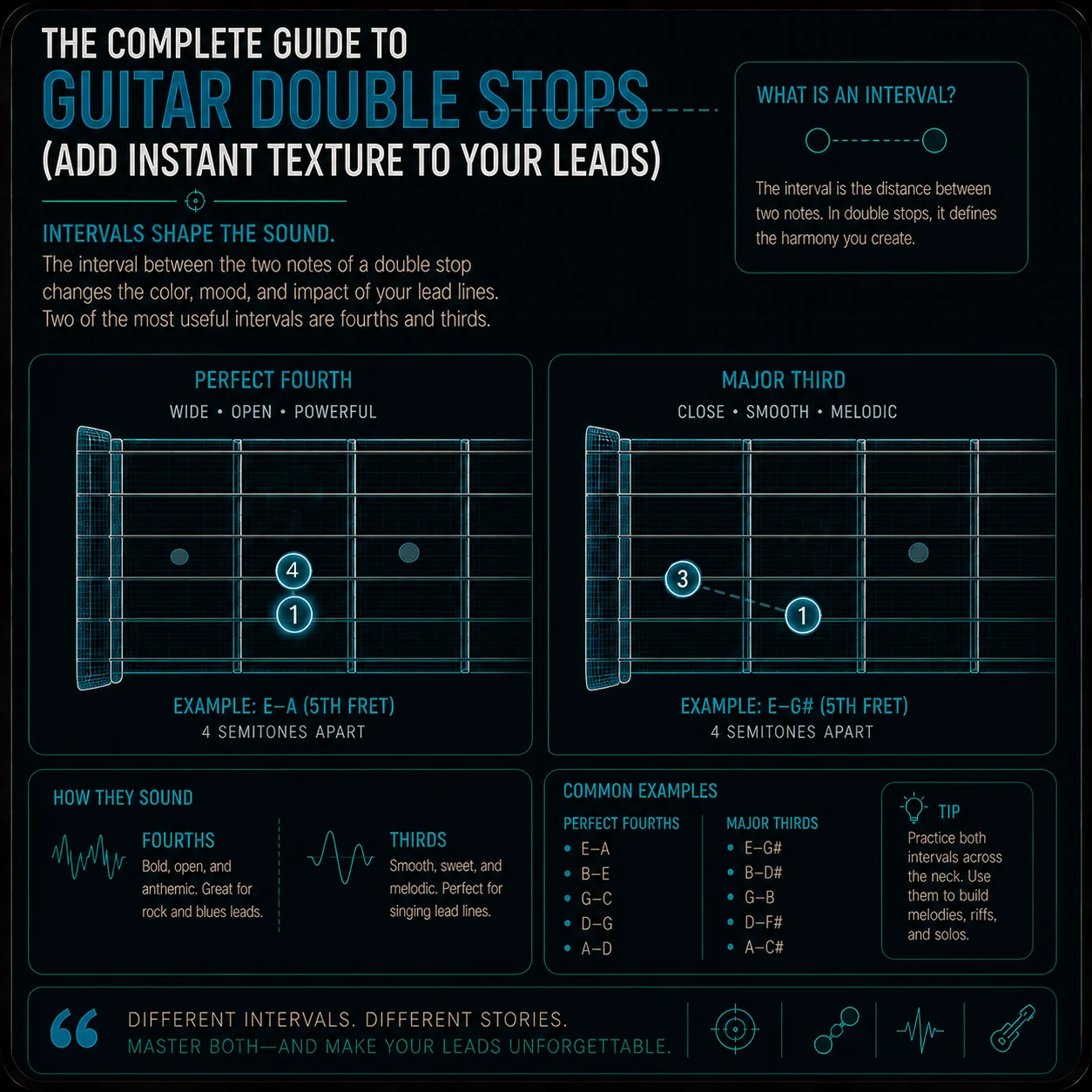
Not all double stops sound the same. Some have a gritty, rock-and-blues feel. Others sound sweeter and more vocal. The difference usually comes from the interval between the two notes.
Wide and punchy. Common in rock, blues, and country. The interval that makes a riff feel bold.
Sweeter and more vocal. Common in soul, country, and melodic leads. The interval that makes a line sing.
Learning to hear that difference helps you choose the right shape for the mood you want.
Play them cleanly
Because double stops use two strings at once, muting matters a lot. If the neighboring strings ring accidentally, the sound gets muddy fast. Clean attack and clean muting are the whole game here.
The same finger-arch and placement principles from clean chord playing also apply here. The better your fingers control the surrounding strings, the clearer the double stop will sound. The goal is harmony, not clutter.

Use hybrid picking
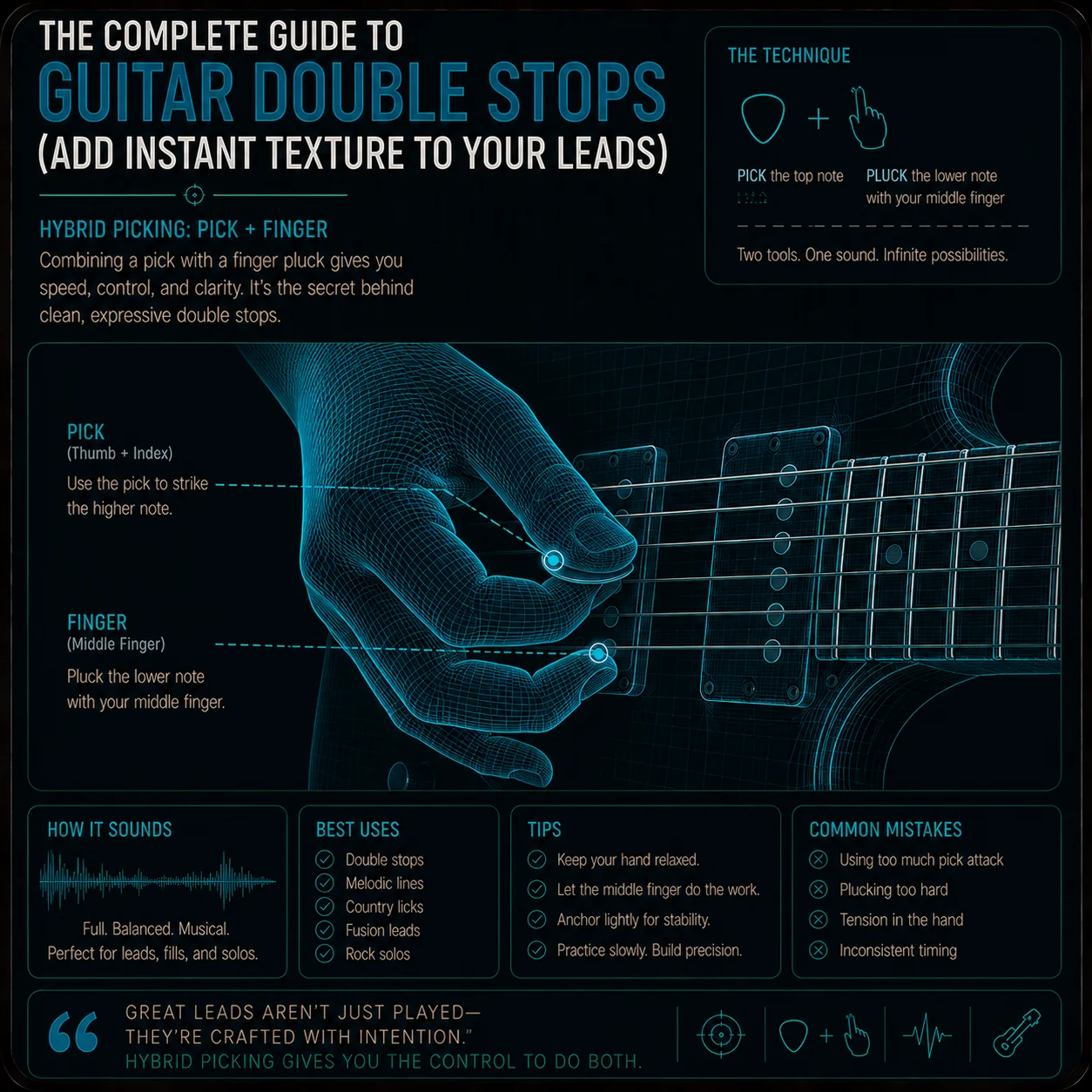
One of the cleanest ways to play double stops is with hybrid picking. The pick handles one note while a finger plucks the other at the same time. That gives you more control and a sharper attack.
Hybrid picking also helps isolate the notes so you do not accidentally brush extra strings. If you want that punchy, percussive sound, it is one of the best techniques to learn. It makes double stops sound intentional instead of accidental.
Use the overlay & the Interval Finder
Instead of hunting for harmony shapes by feel alone, the Scale & Arpeggio Overlay & the Interval Finderlets you see where the thirds, fourths, and other double-stop relationships live on the neck. That makes the concept much easier to apply in real time.
If you are building double-stop licks or mapping them into solos, visualizing the fretboard saves time. It turns theory into something you can actually grab and hear.
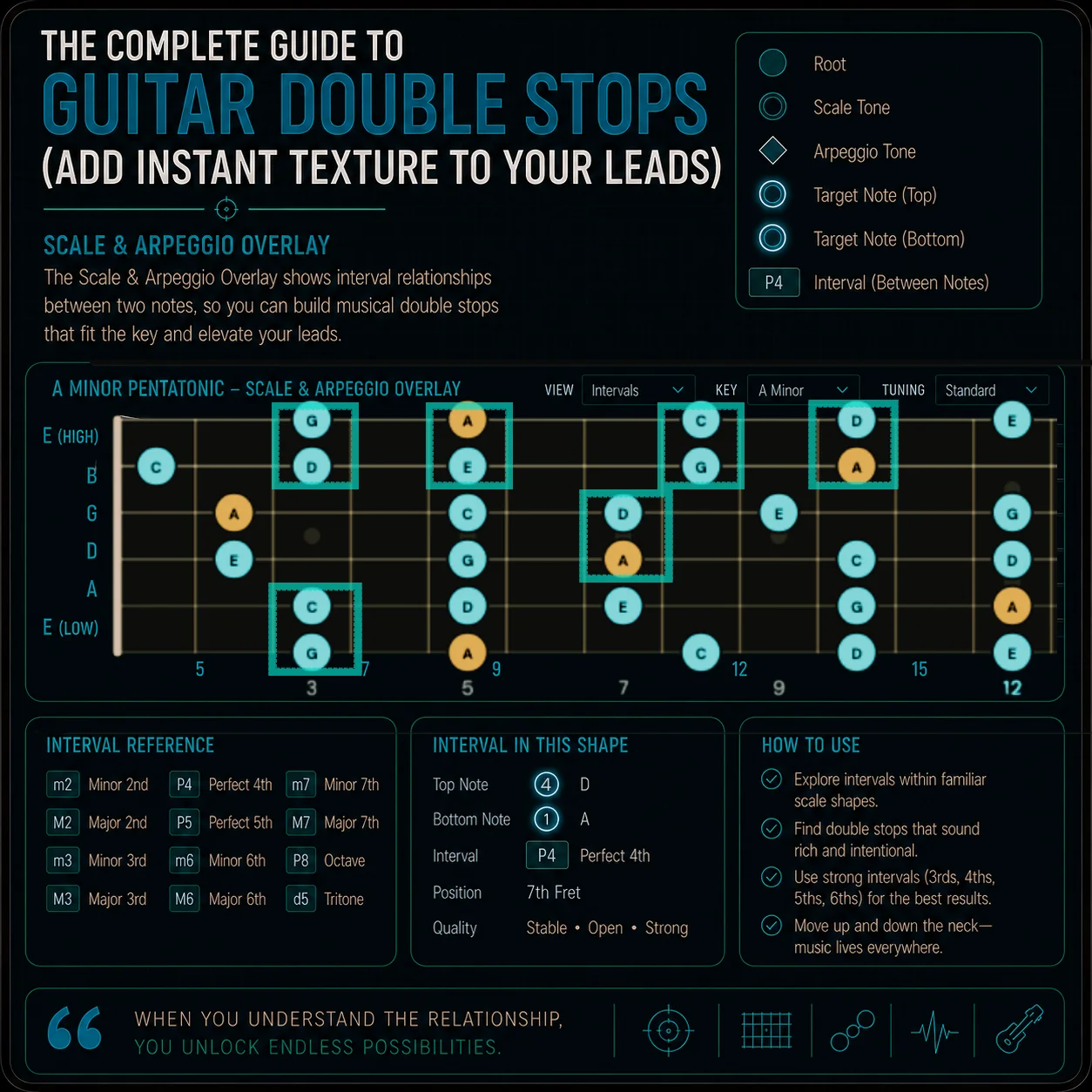
Want to map double stops across the neck? Open the Scale & Arpeggio Overlay & the Interval Finderto see where thirds, fourths, and harmony shapes live in real time.
Open the Overlay → Open the Interval Finder →The Pocket Roady order
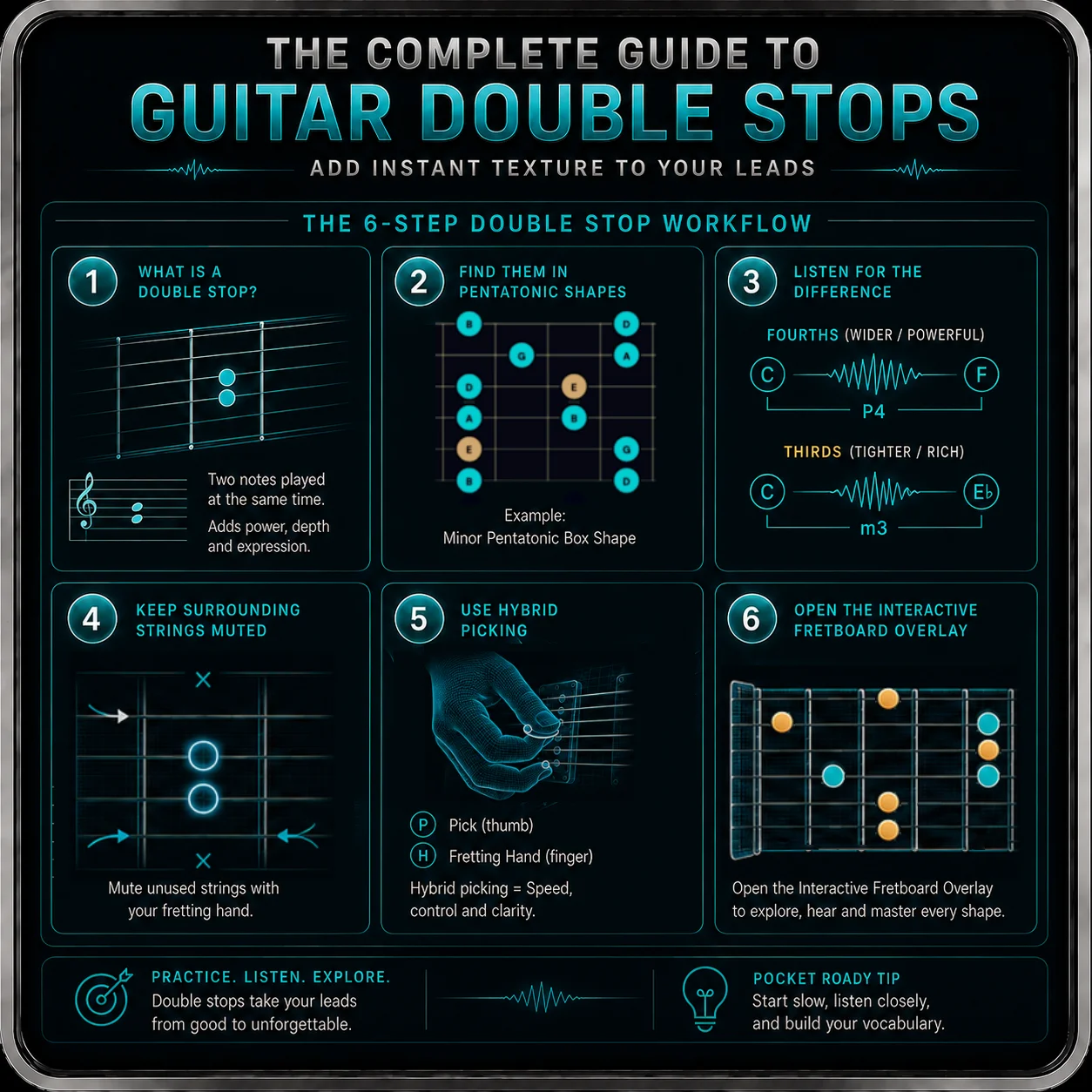
Here is the simplest workflow — start at the top and work your way down:
Learn what a double stop is. Two notes, one move — harmony without the weight of a full chord.
Find them inside pentatonic shapes you already know. They are already there — you just need to grab two strings instead of one.
Listen for the difference between fourths and thirds. Choose the interval that fits the mood of the phrase.
Keep the surrounding strings muted. Clean attack and clean muting are the whole game.
Use hybrid picking for a cleaner, sharper attack on each note.
Open the Scale & Arpeggio Overlay or the Interval Finder to map harmony shapes across the full neck.
Double stops are one of the fastest ways to make lead guitar sound fuller without needing more notes.
Where to go next
If you want your lead lines to sound bigger, double stops are a great place to start. They add instant color, and they are easy to build from shapes you probably already know.
Want to map double stops across the neck? Open the Scale & Arpeggio Overlay to see where thirds, fourths, and other harmony shapes live in real time — or use the Fretboard Note Finder to locate the individual notes first.